Romania’s retail development market remains active, with 3,816 projects monitored over the past 12 months and a combined estimated investment value of RON 79.78 billion (approximately €15.7 billion). The projects cover a planned area of around 23 million square meters, according to an analysis by IBC Focus based on data from its VICTA construction intelligence platform.

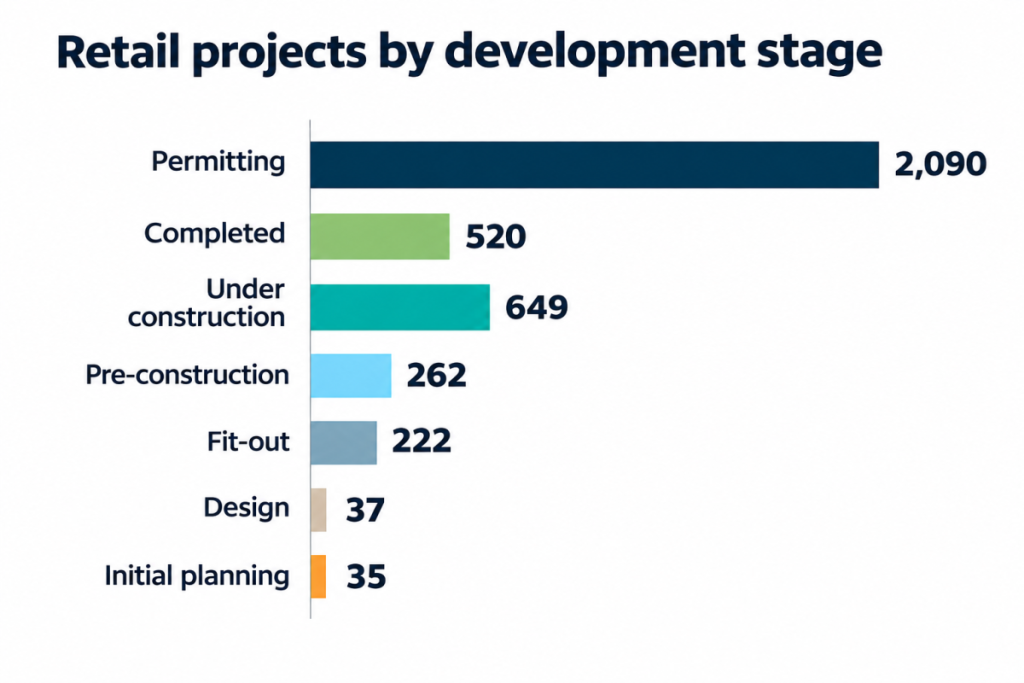
Of the projects identified, 649 are currently under construction, representing an estimated investment of RON 33.7 billion. A further 2,090 projects are in the permitting stage, with an estimated value of RON 29.53 billion. Together, these two groups account for nearly 80% of the total estimated investment value.
The figures cover a broad range of retail developments, from individual stores and supermarkets to showrooms, retail galleries, and shopping centers. Projects have been recorded in all Romanian counties, although activity is concentrated in several key regional markets.
Retail stores dominate the project mix
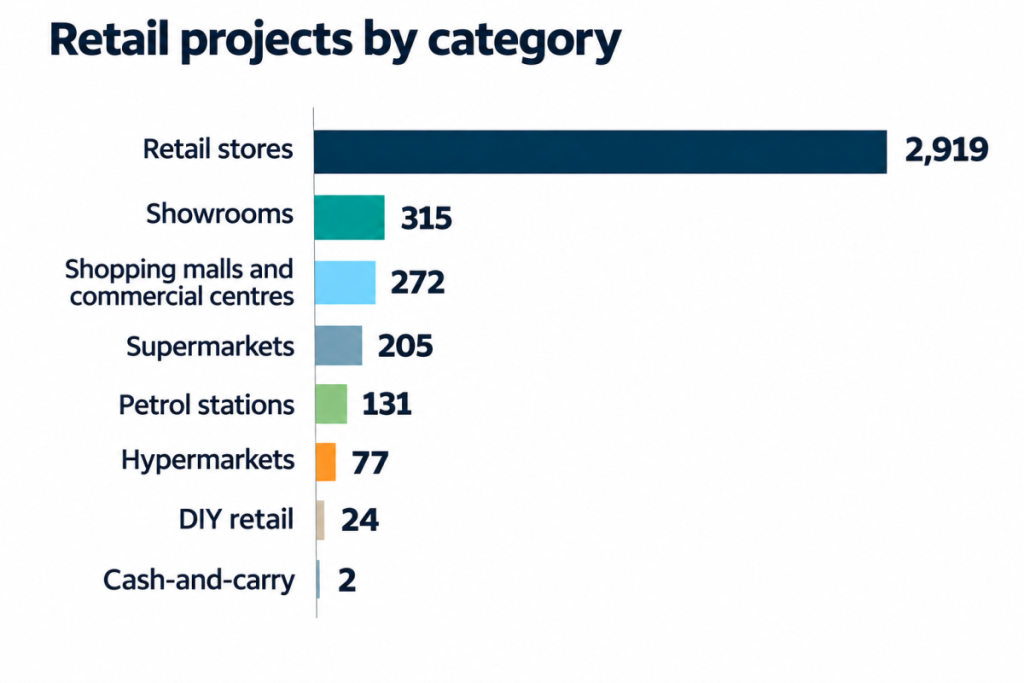
Individual retail stores account for by far the largest category, with 2,919 projects, or approximately 76.5% of the total. Showrooms follow with 315 projects, while shopping malls and commercial centers account for 272 developments. The database also includes 205 supermarkets, 131 petrol stations, 77 hypermarkets, 24 DIY retail projects, and two cash-and-carry developments.
IBC Focus notes that some projects are classified under more than one retail subcategory, depending on their characteristics. The individual category figures therefore should not be added together to calculate the national total.
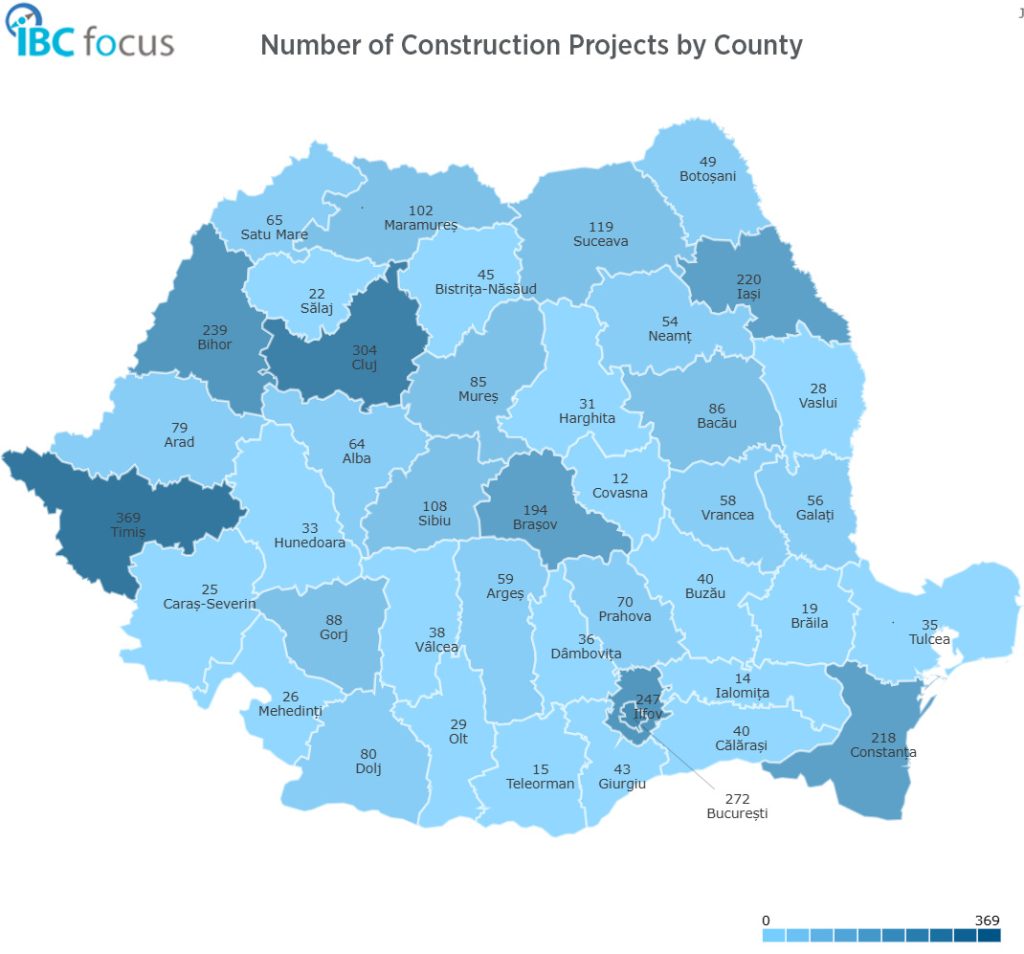
Geographically, Timiș County leads with 369 projects, followed by Cluj with 304 and Bucharest with 272. Ilfov County, which surrounds the capital, accounts for another 247 projects, while Bihor ranks fifth with 239. Other significant markets include Iași (220), Constanța (218), and Brașov (194).
Together, Timiș and Cluj account for 673 projects, or around 17.6% of the national total. Bucharest and Ilfov contribute a further 519 developments.
Most projects are still awaiting permits
The development-stage breakdown highlights the scale of the potential pipeline, but also the distance many projects still have to travel before completion. The 2,090 projects in the permitting stage represent approximately 54.8% of all monitored developments. They cover around 10 million square meters and have an estimated combined value of RON 29.53 billion.
Projects already under construction account for a smaller share by number, but a considerably larger proportion of the estimated investment. Their combined value of RON 33.7 billion represents more than 42% of the total. Another 262 projects are in pre-construction, while 222 are undergoing fit-out works. The database also recorded 520 completed projects during the period analysed.
New-build developments dominate the market: 3,544 projects, or 92.9% of the total, involve new construction. The remaining projects comprise 115 extensions, 86 renovations, 66 modernization projects, and five repairs.
The overall investment figure should be understood as the estimated value of projects at different stages of planning, construction, and completion, rather than capital already invested or expenditure committed for the coming year. In particular, projects still awaiting permits remain subject to regulatory approvals, financing, and commercial decisions.
The data nevertheless points to substantial ongoing development activity in Romania, with a significant volume of projects already on site and an even larger group progressing through the permitting process.
(ps)