Romania is experiencing a remarkable wave of retail construction. According to an analysis by IBC Focus, 3,816 retail projects were monitored across the country over the past 12 months, representing an estimated investment value of RON 79.78 billion, or approximately €15.7 billion. Nearly 650 projects are already under construction, while another 2,090 are in the permitting stage.

From an investment perspective, these figures are impressive. But I believe they also deserve a second look. How much new retail infrastructure does a country really need, and what are the wider consequences of building it at this pace?
The database covers a broad range of developments, from individual stores and supermarkets to showrooms and shopping centers. It would therefore be wrong to equate all 3,816 projects with large retail parks. Nevertheless, the scale of activity raises questions about the development model behind it.
The price of car-dependent retail
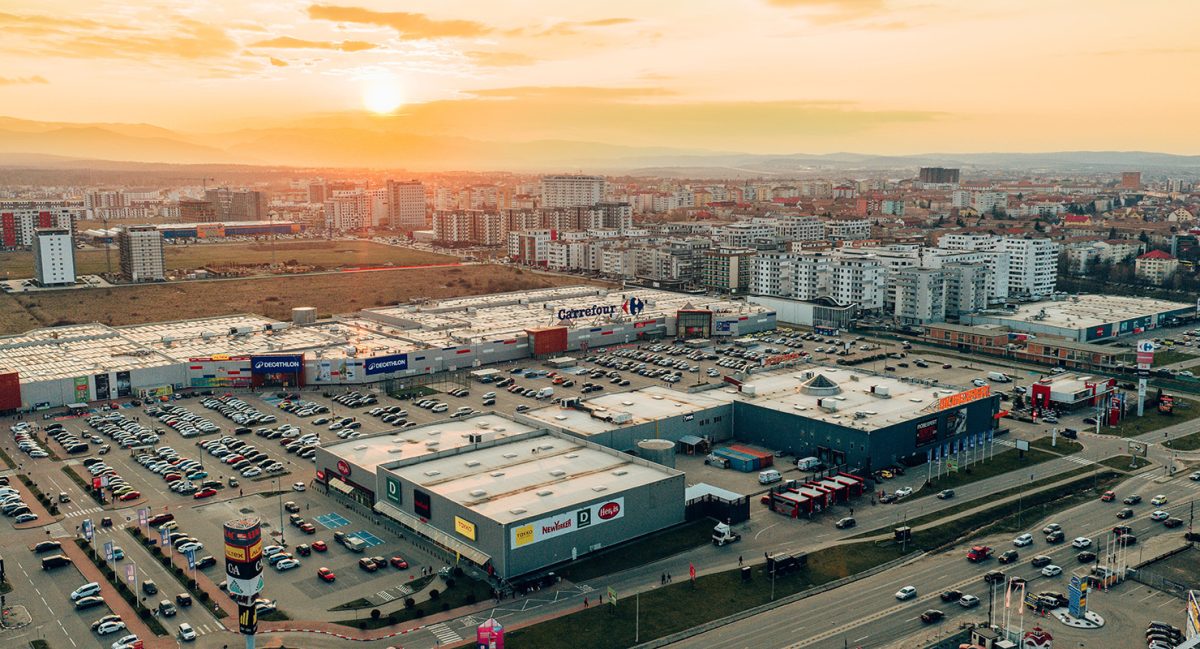
Many large retail developments are located outside established urban centers or along major roads. Their business models often rely heavily on customers arriving by car. As more destinations emerge, so does the pressure on roads, parking infrastructure, and local transport networks. The resulting traffic and emissions are costs that rarely feature prominently in investment calculations.
There is also a social dimension. When everyday shopping increasingly shifts away from residential neighborhoods and local town centers, access becomes more difficult for people without cars. Elderly residents, younger people, and lower-income households may find themselves particularly affected. What offers convenience to motorists can create additional barriers for others.
The impact on local communities should not be underestimated either. Traditional shopping streets and village centers are more than places to buy goods. They provide services, support local businesses, and offer opportunities for everyday social interaction. If commercial activity moves elsewhere, these places risk losing part of their economic and social function.
Land and resources are not unlimited
Every new development requires land, building materials, energy, and infrastructure. Large paved areas for parking and access roads contribute to soil sealing, reduce natural water absorption, and can increase pressure on local ecosystems. Construction itself also carries a substantial environmental footprint, from the production of concrete and steel to the transport of materials.
One project may have a limited impact in isolation. Thousands of projects across a country present a different picture. This makes the question of alternatives all the more relevant. Could more demand be accommodated through the refurbishment of existing properties, the reuse of vacant buildings, or the regeneration of established urban locations?
As Eric Decouvelare, Head of EMEA Urban Destinations Operator Division at CBRE Investment Management, pointed out in a conversation with ACROSS at MAPIC in Cannes, the future of retail real estate lies less in building new assets than in rethinking existing ones. “The new assets are not new construction. They are redevelopments and repositionings.” His observation underlines an important question for markets such as Romania: whether the next phase of retail growth should focus on adding more space or making better use of what already exists.
Building for a changing population
There is another question that deserves attention: who will use all this new retail space in 20 or 30 years?
Romania’s population is ageing and shrinking. Its demographic structure increasingly resembles an onion rather than a pyramid, with smaller younger generations and a growing proportion of older people. Declining birth rates and the ageing of the baby-boomer generation will continue to reshape the country’s population in the decades ahead.
This has implications not only for society, but also for the retail real estate market. A smaller and older population will have different shopping habits, mobility requirements, and expectations of accessibility. Consumer demand will change, and so will the geographical distribution of purchasing power.
This raises a legitimate question about the long-term assumptions behind today’s construction boom. Will the retail developments being planned and built now remain commercially viable in 2050 or 2060? Are developers and investors adequately accounting for demographic projections when assessing future demand? And how adaptable will these assets be if the markets they serve change significantly?
Retail properties are long-term investments. Their viability cannot be assessed solely against today’s population figures and consumer demand. Demographic change needs to be part of the equation from the outset.
Growth needs a broader perspective
None of this is an argument against retail investment or modern commercial infrastructure. Romania needs both. But the success of retail development should not be measured solely by investment volumes, construction activity, or newly created floor space.
Accessibility without a car, the vitality of existing town centers, responsible land use, and the efficient use of resources should be part of the equation, too. So should demographic projections and the long-term adaptability of new developments.
Romania’s retail development pipeline is certainly impressive. Whether it will ultimately contribute to better places and more sustainable communities is a question that deserves at least as much attention as the investment figures themselves.