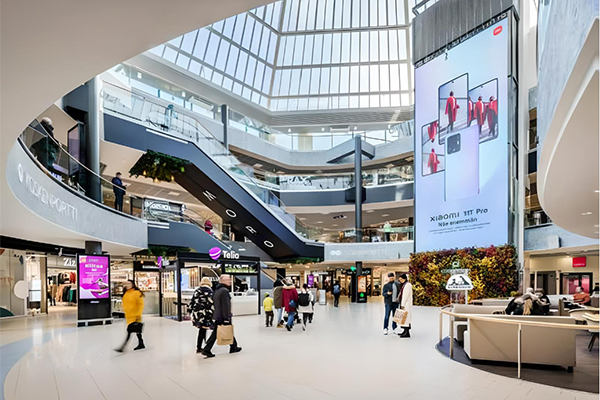
In today’s evolving retail landscape, marketing automation is no longer optional, it is essential. Shopping centers, once purely transactional spaces, are now transforming into dynamic destinations for experience, entertainment, and community connection. However, in a world in which consumers expect relevance, immediacy, and personalization, how can centers deliver consistent, high-quality engagement without overwhelming their marketing teams?
As tourists venture to new places, they look for easy and flexible ways to make purchases—making gift cards an ideal choice. Whether it’s at shopping malls, restaurants, or entertainment spots, digital gift cards can boost sales as the company SmartGifty shows.
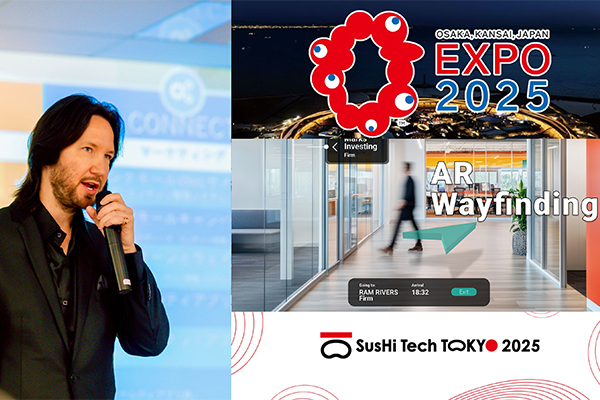
As Asia stands at a pivotal moment for sustainable development, Nordic Innovation was in the spotlight at EXPO 2025 Osaka, as well as SusHi Tech Tokyo 2025, with leaders and companies sharing ideas on how technology can make cities more livable, resilient, and sustainable. The events emphasized the importance of ESG (environmental, social, and governance) principles in shaping the future of urban development, from green infrastructure to inclusive economic growth.
Proptech/martech expert Placewise Group has been acquired by Total Specific Solutions (TSS), a leading international group of vertical market software companies.
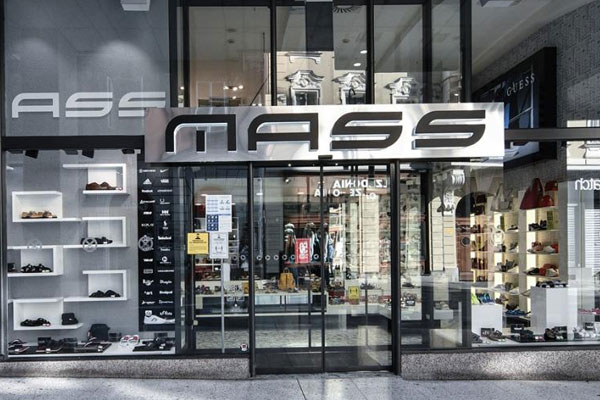
SmartGifty is a web-based gift card management solution for shopping centers and retailers. Through the solution companies can analyze a number of statistics to plan effective marketing activities and have control over the gift card stock. MASS is a prominent Slovenian client of SmartGifty. By implementing the solution the shoe retailer gained growth especially in its online channel.
The Nordic Real Estate Forum 2025, held March 20 in Tallinn under the theme “New Normal in Real Estate,” examined the critical intersection of technology and sustainability in commercial real estate. Key discussions revolved around geopolitical uncertainties, infl ation, and shifting investment strategies, but one theme stood out across panels: technology’s role in enabling ESG compliance and operational efficiency.
Gift cards offer more than just convenience for customers—they are a treasure trove of data for retailers. By analyzing gift card purchases and redemptions, retailers can gain valuable insights into customer behavior, preferences, and purchasing patterns, which can then be used to optimize sales strategies and drive business growth.
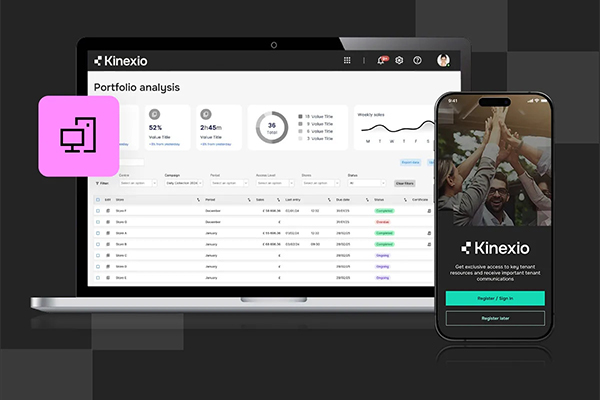
Mallcomm, has announced its completed rebrand to Kinexio, including a new name, logo and brand identity. The rebrand is a mark of the transformation that Mallcomm has undergone over the last 12 years, as the business has grown from a leading retail communications tool, to become a global enterprise software solution for commercial property management.
Data exchange in the shopping center industry is still in its infancy, states David Blumenfeld, Co-founder of NextRivet. While the benefits of data sharing between landlords and tenants are obvious, retailers are not enthusiastic about giving their landlords more insight into their business. For efficient data sharing, an honest and good lease relationship is essential. In this interview, Blumenfeld explains why data sharing is so important, but it requires a change in collaboration. Landlords are in the driving seat when it comes to data sharing. They have to prove the value of the data before demanding anything in return. The value of data is always the driving force.
“First, ask why!” That is the most important piece of advice that Mark Bruce, Data & Insights Director at Kinexio — formerly Mallcomm — can give. As data begins to redefine the retail experience, a key question that we must ask ourselves is: “Why should we share data?”. To many the idea of sharing data is clouded with questions around how it will be used, and what the implications will be. However, as businesses shape and implement their data strategies, there is a real opportunity to use data for good, especially in the landlord-tenant relationship and in order to maximize ROI.
In today’s digital age, with AI advancing at an unstoppable pace, consumers are becoming increasingly aware of both the incredible power and the significant risks of sharing their data with businesses. As a global leader in CRM and loyalty solutions, Ben Chesser has seen, firsthand, the profound impact data sharing can have – not only on businesses but on customers as well.
In today’s fast-paced retail landscape, data is no longer just a luxury – it’s the foundation for staying competitive and future-ready. At ROS Retail Outlet Shopping, we understand that success isn’t just about collecting data; it’s about how we use that data to address challenges, boost performance, and spark growth.
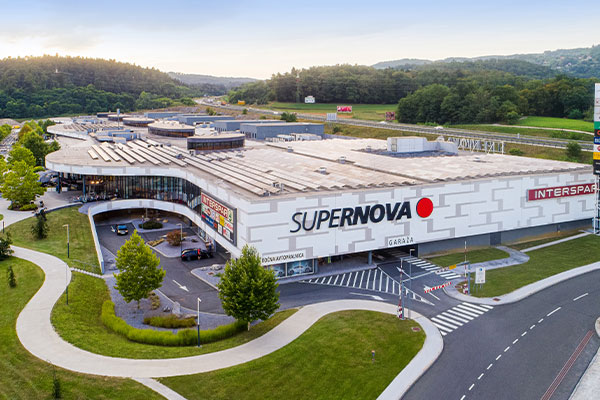
SmartGifty is a web-based gift card management solution, especially useful for shopping centers. Through this solutions shopping centers’ management or marketing department have complete access to all data for all shops and all centers in the chain. They can analyze a number of statistics to plan effective marketing activities and have control over the gift card stock. Supernova was one of the first clients of SmartGifty and Supernova gift Card is the most popular Shopping center. Supernova CEO Markus Pinggera talks about his experience with the solution.
Jurij Triller is the CEO of Smart Octopus Solutions. Together with a co-founder, he has developed a smart gift card solution that offers a closed loop to customers and partners, unlike comparable products. He talks to ACROSS about the advantages of being independent from a major player like Visa or Mastercard, what data insights he can ensure as a result, and why personalization and customization are key.
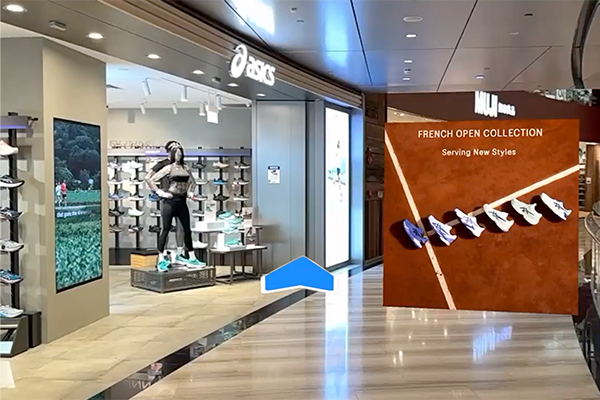
Across Asia, Visual Positioning System (VPS) technology utilizing augmented reality (AR) wayfinding is transforming how people navigate complex commercial spaces. From shopping malls and airports to mixed-use developments, digital navigation is evolving beyond static maps—offering real-time, interactive experiences through mobile devices.
Coresight Research, a research and advisory firm specializing in retail and technology, and NextRivet, a digital innovation and implementation consultancy specializing in retail real estate, announced their strategic partnership and the launch of CoreRivet. The CoreRivet service is designed to empower retail and real estate executives with actionable insights and cutting-edge technologies that drive sales growth, operational efficiencies, and elevated customer engagement.
Over the past couple of years, it has become evident that retail is seeing a significant resurgence. This is across shopping centers, large destination indoor malls, and retail parks and outlets, explains Mark Bruce, Data & Insights Director at Mallcomm. While some may have dismissed the retail sector, others have recognized that despite some challenges, there is a great opportunity.
In today’s challenging market, how can stakeholders truly maximize value? As consumer behaviors evolve and sustainability becomes a priority, innovative monetization strategies are essential, especially in redevelopment projects. The commercial real estate sector has historically adapted to economic changes, transforming into an ecosystem in which experience, technology, and community engagement are crucial.
Mallcomm has announced the acquisition of MyTAG, a global software and technology company offering solutions for proof of presence, proof of compliance and enhanced security to safeguard people, property and assets.
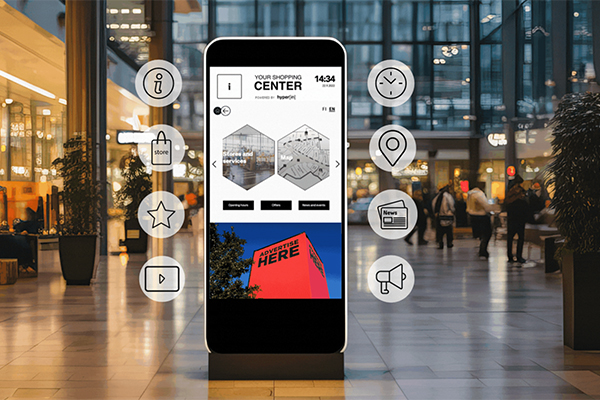
Expo Real, Europe’s largest property and investment trade fair, concluded with a strong focus on digital transformation in the real estate sector. Among the key exhibitors, HyperIn stood out for its contributions to discussions on the evolving landscape of commercial real estate technology. The event served as an important platform for HyperIn to showcase their all-in-one platform, engaging industry leaders and sharing insights on how technology is shaping the future of property management.
Shopping centers—including multi-use, regional, luxury centers, and outlet malls—should always be looking for ways to increase traffic and maintain loyalty among existing shoppers, as well as attract new visitors. This article by Placewise CEO Susan Hagerty Bonsak delves into how experiential marketing can help centers evolve into vibrant community hubs. Let’s explore a hypothetical event, Sensory Spring Fest, which uses experiential marketing to create engaging activities, drive sales, and build strong community ties.
Hardly any other word has characterized the real estate industry lately as much as transformation. It describes many different aspects and involves all stakeholders. However, one area that is often neglected is community building. We are ignoring the most critical group: the users and consumers. David Fuller-Watts, CEO of Mallcomm, explains in this interview what community building should stand for today and what the real estate industry, including proptech, needs to do to serve their communities’ changing needs.
Why do we visit shopping centers? Is it merely for shopping, or are we seeking entertainment, a place to meet, or perhaps all of these experiences combined? Despite the diverse reasons that draw us to shopping centers, one expectation remains consistent across all visits: the demand for quality.
This year´s SusHi Tech Tokyo 2024 aimed at fostering cooperation between Japan and Finland by providing a platform for tech companies of both countries to promote sustainability technology and ESG principles. Markus Porvari, President and CEO of HyperIn, represented the company as a keynote speaker at the conference. HyperIn has demonstrated how a startup can successfully grow into a thriving enterprise, showcasing real cases of how some of the leading companies in the Nordics are succeeding with sustainable technology.
We use cookies on our website to give you the most relevant experience by remembering your preferences and repeat visits. By clicking “Accept All”, you consent to the use of ALL the cookies. However, you may visit "Cookie Settings" to provide a controlled consent.
This website uses cookies to improve your experience while you navigate through the website. Out of these, the cookies that are categorized as necessary are stored on your browser as they are essential for the working of basic functionalities of the website. We also use third-party cookies that help us analyze and understand how you use this website. These cookies will be stored in your browser only with your consent. You also have the option to opt-out of these cookies. But opting out of some of these cookies may affect your browsing experience.
Necessary cookies are absolutely essential for the website to function properly. These cookies ensure basic functionalities and security features of the website, anonymously.
Cookie
Duration
Description
cookielawinfo-checkbox-advertisement
1 year
Set by the GDPR Cookie Consent plugin, this cookie is used to record the user consent for the cookies in the "Advertisement" category .
cookielawinfo-checkbox-analytics
11 months
This cookie is set by GDPR Cookie Consent plugin. The cookie is used to store the user consent for the cookies in the category "Analytics".
cookielawinfo-checkbox-functional
11 months
The cookie is set by GDPR cookie consent to record the user consent for the cookies in the category "Functional".
cookielawinfo-checkbox-necessary
11 months
This cookie is set by GDPR Cookie Consent plugin. The cookies is used to store the user consent for the cookies in the category "Necessary".
cookielawinfo-checkbox-others
11 months
This cookie is set by GDPR Cookie Consent plugin. The cookie is used to store the user consent for the cookies in the category "Other.
cookielawinfo-checkbox-performance
11 months
This cookie is set by GDPR Cookie Consent plugin. The cookie is used to store the user consent for the cookies in the category "Performance".
CookieLawInfoConsent
1 year
Records the default button state of the corresponding category & the status of CCPA. It works only in coordination with the primary cookie.
elementor
never
This cookie is used by the website's WordPress theme. It allows the website owner to implement or change the website's content in real-time.
viewed_cookie_policy
11 months
The cookie is set by the GDPR Cookie Consent plugin and is used to store whether or not user has consented to the use of cookies. It does not store any personal data.
Functional cookies help to perform certain functionalities like sharing the content of the website on social media platforms, collect feedbacks, and other third-party features.
Performance cookies are used to understand and analyze the key performance indexes of the website which helps in delivering a better user experience for the visitors.
Analytical cookies are used to understand how visitors interact with the website. These cookies help provide information on metrics the number of visitors, bounce rate, traffic source, etc.
Cookie
Duration
Description
_ga
2 years
The _ga cookie, installed by Google Analytics, calculates visitor, session and campaign data and also keeps track of site usage for the site's analytics report. The cookie stores information anonymously and assigns a randomly generated number to recognize unique visitors.
_gat_gtag_UA_135750163_2
1 minute
Set by Google to distinguish users.
_gid
1 day
Installed by Google Analytics, _gid cookie stores information on how visitors use a website, while also creating an analytics report of the website's performance. Some of the data that are collected include the number of visitors, their source, and the pages they visit anonymously.
Advertisement cookies are used to provide visitors with relevant ads and marketing campaigns. These cookies track visitors across websites and collect information to provide customized ads.