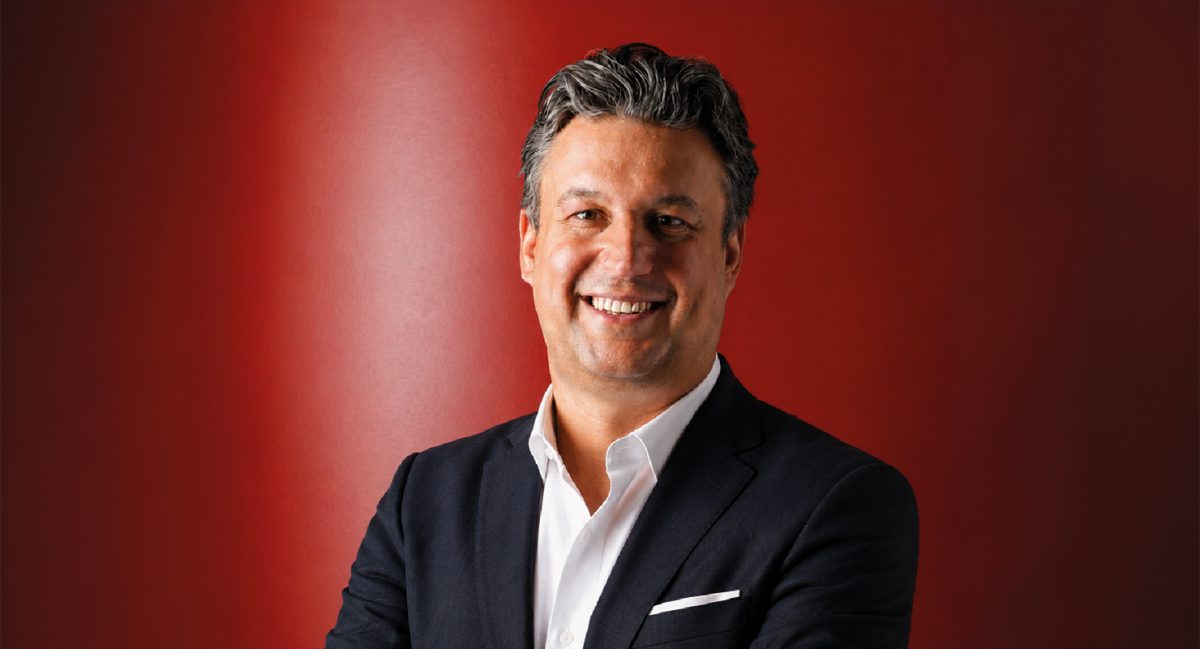
ACROSS: Mr. Chinali, you have lived and worked in Istanbul for more than 16 years. Looking back, what surprised you most when you first arrived in Türkiye?
Claudio Chinali: Personally, what surprised me most was Istanbul itself. I found a city that was far more modern and sophisticated than I had expected, while still preserving an extraordinarily strong historical identity.
What makes Istanbul unique is that these different layers do not replace one another. They coexist. You can move from a very contemporary business environment to a neighborhood shaped by centuries of history within minutes, and both feel completely authentic.
Professionally, what struck me was the energy. There was, and still is, a strong desire to build, invest, improve and make things happen.
I was also surprised by how structured and corporate the F&B industry could be. Coming from Italy, where gastronomy is deeply rooted in traditional craftsmanship and family businesses, I discovered in Türkiye a food industry that, in many areas, had developed a very managerial approach to operations, scale, service and expansion. Over time, I realized that this combination of entrepreneurial energy, complexity, speed and tradition is one of the defining characteristics of doing business here.
You are a chef by profession, and food is at the heart of both your career and Eataly. What did you discover about the relationship between food and culture in Türkiye?
The similarities between Italy and Türkiye surprised me more than the differences. Italy and Türkiye have very different cuisines, but culturally they share something fundamental: food is not simply nutrition. It is identity.
People are proud of what they eat. They discuss ingredients, regional traditions, where products come from, which restaurant is better, how something should be cooked. Food is part of family life, social life and national culture. That made Türkiye surprisingly familiar to me as an Italian.
The differences are more visible in consumption habits. In Istanbul, people traditionally eat outside the home much more frequently, and food is available almost continuously throughout the day. There is much less rigidity around the idea that lunch or dinner must happen within a very specific time window.
For me, the connection between Italian and Turkish consumers comes from this shared emotional relationship with food. The recipes are different, but the importance given to food is remarkably similar.
“Food is a form of cultural diplomacy. It transforms a commercial space into a cultural space.”
What role do domestic food brands play Türkiye’s food culture and retail landscape?
Türkiye has a very deep regional food culture and local brands are extremely important. They act as a bridge between tradition and modern retail. Many entrepreneurs have managed to take something historically local —
a kebab style, a bakery product, a dessert, a breakfast tradition — and turn it into a scalable contemporary concept. The strongest brands do not necessarily reinvent the product but the way it is delivered, branded, standardized and experienced. The ability to turn familiarity into scale is one of the most interesting characteristics of Turkish food brands.
But the country is also becoming increasingly influenced by global patterns, particularly convenience and quick-service concepts. So you have two forces moving together: a strong attachment to national and regional food identity, and an increasing openness to international formats. The winners are often those who understand how to combine the two.
Türkiye can actually be a difficult market for something completely unfamiliar. Consumers have very strong reference points. But once a concept is accepted and earns trust, adoption can be incredibly fast because the potential customer base is so large.
Food and beverage have evolved from a supporting offer into one of the strongest drivers of successful retail destinations. Why has it become such a strategic element of placemaking?
Because gastronomy creates something that traditional retail alone struggles to create today: time, emotion and human interaction. Retail gives people a reason to come. Gastronomy gives them a reason to stay, meet and return.
We live in an increasingly digital environment. We shop online, work remotely, communicate through screens and are constantly exposed to short bursts of digital stimulation. But food brings people physically together. You may buy a product online in thirty seconds, but you cannot replicate the experience of sitting around a table with friends, having coffee with a colleague or discovering a new cuisine through a screen in the same way.
This is why gastronomy has become so important to placemaking.
It transforms a commercial space into a social space. I also see food as a form of cultural diplomacy. Eataly, for example, is certainly a retail and restaurant business, but it is also a cultural platform. People experience Italy through food, ingredients, producers, rituals and hospitality. A strong Turkish restaurant can perform the same role for Turkish culture. For developers, this means gastronomy is no longer simply an amenity.
“Gastronomy is no longer simply there to monetize hunger. It is there to create life around the real estate.”
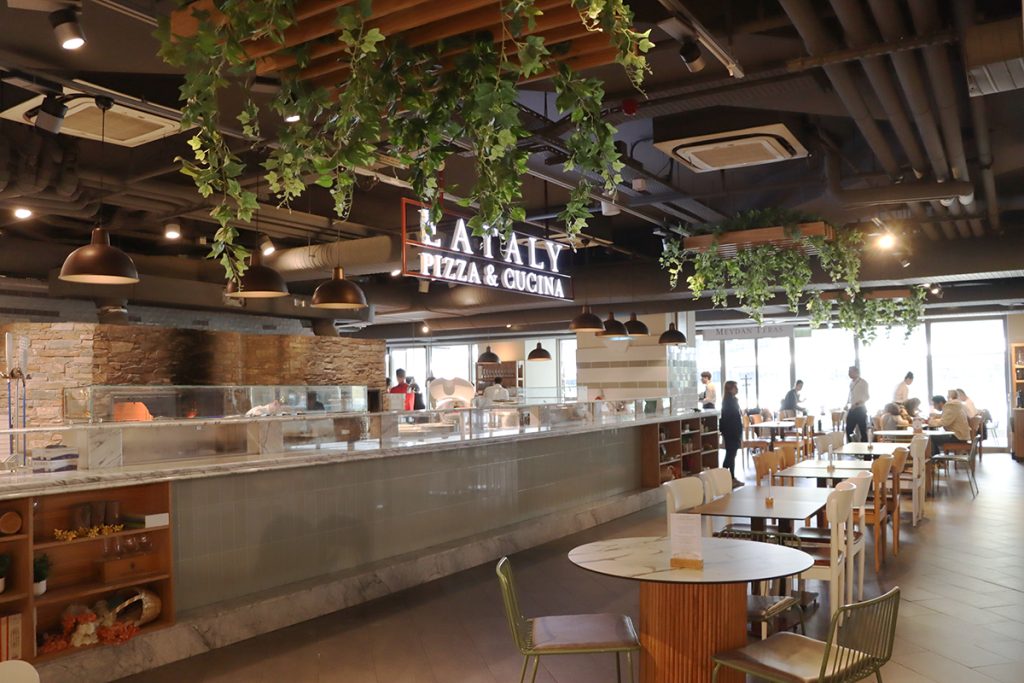
The philosophy behind Eataly is „Eat. Shop. Learn.“ Why, for you as a Chef, is learning about food just as important as selling or serving it?
Because knowledge creates both accessibility and trust. When people do not understand a product, unfamiliarity creates distance. When customers understand a product, they do not simply buy it differently. They relate to it differently.
If you explain where an ingredient comes from, who makes it, how it should be cooked and why it tastes different, that distance becomes smaller. Suddenly, something foreign becomes familiar.
For an international concept such as Eataly, this is particularly important. Our job is not simply to place an Italian product on a shelf and expect the customer to understand it. We need to create context around it.
Education also changes the nature of the relationship with the customer. During a cooking class or workshop, the chef is no longer simply the person behind the kitchen door. The customer participates, asks questions and understands the process. That creates a much deeper connection. And in Türkiye, where trust is extremely important in both personal and commercial relationships, this has particular value. I therefore see our school and workshops not just as educational activities but as one of our strongest loyalty platforms.
You also advise Turkish food companies. Has this work changed your perspective on the country‘s food industry and its international potential?
It has reinforced my belief that Türkiye has a food industry with much greater international potential than is sometimes recognized.
There are companies here that could absolutely compete internationally. The challenge is often not the product itself but translating domestic success into an international proposition. A product may need different positioning, packaging, communication, distribution or storytelling when it moves from Türkiye to Germany, Italy, the Gulf or the United States. This is where I think my own position is useful. I understand how Turkish entrepreneurs see their own products, but I can also look at them through the eyes of a European consumer or retailer. There is enormous ambition here. What many companies need is not more ambition, but the right translation between local strength and international relevance.
How has Turkish food culture changed during your time here?
The most valuable commodity today is probably time. People still care deeply about food, but they increasingly want quality to fit into a faster lifestyle. The pandemic accelerated the trend to grab-and-go in Türkiye, but changing work patterns and economic pressure have reinforced it.
I do not see grab-and-go as the opposite of gastronomy. If convenience simply means industrialized low-quality food, then of course something is lost. But if you simplify service and remove unnecessary operational costs while maintaining ingredients, freshness and flavor, convenience becomes interesting.
Consumers choose different formats for different moments. The mistake would be to think one behavior will completely replace the other. What is changing is the number of occasions and formats through which people consume food. Successful operators will need to serve both ritual and convenience.
What role do you believe food and beverage will play in the next generation of shopping centers and mixed-use destinations?
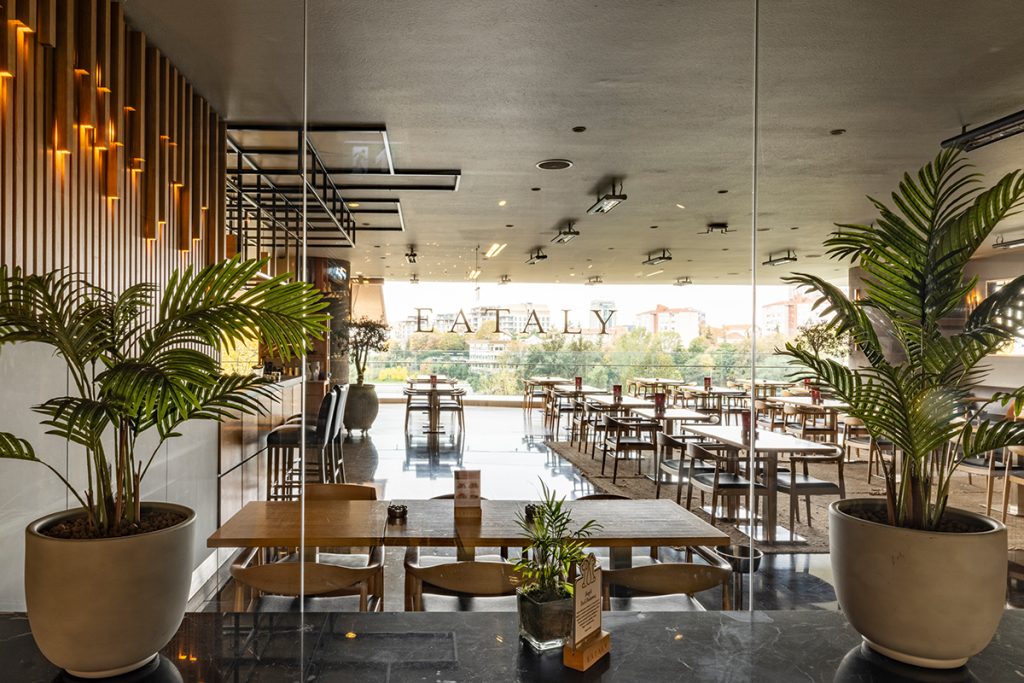
I believe food and beverage will become part of the core infrastructure of successful destinations.
The old shopping-center model was based primarily on transactions: people came to buy something. The next generation needs to compete for people‘s time. Gastronomy becomes the connector between different audiences and different moments of the day.
Breakfast, business lunch, coffee, afternoon meetings, aperitivo, dinner and late-night socializing can all happen within the same destination. The key will be diversity. You need different price points, different service models and different reasons to visit.
One trend I strongly believe in is what I call fast quality. Less money is spent on service complexity; more value placed on ingredients, flavor and health. Understanding this shift will very important.
If you were advising the developer of an entirely new retail destination today, what role would gastronomy play within the overall concept?
I would involve gastronomy from the first stage of the masterplan. Too often, F&B was treated as something to fill the remaining spaces after the retail mix had already been decided. Today I think that approach is fundamentally wrong. Imagine a premium office complex with excellent architecture and retail but nowhere to get a genuinely good coffee, have a business lunch, buy quality food or meet someone after work. That immediately reduces the value of the entire destination. The same applies to residential developments, hotels and shopping environments. Food determines daily habits. It gives employees services, gives visitors reasons to extend their stay and gives residents a sense of community.
I would therefore design the gastronomic mix around different dayparts, spending levels and consumer needs from the beginning.
The important point is that gastronomy is no longer simply there to monetize hunger. It is there to create life around the real estate.
That ultimately increases the relevance and attractiveness of every other component of the project.
Meet Claudio Chinali and explore Eataly Istanbul
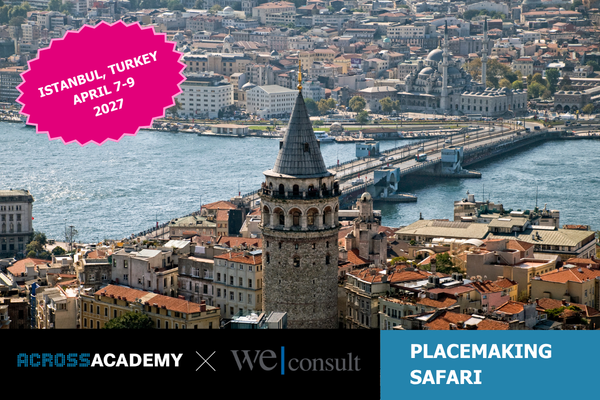
Eataly Istanbul will be among the locations to be visited during the ACROSS Placemaking Safari in April 2027.
REGISTRATION
ACROSS ACADEMY presents
PLACEMAKING SAFARI ISTANBUL
Istanbul | 7-9 April 2026
NOTE: Seats are limited. Secure your place now.
📩 REGISTRATION VIA FILLED OUT FORM EMAILED TO
Reinhard Winiwarter
Publisher and Managing Partner ACROSS Magazine
r.winiwarter@across-magazine.com
+43 1 533 32 60-80
This article was originally published in ACROSS 3/2026.