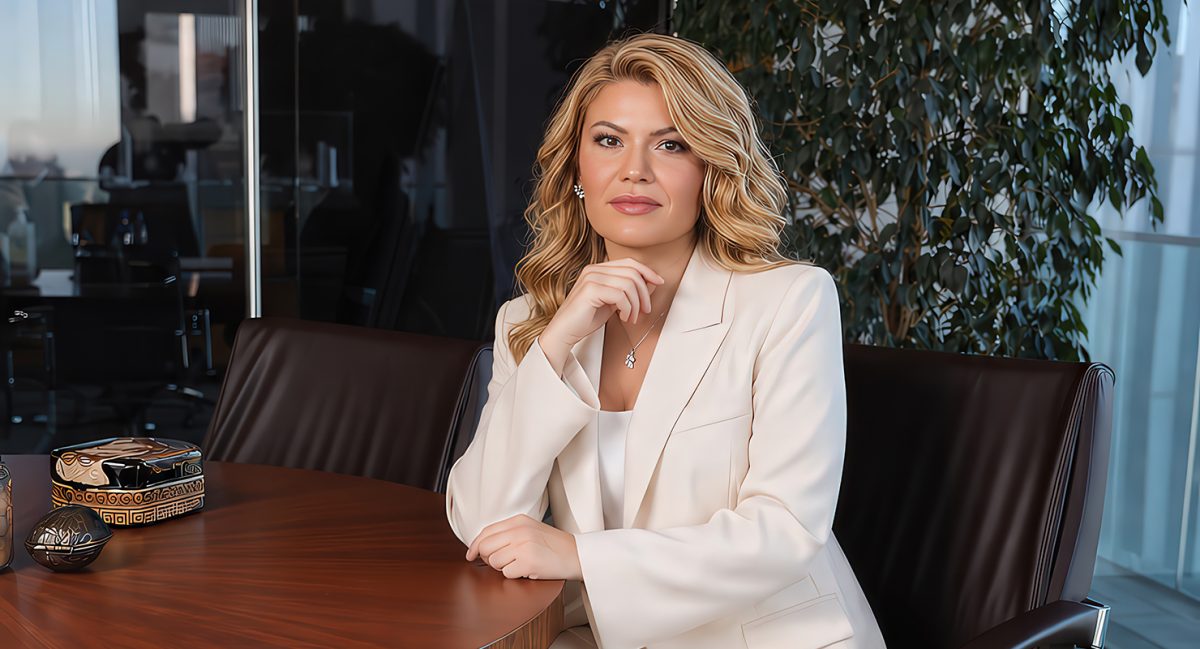
ACROSS: Mrs. Demirpençe, you have been in retail real estate for a long period. When you approach a new project – how do you look at it?

Ece Demirpençe: It is my strong belief that real estate development is fundamentally about seeing potential and creating value where others may not yet see it. I look at a location, an existing asset or even an early-stage idea and try to understand what it could become.
I studied City and Regional Planning and later completed a Master’s degree in Real Estate Development. That taught me to look at real estate not simply as buildings, but in the broader context of cities, people, economics, infrastructure and long-term change. And that there is rarely only one way to approach a development opportunity. Over a 23-year career, I have worked on more projects than I can probably count. Every location teaches you something different, every design challenges your assumptions, every team brings another perspective, and even projects that do not proceed can provide extremely valuable lessons.
I like to research, understand why things work, question established approaches and explore what could be done differently. Markets change, cities change, technology changes and people‘s expectations change. A developer has to keep evolving with them.
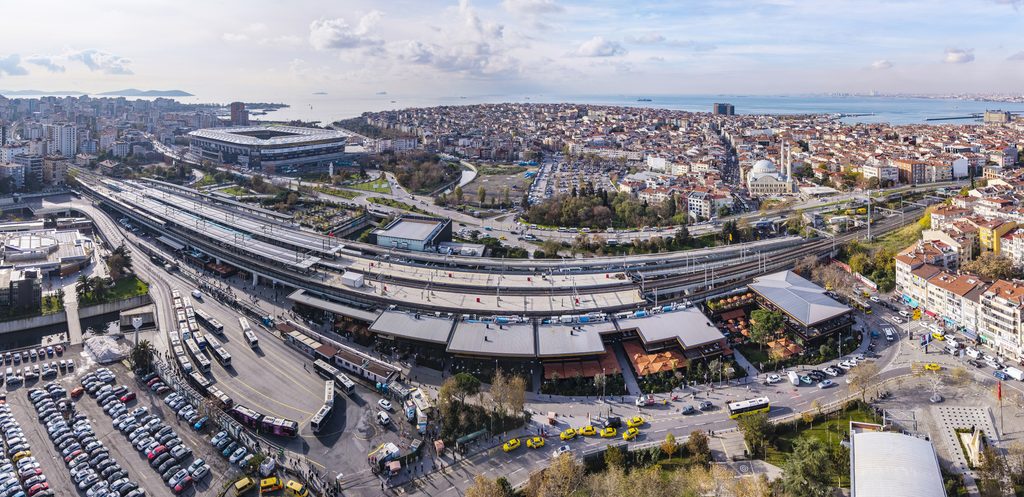
Terminal Kadıköy began with an unusual question: How can a transport hub become a destination? What convinced you that this idea had real potential?
The site convinced us before we convinced ourselves. Söğütlüçeşme is one of the busiest pedestrian hubs on Istanbul’s Anatolian side. More than three million people move through it every month.
That is a level of footfall most destinations spend enormous effort and investment trying to create. Here, it already existed. We saw the opportunity to transform that movement into a meaningful urban experience. What made the idea particularly compelling was that Söğütlüçeşme was already a daily touchpoint in the lives of millions of people, right in the heart of Kadıköy. The question was how we could add value to that existing rhythm.
When we benchmarked the concept against some great destinations, such as Borough Market, La Boqueria, Chelsea Market and Time Out Market, one thing stood out. Terminal Kadıköy would be the only one embedded within a live transport hub, with a semi-open architectural concept and its own performance stage. With a projected 36 million visitors a year, the potential was clear to us. This was not simply a market hall or another commercial destination. It was an opportunity to create a new piece of urban infrastructure.
“Good placemaking is ultimately about turning spaces into places where ordinary moments of everyday life can become more enjoyable, comfortable and meaningful.”
How do you get people to stop in a place designed primarily for movement?
We never approached Söğütlüçeşme simply as a transport hub where the challenge was to persuade people to stop. We saw an opportunity to create a place where transportation, everyday life, gastronomy, culture, art and public space naturally come together.
Every day, thousands of people pass through as part of their daily routines, going to work, returning home, meeting friends or heading to a football match. Our ambition was to become part of that natural rhythm rather than interrupt it. To create a place where, in the middle of a busy day, people can simply pause and breathe; meet their everyday needs, sit among generous landscaping, enjoy genuinely good food and drink, meet friends, or unexpectedly encounter an exhibition or an open-air event. It is not only about giving people reasons to stay longer. It is about making the time they spend more enjoyable and meaningful.
What did the project teach you about people and how they use a city?
One of the most important things we learned is that people refuse the neat categories developers design for. The same person can be a commuter, a parent, a football fan, a student or someone meeting friends, sometimes within the same hour. Cities are much more fluid than the categories we tend to create for them.
We also learned how important the in-between moments of city life can be. The fifteen or twenty minutes between leaving the train and going home, waiting for a friend, or taking a break in the middle of a busy day may seem insignificant, but collectively they make up a large part of our experience. So we designed deliberately for those moments.
For me, good placemaking is ultimately about turning spaces into places where ordinary moments of everyday life can become more enjoyable, comfortable and meaningful.
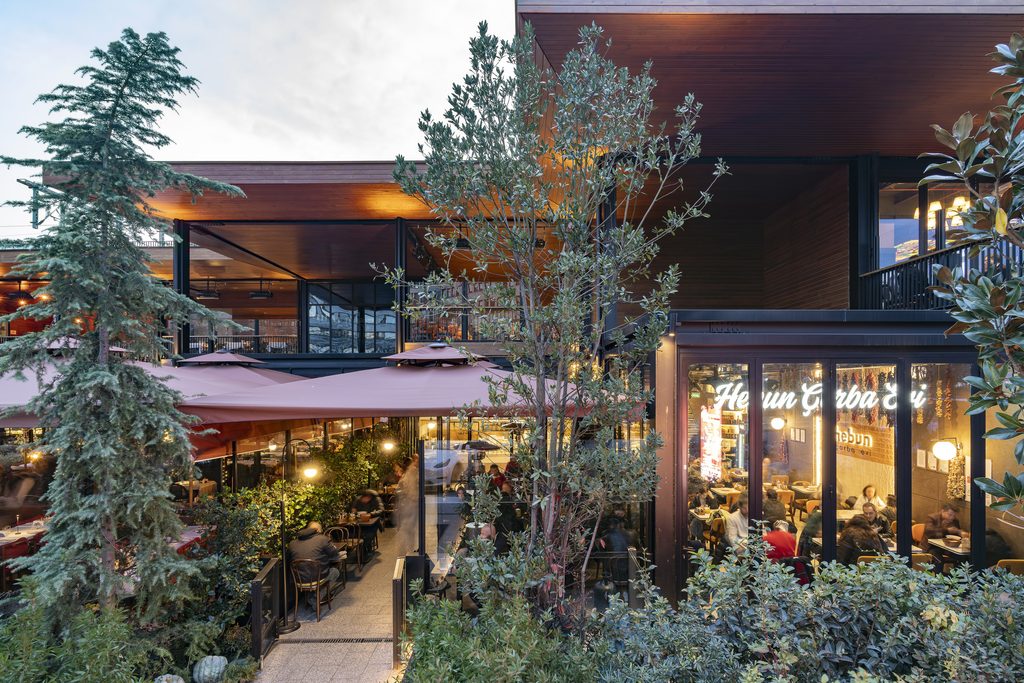
Kadıköy district has a very strong identity. How did you make sure that Terminal Kadıköy really belongs here?
We started by listening, including to residents who had concerns about the original mall-and-hotel scheme.
That dialogue became an important part of the project’s evolution and helped guide us toward a smaller-scale, F&B-led, open and more integrated concept.
Kadıköy is independent, creative, sociable and deeply connected to its street life. We therefore looked at international references for inspiration and methodology, but the intention was never to import a ready-made concept. We wanted to interpret those ideas through Kadıköy’s own culture, rhythm and character.
“Design for the flow you already have, and then earn the pause.”
Perhaps the clearest expression of that is in our tenant mix. A brand such as Cafer Erol, born in Kadıköy in 1807 and deeply connected to the district’s identity, is opening a new concept here. At the same time, we have tripled the site’s green cover and created open and semi-open spaces that preserve the feeling of being part of the city rather than enclosed away from it. The aim from the very beginning was not to create a sense of alienation, but rather a sense of reconnection. Take a neglected urban space, give it new life and create public value in a way that makes the community feel it belongs to them.
How did you develop the right tenant mix for a destination that needs local character and international appeal?
We had a few clear principles: concepts should not repeat one another, each should bring something new or distinctive, the brands themselves should be strong, and, perhaps most importantly, they should work together as part of one coherent destination.
We therefore prioritized brands opening their first Istanbul location, as well as established brands willing to reinterpret themselves for the project. At the heart of the entire concept is 7DE7, our own anchor brand, which we developed in collaboration with the Culinary Arts Academy. 7DE7 is entirely under our control and represents many of the ideas behind Terminal Kadıköy in one place. It brings together more than a hundred street-food options across around two dozen kiosks, integrated with a sports café and a strong social experience. In many ways, 7DE7 is the concept within the concept.
Do you believe open, mixed-use urban destinations are the future of retail?
I would put it this way: the future belongs to places that create genuine reasons for people to come together, and open, mixed-use formats are simply much better positioned to do that.
Physical places offer one thing that cannot truly be replicated elsewhere: the experience of being together: eating, meeting friends, watching live music or sport, experiencing culture and moving through public space. In that sense, the evolution towards more open, integrated and experience-led destinations is a very natural one.
Our advantage with Terminal Kadıköy was that we were able to design that from the very first line. And we could take the idea further. While many of the classic food halls are enclosed market buildings, Terminal Kadıköy is a semi-open urban destination integrated into a live transport hub, with its own public spaces and performance stage.
I believe that is where the industry is heading. Creating a genuine reason to come together is something that only a real place can truly own.
“The future belongs to places that create genuine reasons for people to come together.”
Istanbul continues to invest in ambitious new concepts. What explains this?
Istanbul is a young, highly dynamic metropolis of about 15.8 million people, in an extraordinary position between Europe and Asia. It also has a very strong culture of eating out, socializing and spending time outside. This creates a natural appetite for new places and new experiences. That makes real estate development an inherently active and constantly evolving market and Istanbul a natural focus for international investors, operators and brands.
If a city plans to transform a transport hub, what would be your advice?
My most important advice would be to design for the flow you already have, and then earn the pause. Understand the neighborhood, its people and its daily rhythms, but also watch younger generations closely. Their expectations are often the best indication of how cities will be used tomorrow.
Then, find your own anchor. It does not have to be a large physical space or a traditional anchor tenant. It could be a completely new experience. What matters is that it gives the place a strong identity and a genuine reason to stay.
For placemaking, I would take the classic principle ‘Think globally, act locally‘ one step further: learn from the world, but create something that could only belong to that particular city.
Meet Ece Demirpençe and explore Terminal Kadiköy
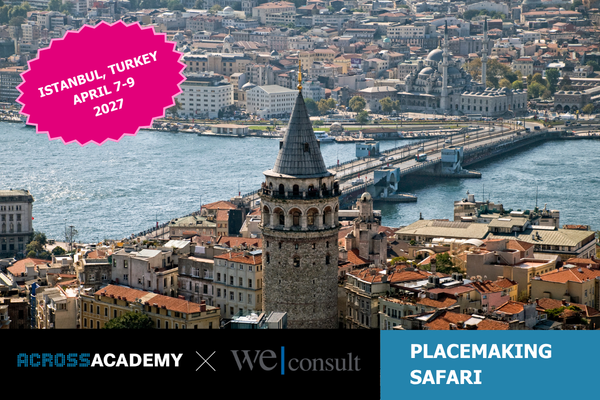
Terminal Kadiköy will be among the locations to be visited during the ACROSS Placemaking Safari in April 2027.
REGISTRATION
ACROSS ACADEMY presents
PLACEMAKING SAFARI ISTANBUL
Istanbul | 7-9 April 2026
NOTE: Seats are limited. Secure your place now.
📩 REGISTRATION VIA FILLED OUT FORM EMAILED TO
Reinhard Winiwarter
Publisher and Managing Partner ACROSS Magazine
r.winiwarter@across-magazine.com
+43 1 533 32 60-80