ACROSS: Ms. Paule, how would you describe EUROVEA‘s F&B strategy? What share of your tenant mix is dedicated to dining concepts?
Katarína Paule: Food and beverage is one of Eurovea’s strategic pillars, rather than simply an add-on to its retail offer. Thanks to our city-center location directly on the Danube riverfront, Eurovea offers the largest and most diverse F&B selection of any shopping center in Slovakia. Our long-term ambition is to maintain and further strengthen that position.
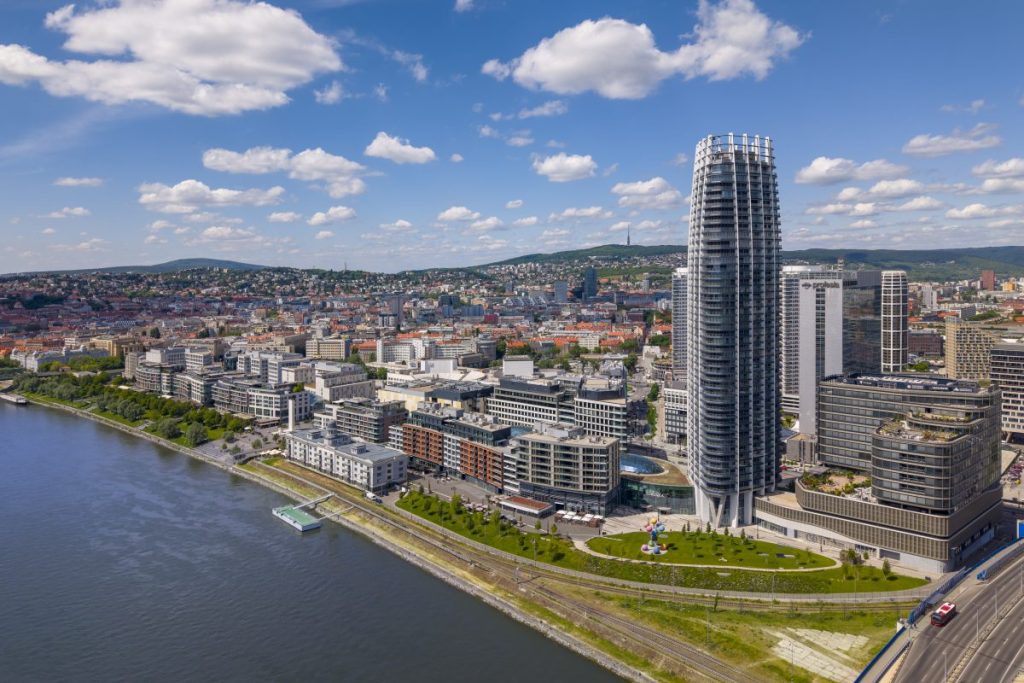
Our indoor F&B offer, comprising the food court and Food Hall, includes 35 units. These are complemented by 16 restaurants and cafés along the riverside promenade. In total, Eurovea features more than 50 F&B concepts, representing approximately 17% of the overall tenant mix by number of units.
The combination of indoor dining, restaurants along the promenade, and outdoor leisure activities helps us maintain more balanced footfall throughout the year. We continuously evolve the offer in line with changes in our customer base. We are attracting more young visitors and families, as well as residents of the surrounding apartments and employees from the nearby office buildings.
Therefore, we work with a broad range of price points, cuisines, and service formats – from a quick lunch to a full-service evening dining experience.

About Katarína Paule
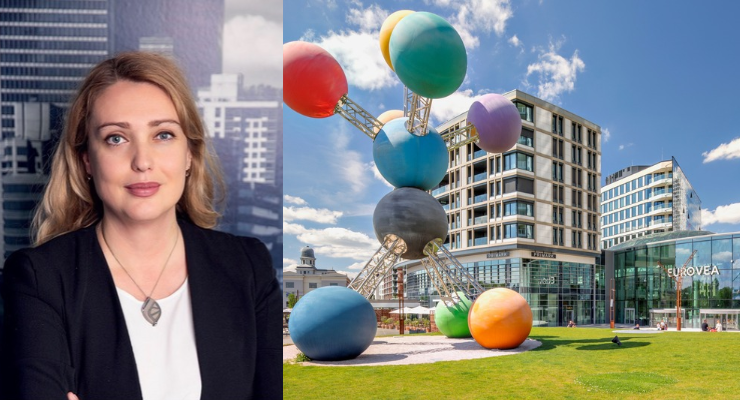
Katarína Paule has been the Leasing Manager of Eurovea in Bratislava, Slovakia´s largest shopping & leisure center, since 2020. After studying financial management and marketing in Bratislava at the Comenius University, faculty of Management and The Open University of London, she joined Penta Investment as project manager at Bory Mall development, then moved to Cushman & Wakefield Slovakia in 2015, where she has been heading the retail team and played a key role in development, leasing and releasing of most of the major shopping centers in Slovakia.
In your view, what does it take to create a successful food court?
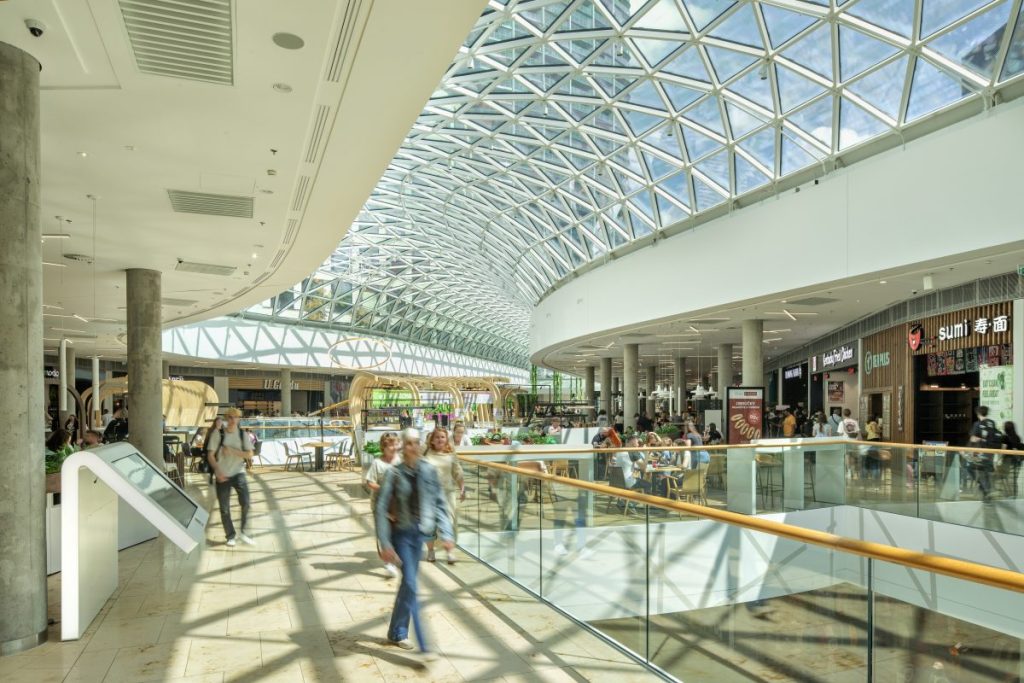
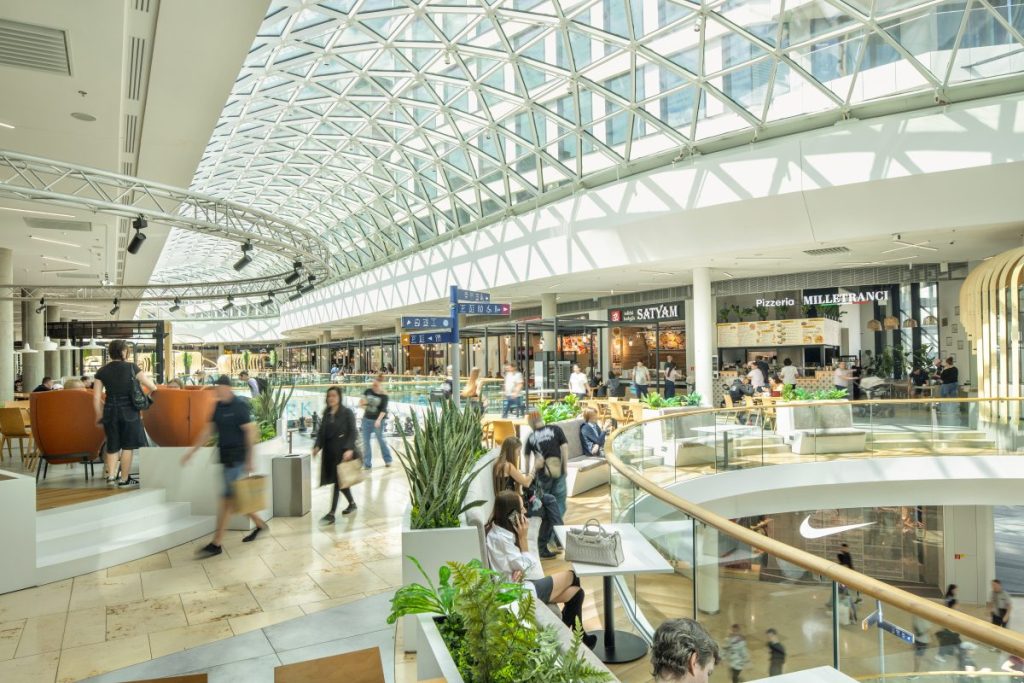
A successful food court starts with the right location within the shopping center. It needs to be easily accessible, highly visible, and supported by intuitive wayfinding. Natural daylight and proximity to other strong retail, entertainment, or leisure uses are also significant advantages.
The quality of the environment is equally important. Customers no longer want large, uniform spaces that resemble institutional canteens.
They expect an inviting destination with its own identity, high-quality lighting, and a variety of seating options – from communal tables and quieter areas offering greater privacy to spaces suitable for informal business meetings. Acoustics, cleanliness, and a strong sense of safety also are important.
The success of this approach at Eurovea has also been recognized internationally. In 2024, Eurovea’s food court received the prestigious FoodInSpace Award for design in the Food Hall category. The jury, comprising 16 experts from 10 countries, highlighted the way the space connects contemporary design with its urban surroundings, as well as its natural daylight and multifunctional zones for dining, working, relaxing, and socializing. The space was designed by the Spanish studio Reify.
From a commercial perspective, a carefully curated and continuously reviewed tenant mix is essential. A successful food court needs diversity in terms of cuisines, price points, and service formats, as well as sufficient flexibility to introduce emerging brands and test new concepts. The offer cannot remain static, particularly when a significant proportion of customers live or work nearby and visit regularly.
A robust technical infrastructure is another essential requirement. Sufficient capacity for electricity, gas, water, ventilation, and kitchen extraction directly affects both operational performance and the range of operators that can be accommodated. If these requirements are underestimated, the result is a more limited tenant mix and a lower-quality environment for customers.
Based on your experience, do visitors prefer a sit-down dining experience or quick-service and fast-food options?
It is not an either-or question. Customer preferences depend primarily on the purpose of the visit, the time of day, and the individual customer profile. During the working week, speed, value for money, and the ability to enjoy a quality meal within a limited lunch break are particularly important.
In the evenings and at weekends, visitors are more likely to choose a longer sit-down experience, table service, and an attractive setting.
At Eurovea, customers can choose a full-service restaurant on the Danube riverfront for a business lunch, a meeting with friends, or an evening meal combined with a visit to the theater or cinema. At the same time, they can enjoy a quick and accessible meal at one of the food court‘s units.
Some of our food court concepts also provide their own dedicated seating and offer a full restaurant-style experience. The strength of our F&B mix lies precisely in its ability to serve different customer needs, visit missions, and dayparts within a single destination.
Finally, what trends are you observing in shopping-center food courts? Would you say that they still influence the amount of time visitors spend at a shopping center?
The most significant trend is the transformation of food courts from purely functional dining areas into hospitality-led social destinations. Customers expect more than a diverse selection of food. They also look for attractive design, comfort, a variety of seating options, and an environment in which they genuinely want to spend time. Local and authentic concepts, healthier choices, and digital solutions for ordering and collection are also becoming increasingly important.
Variety remains essential, not only in terms of cuisine but also across price points and service formats. A successful shopping center must also create reasons for customers to use its F&B areas beyond the main lunchtime peak. At Eurovea, the food court’s location next to the cinema and fitness center supports activity across different dayparts, as does its proximity to a substantial office and residential catchment.
A strong F&B offer continues to have a direct impact on both destination choice and customer dwell time. Dining may complement a shopping trip, but it is increasingly becoming the primary reason for visiting a shopping center.
When combined with good accessibility, ample parking, cinema and fitness facilities, a strong events program, and the riverside promenade, Eurovea’s F&B offer encourages visitors to extend their stay and reinforces the center’s position as an all-day urban destination.