As demands for economic efficiency, flexibility, and customer experience continue to rise, store design solutions that combine experience and efficiency are becoming increasingly important.
Customers no longer evaluate places solely on the basis of assortment, offering, or price. Increasingly, what matters is how a place feels, how intuitively it works, and what personal value it provides. At the same time, demands for economic efficiency, space utilization, and operational processes are increasing.
At umdasch The Store Makers, we see this shift across industries. Whether in retail, fitness, hospitality, or branded environments, successful concepts increasingly combine experience and efficiency. The key lies in the intelligent use of existing resources. Spaces and touchpoints serve multiple functions simultaneously, combining communication, orientation, service, and brand presentation while creating value for operators and visitors alike.
This ability is becoming an increasingly important success factor. The strongest concepts are those in which individual elements perform several tasks, connect different requirements, and improve both the brand experience and economic efficiency. Experience and efficiency are therefore no longer opposites, but two sides of the same coin.
Two current projects by umdasch The Store Makers show what this principle can look like in practice: Galaxus Winterthur and JOHN REED Fitness Vienna Opera.
Small but powerful: One surface, several purposes
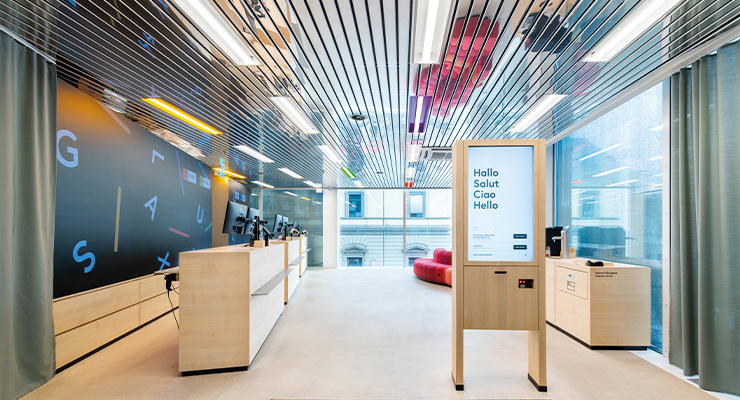
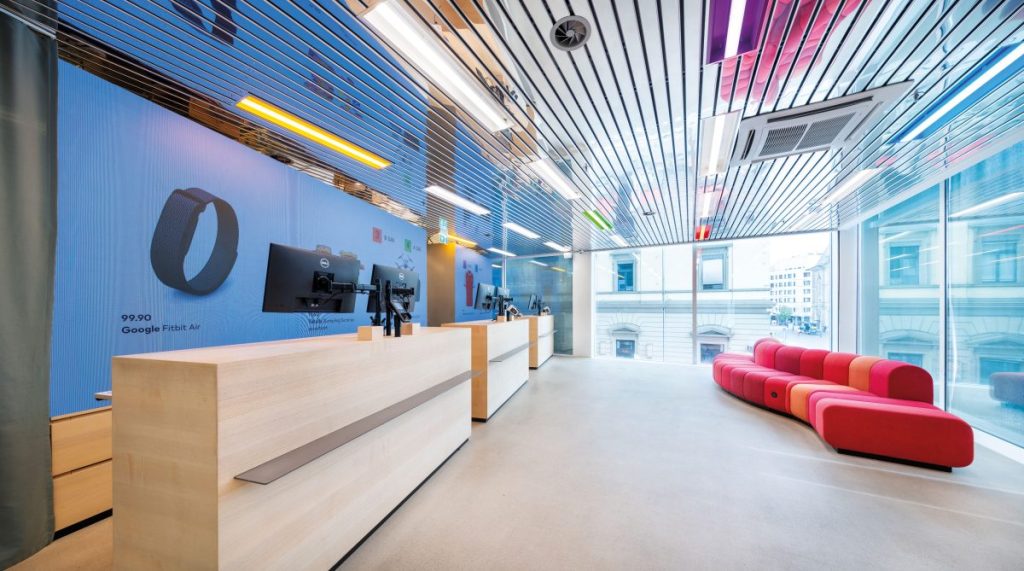
At Winterthur railway station, the umdasch Store Makers Digital Retail team created LED surfaces for Digitec Galaxus covering around 26 square meters, including a corner installation.
At first glance, the installation appears to be an attention-grabbing brand presence. At the same time, however, the LED surfaces serve several functions. They help guide customers through the store, form part of the queuing system, and provide clear orientation. They also communicate brand messages, product information, and current content.
Instead of installing several separate systems, a single touchpoint combines different requirements on the same surface. This is precisely where the connection between experience and efficiency becomes visible.
The screens create a modern, dynamic brand experience while also increasing the efficiency of the store. They save space, reduce the complexity of different communication channels, and enable flexible, centrally controlled content distribution. At the same time, they create a seamless connection between the public space in front of the store and the experience inside.
What becomes particularly clear here is that digital solutions are no longer an additional element. They increasingly form the bridge between emotional brand presentation and operational efficiency. Digital touchpoints can inspire, inform, guide, and simplify processes, often at the same time. This is why they are becoming a strategic success factor for modern brand environments.
The Galaxus store in Winterthur is an example of how space can be used more intelligently by having one solution perform several functions, thereby increasing both customer value and economic efficiency.
Delivering high-quality experiences efficiently
The connection between experience and efficiency is not limited to traditional retail, as demonstrated by the new JOHN REED Fitness Club in Vienna‘s Kärntner-Ring-Hof.
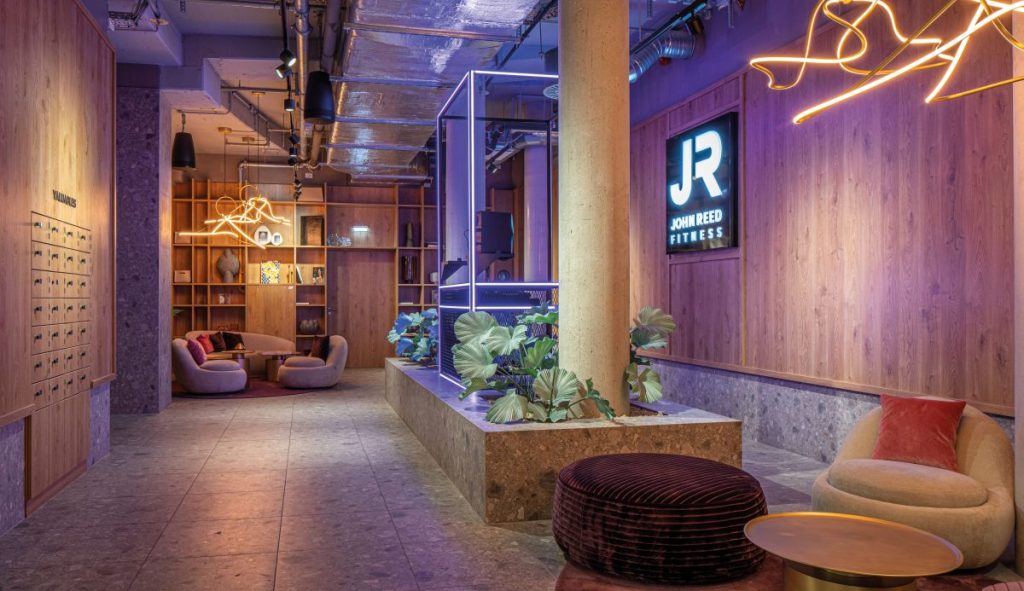
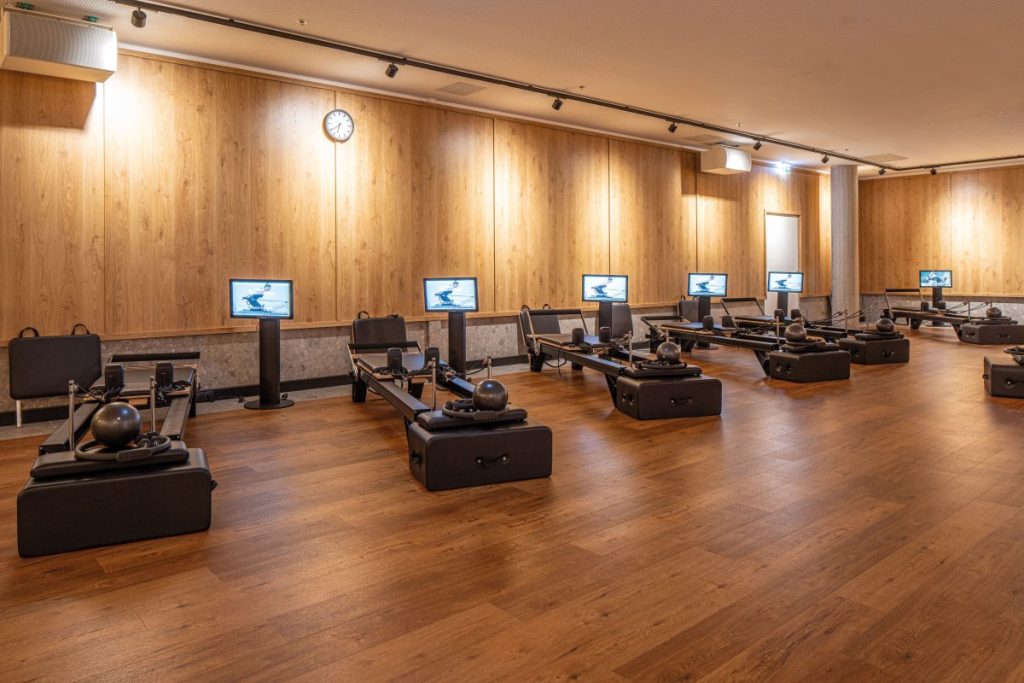
A premium fitness club covering around 2,400 square meters was created in the former Ringstrassen Galerien, combining training, lifestyle, wellness, and design. The new location brings together high-quality training areas, a generous reformer Pilates area, wellness zones, and a Coffee & Health Bar to create an integrated experience, all within an environment that is fundamentally focused on efficiency.
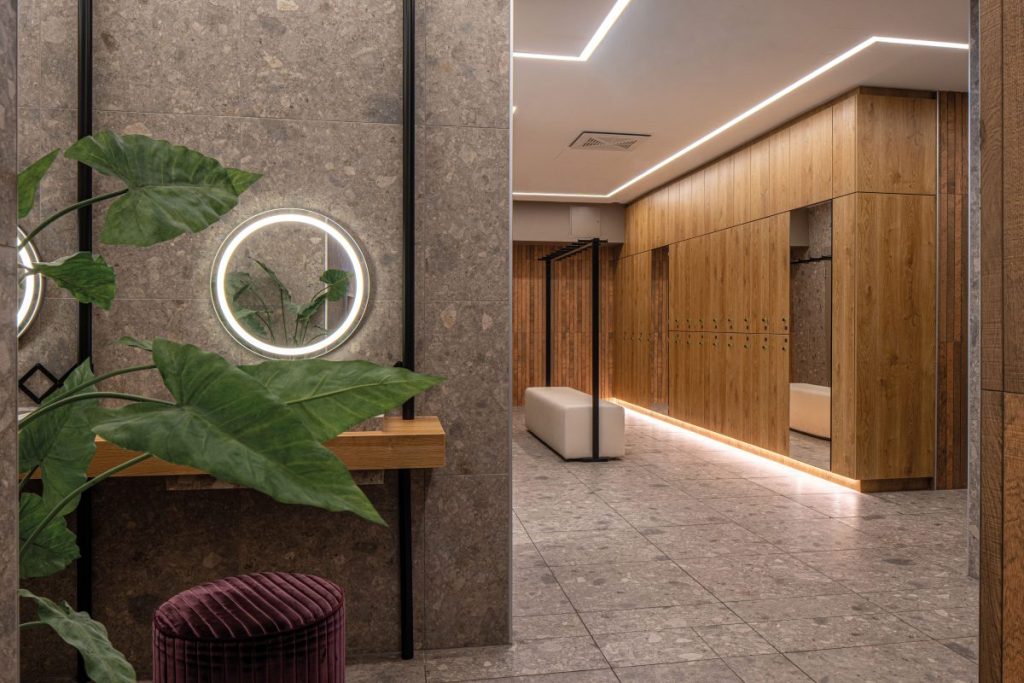
Lockers, changing-room furniture, platforms for training equipment, the DJ booth, wall and ceiling cladding, planters, and the furnishings for the food and beverage area were all custom-made by umdasch The Store Makers.
“A seamless connection between the public space in front of the store and the experience inside.”
The project demonstrates that efficiency does not mean sacrificing quality or atmosphere. On the contrary, a consistent value-engineering approach makes it possible to bring design ambitions and economic requirements together at an early stage. Materials, constructions, and production processes are planned so that they achieve the desired brand impact while also being produced and implemented efficiently.
The elements do more than shape the atmosphere of the club. They structure the different areas, support orientation within the club, and contribute to intuitive use of the space. Functional components thus become defining elements of the brand experience.
This is where experience and efficiency come together: the individually manufactured elements create the distinctive JOHN REED atmosphere, appeal to visitors emotionally, and can at the same time be realized and operated efficiently.
That is the crucial difference in modern spatial concepts: design is no longer understood as an end in itself, but as part of an integrated overall concept. Every element needs to be aesthetically convincing while also making a functional contribution.
The future belongs to multifunctional spaces
Whether in hospitality, health and fitness, or traditional retail, the development is the same everywhere. Space is becoming more valuable. Customer expectations are rising. Processes are becoming more complex. At the same time, people increasingly want inspiring places that they enjoy visiting and remember.
Successful concepts are therefore no longer based on either-or thinking, but on combining both sides. Brands need experiences that engage people. At the same time, they need structures and processes that work economically and remain scalable over the long term.
The real challenge is connecting the two. This is where the greatest value is created.