A former department store becomes housing. An empty office building turns into a hotel, healthcare facility or multi-tenant workspace. A redundant shopping center makes room for leisure, culture, gastronomy or community uses. Across European cities, buildings are beginning to acquire second lives as their original purposes lose relevance.
The phenomenon is often discussed as a response to vacancy. But that is only part of the story. A building can become obsolete for one use without becoming obsolete as an asset or as part of the city. The more interesting question is therefore not simply what can be put into an empty building, but what the place needs next.
That question is becoming increasingly important for retail real estate. Retail remains one of the strongest generators of footfall, visibility and urban activity. But in many locations, it can no longer be expected to carry the entire burden of making a place relevant on its own. The future may lie less in replacing retail than in creating stronger relationships between retail and other uses.
For Anastasia Stolzenburg, Business Development Manager at umdasch The Store Makers, this is precisely where transformation should begin.
At umdasch The Store Makers, transformation is therefore understood as more than a construction task. It starts with identifying the future potential of a building and continues through concept development, design, fit-out and implementation. The ability to connect strategy and execution has become a key success factor in adaptive reuse projects.
“The honest first question is not ‘What do we do with the space?’, but ‘What does this location need over the next 10 to 15 years, and what does the existing building actually allow?’” she says.
Read The Place
There is a temptation to start with the most obvious answer. Housing is one of the most frequently discussed options for redundant commercial space. Hotels, offices, healthcare and leisure are other possibilities. But a use that works somewhere else does not necessarily work here.
The problem is both strategic and physical. A former department store may offer a highly attractive central location and substantial floor area, yet its deep floorplates and limited access to natural light can make some conversions difficult. A building may have excellent bones for one purpose and be fundamentally unsuitable for another.
Stolzenburg sees a recurring mistake in precisely this premature commitment to a solution.
“The most common mistake is falling in love with the use before understanding the building and the location.”
She describes two versions of the problem: following a market trend without properly examining the building or selecting a use because the numbers look attractive in a spreadsheet, only for planning, structural, fire-safety or building-services requirements to undermine the business case.
The better sequence is therefore not vacancy-use-conversion. It is place- people-need-building-possibilities- business case.
This is also where a more holistic redevelopment approach becomes critical. Successful transformations require more than a viable business case. They need a realistic understanding of the existing structure, regulatory constraints, future user requirements and operational feasibility. Combining strategic consultancy, design expertise and implementation know-how early in the process helps to reduce risk and create more resilient concepts.
That sounds straightforward. In practice, it requires a change in mindset.
Think In Urban Ecosystems
This is where adaptive reuse becomes a placemaking issue.
The success of a transformation cannot be measured solely by whether an empty property becomes occupied again. Increased footfall, longer dwell times, a stronger local offer, community acceptance and the environmental value of retaining existing structures can also form part of the equation.
And this does not mean that retail is losing its role in the city. On the contrary. Retail remains an essential component of many successful urban environments. What is changing is the role it plays within them.
“The most common mistake is falling in love with the use before understanding the building and the location.”
When a department store or shopping center loses part of its original retail role, simply replacing every lost square meter with another retail offer may no longer be the only or best answer. The opportunity can be to complement the remaining retail offer with uses that create new reasons to visit, stay and return.
Food and beverage can extend dwell time. Leisure may create destination value. Culture might provide identity. Healthcare and other services can generate regular local demand. Offices and housing can bring people into an area at different times of day.
Public spaces can connect these activities and turn them into a coherent experience. The result is not necessarily less retail. It can become a stronger environment in which retail has more reasons to succeed.
This also changes the way mixed-use should be understood. Rather than applying a standard formula of retail, office, residential and leisure, the combination of uses can emerge from the needs of the location and the characteristics of the building.
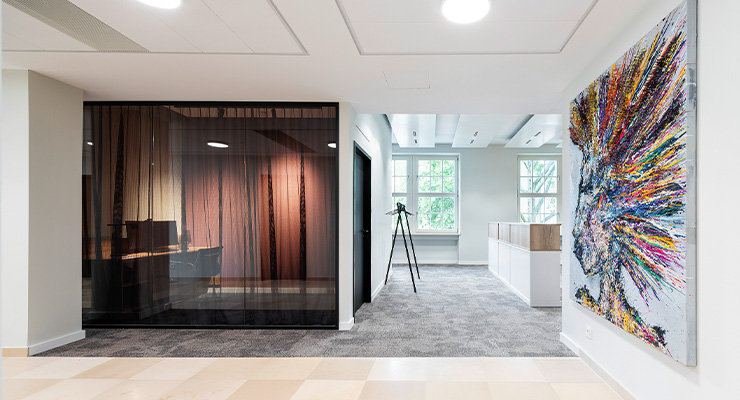
The transformation of Düsseldorf‘s Kämmerei offers a great example. Gastronomy, retail, contemporary workplaces and public areas now all interact within the historic building. The underlying question was not simply how to refurbish the property, but what role it should play for Düsseldorf and its people.
In this sense, mixed-use is often the result of good placemaking rather than its starting point.
Test Before You Invest
If the future is uncertain, there is another option besides making a large investment based entirely on assumptions: test it.
Temporary uses are often treated as a way of keeping an empty property alive until a permanent project arrives. But they can be much more valuable than that. A temporary activation can provide information that no conventional feasibility study can fully reproduce.
“A feasibility study tells you what is possible and what works financially based on assumptions. A temporary use shows real footfall, real dwell time and real willingness to pay.” Stolzenburg says.
It can also reveal how people actually behave in a building. Which entrance do they choose? Where do they linger? Which areas remain empty? What is too dark, too noisy or difficult to reach?
And which use creates an energy that the property previously lacked?
This turns temporary activation into a form of live market research. It can test demand, generate local awareness and involve potential users before a long-term concept has been fixed.
For Stolzenburg, that makes temporary use a strategic instrument rather than a placeholder. It can generate cash flow, strengthen the connection between a place and its community, and test the market in real conditions.
The approach is also visible in former retail properties. At the former kika/Leiner locations, temporary activation is being combined with longer-term transformation: the former central warehouse in St. Pölten has been opened as a pop-up padel venue, while numerous other sites are currently being explored for a variety of reuses.
Such projects illustrate an important lesson: temporary activation is not merely about filling vacant space but about generating insight. Flexible fit-out solutions, modular interventions and rapid implementation make it possible to test ideas in real-life conditions before committing to major investments.
Look Beyond The Next Use
Adaptive reuse also changes the way value itself is understood.
For an owner, a truly successful transformation obviously needs to make economic sense. But a building can also generate value by bringing people back to a location, supporting surrounding businesses, providing services that were previously missing or reconnecting a neglected part of the city with its community.
For retail destinations, this broader perspective can be particularly valuable. A stronger local ecosystem can provide the footfall, dwell time and diversity of reasons to visit that individual retail concepts cannot create alone.
The question is therefore not which use should replace retail. It is which combination of uses can make the place more relevant. This is where adaptive reuse and placemaking converge. The building becomes a platform for different activities, rather than a container for a single predetermined function. And the surrounding urban environment becomes part of the value proposition rather than merely the context in which the property happens to sit.
There is also a temporal dimension. Different uses activate a location at different times and for different reasons. A workplace may generate activity during the day, restaurants and leisure in the evening, housing throughout the day and retail across multiple periods.
The objective is not simply to maximize occupancy, but to create a more continuous and resilient pattern of urban life.
Shape The Transformation
There is one final implication.
If buildings are increasingly being transformed because their original uses no longer work, today‘s successful solution should not become tomorrow‘s rigidity.
Adaptability therefore becomes part of the value proposition.
“Because uses will change more quickly in the future, the ability to convert a building must be planned from the outset. Adaptability is becoming a quality criterion and a value driver.” Stolzenburg argues.
This may be one of the most important lessons of adaptive reuse. The objective is not simply to find a second use for a building. It is to avoid making the next transformation unnecessarily difficult.
That means thinking about flexibility in layouts, infrastructure, access, floor plates and building services, but also about the relationship between the building and the public realm around it. A place that can accommodate changing needs has a better chance of remaining relevant as its users, markets and urban context evolve.
For cities and property owners, this points towards a more complex but also more promising form of placemaking. The future of an urban location may not depend on finding a new single anchor to replace the old one. It may depend on creating a network of complementary reasons to visit, stay, work, live, consume, meet and return.
Retail remains a crucial part of that network. But its future strength may increasingly depend on how well it connects with everything around it.
The second life of a building, then, is not simply an architectural exercise. It is a question of urban relevance.
Redevelopment asks what can be built. Adaptive reuse asks what an existing building can become. Placemaking asks what the place needs. The most successful transformations need to answer all three questions at once.