ACROSS: CC Real is primarily known for retail real estate. Is the move into Industrial & Logistics a change of direction?
Dirk Sosef: No. Retail remains a fundamental part of CC Real’s DNA and core expertise. Over many years, we have built deep capabilities in investing in, developing and actively managing complex retail assets. I&L is a strategic extension of that platform, not a replacement for retail. We see attractive growth opportunities in I&L and have therefore built dedicated specialist expertise. At the same time, we can leverage an established organization, investor relationships, asset management capabilities and a strong service culture. That broadens the platform and gives our capital partners access to additional opportunities.
Why does I&L look attractive now?
The sector has changed enormously over the past 15 years. What was once treated as an alternative asset class has become a mature and established part of the European investment market. The attraction is the combination of several structural demand drivers rather than reliance on a single theme. E-commerce remains important, but so do supply-chain de-risking, changes in manufacturing and new demand from sectors such as defence. In Germany, the occupied I&L stock (+84%) has materially outgrown GDP (+12%) since 2013, while the market remains relatively undersupplied at around 1.25 square meters of I&L space per capita compared with roughly 4.5 square meters in the US.
“Retail and I&L are not opposing worlds. They are closely connected parts of the same economy, from the warehouse rack to the sales shelf.”
Does diversification into I&L also reflect challenges in retail?
Diversification naturally makes a real estate platform broader and more resilient, but I would not frame this as retail versus I&L. Every property sector is changing and has its own challenges. In retail, there is now much greater clarity about the role of physical stores. The idea that e-commerce would simply replace bricks-and-mortar retail has not materialized. Physical and digital retail coexist. For CC Real, the question is therefore not which asset class “wins”, but where our expertise can create value. We continue to see opportunities in retail while selectively expanding our capabilities in I&L. We see retail and I&L as complementary to each other, with each strengthening the breadth and resilience of our platform
Retail and Industrial & Logistics are often discussed separately. How closely are they actually connected?
Very closely. To say it in a simple way, every product sold in a shopping center has passed through a warehouse. Retail and I&L are parts of the same value chain. There is also overlap on the occupier side: many retailers are significant users of I&L space. Our existing relationships can therefore create additional insight and, in some cases, opportunities in I&L. The broader connection is our operating mindset. In retail, we have long believed that you need to understand the tenant’s business. The same principle applies in I&L.
What does that retail mindset mean in Industrial & Logistics?
It means moving beyond the traditional landlord model. For an I&L occupier, the cheapest rent is not necessarily the most economical solution.Transport costs, connectivity, access to labor, energy availability and operational efficiency and flexibility can be much more important. Urban delivery costs can account for half of total supply-chain costs. A well-connected property closer to customers and employees may command a higher rent, but still improve the occupier’s overall cost position. That is why understanding the tenant’s operation is crucial. Service orientation, attention to detail, understanding differences of locations at micro-level and active management are capabilities we can transfer directly from retail.
“The value does not simply come from owning the building; it comes from understanding the location and demand, staying close to occupiers and continuously improving the asset.”
What exactly is CC Real targeting within I&L?
Our focus is Urban I&L rather than the classic large single-tenant out of town big box. We are interested in flexible, predominantly mid-sized and multi-let assets in or close to major economic centers. These properties should be able to accommodate different uses – warehousing, light manufacturing, assembly, B2B and B2C logistics, last-mile activities, showrooms or related urban business uses. Flexibility is essential. If one occupier leaves, the space should be easily adaptable for another type of business. That broad potential occupier base improves resilience and is supported by active asset management.
Why focus on Germany and Austria, and particularly on the large economic centers?
Our strategy is deliberately selective. We focus on large, resilient economic centers with deep and diverse occupier demand, constrained land supply and strong infrastructure. In Germany, that means for us primarily the corridor from the Rhine-Ruhr region through Cologne and Frankfurt to Stuttgart and Munich. In addition, the Vienna Metropolitan Area is a key target region within our Urban I&L strategy. These are markets where the underlying economies are strong and where new supply is difficult to create. Across major DACH economic centers, average vacancy is below 3.0% in the market data we track. At the same time, land scarcity and lengthy planning processes continue to restrict new development – a positive for investors. That combination of demand depth and supply constraints is central to our investment conviction.
You place considerable emphasis on “boots on the ground”. Why is that so important in Germany?
Because Urban I&L is fundamentally a local business. You cannot successfully manage these markets from a distance. You need to understand local occupier demand, know owners and municipalities, identify opportunities early and be close enough to manage assets actively. That is why we have a dedicated I&L team in Stuttgart, involved across the investment lifecycle – from acquisitions and leasing to capex, value-add initiatives and asset management.
Local connectivity is also critical for accessing off-market opportunities. At the same time, the team is embedded within the wider CC Real platform. So we combine local entrepreneurial execution with the capabilities of an established international investment and asset manager.
What role does active asset management play? Is I&L not much simpler to manage than a shopping center?
A stabilized big-box logistics asset can certainly be less management-intensive than a shopping center. But that is not where we see the most interesting opportunities.
Our strategy has a strong value-add component: repositioning and refurbishing older assets in established and constrained locations, improving space efficiency, upgrading ESG performance and energy infrastructure, adapting unit sizes and, where appropriate, pursuing brownfield development. That is actually another parallel with retail.
The value does not simply come from owning the building; it comes from understanding the location and demand, staying close to occupiers and continuously improving the asset.
“For an I&L occupier, the cheapest rent is not necessarily the most economical solution.”
What will make I&L assets future-proof?
Flexibility, location, energy and ESG. Automation and robotics are changing technical requirements, while electrification will increase the importance of grid capacity and charging infrastructure. Labor availability is another major factor, which means a good working environment and accessibility matter more than they did in the past.
Sustainable buildings also have a clear commercial advantage: they can reduce operating costs, help occupiers meet their own ESG targets and remain attractive to investors and lenders.
In a land-constrained urban market, a flexible existing asset that can be upgraded may be extremely difficult to replicate.
What should investors who know CC Real mainly from retail take away from the I&L strategy?
Above all, continuity. Retail remains part of our DNA and continues to be a core pillar of CC Real.
I&L broadens the platform, but the underlying principles are the same: invest in markets we understand, stay close to occupiers, manage assets actively and focus on situations where we can create value. We are not trying to be everywhere. We are building a targeted Urban I&L strategy around markets where we have strong conviction and local execution capability.
And in the end, retail and I&L are not opposing worlds – they are closely connected parts of the same economy, from the warehouse rack to the sales shelf.
About Dirk Sosef
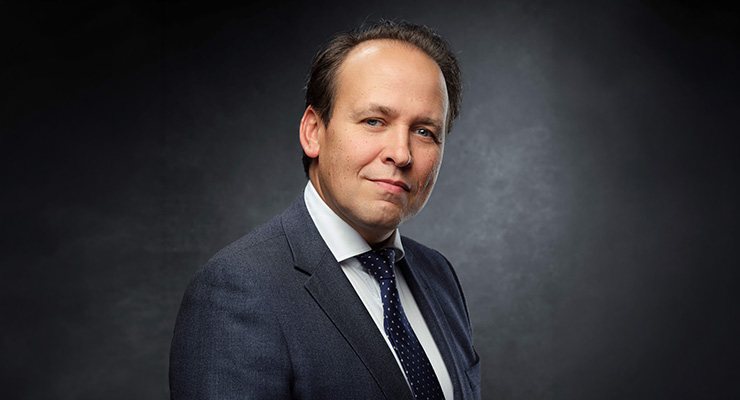
Dirk Sosef has more than 15 years of experience in Industrial & Logistics real estate across 17 European countries, responsible for I&L strategy and positioning towards capital partners. He previously held research and strategy leadership roles at CTP and Prologis Europe, and is MRICS qualified. His focus: translating structural market trends into asset-level investment opportunities and long-term resilient strategies.