ACROSS: In most segments, recent trends are all pointing towards AI, and the same rule applies to the retail sector. How would you describe the key differences compared to directions in the past?
Zsolt Kákosy: In the past, retail trends centered on the online-versus-brick-and-mortar dynamic and the rise of experiential shopping, where customers visited stores for the experience rather than just the product. Some digitalization already happened like POS systems, barcodes, loyalty programs and EREP systems. That still holds, but AI adds a new, data-driven layer on top: it processes vast datasets so quickly that footfall and turnover trends can be identified much earlier than before. It allows hyper-personalization like individualized offers, operations move from reactive to predictive, automation increases and the omnichannel experience becomes more frictionless.
AI is also blurring the line between online and offline, as consumers increasingly interact with conversational AI agents in physical stores alongside human staff.
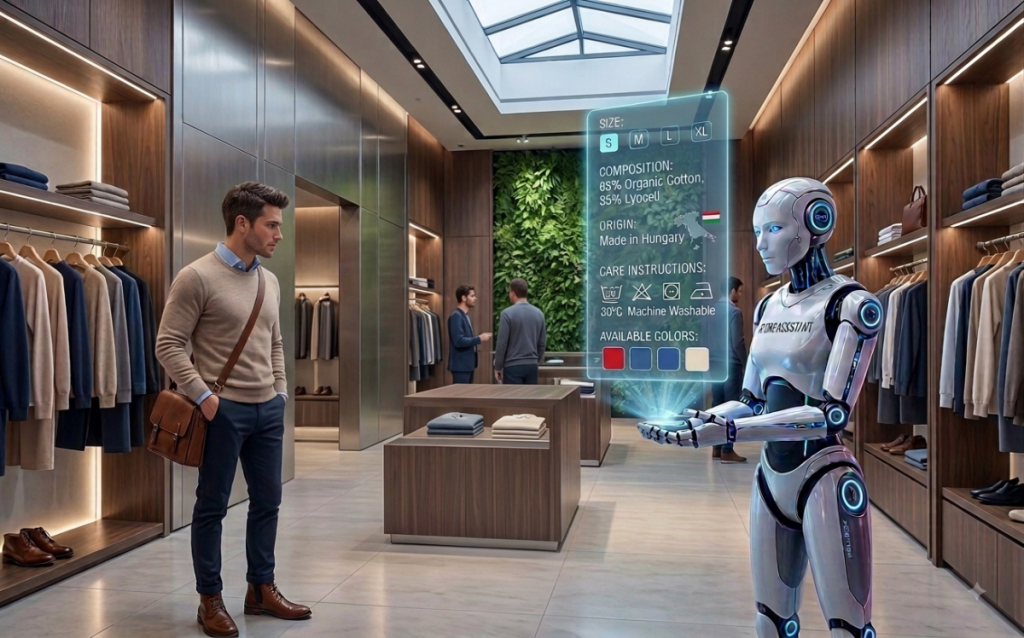
Beyond customer-facing shifts, property operations are becoming more data-driven too: sensor processing, automated invoicing, and robotics, from cleaning robots to eventual humanoid service robots.
Interestingly, as AI expands, genuine human connection becomes even more valued in the shopping experience. Human expertise, intuition and direct customer interaction remain essential; AI is a powerful aid, not a replacement. That said, this only works if AI is used responsibly, so questions around data privacy, transparency and human oversight are already relevant even at this early, exploratory stage, not just once AI is fully rolled out.

About Zsolt Kákosy
Zsolt Kákosy is Deputy Managing Director and Head of Property Management at ICON Real Estate Management. He is also an RICS Fellow and contributes to RICS’s regional work in Europe, including discussions on the future of the built environment, professional standards and market development across CEE. He is a Member of the RICS Europe World Regional Board, a Member of the RICS MEG in Hungary and Chair of the Workspace & Facilities Management Committee of AmCham Hungary.
Speaking of retailers, how has tenant behavior changed as a result? What are retailers now expecting from their physical stores that they weren’t considering a decade ago?
Tenant behavior started shifting with e-commerce, as stores increasingly became showrooms or pick-up points and AI is accelerating that. Physical stores are now logistics assets: click & collect points, part of the last mile distribution system. At the same time, retailers are bringing AI into the in-store experience itself, such as AI shopping assistants, to engage more digitally-oriented generations.
Physical stores themselves have also evolved. Retailers now look for greater flexibility: spaces that support omnichannel operations, adapt quickly to changing consumer needs, and deliver operational efficiency alongside a superior customer experience.
We’re also seeing digital-native brands that once traded exclusively online open flagship stores to strengthen their brand presence and build direct relationships with customers. This shows that retail destinations aren’t diminishing; they’re evolving beyond points of sale into places for brand experience, engagement and community.
“If routine purchases are delegated to AI, consumers will increasingly visit stores for things AI cannot fully replace.”
Sustainability and ESG also remain a lasting priority for tenants, and AI now offers new tools to strengthen those efforts. Energy efficiency, carbon footprint and certificates relevant to ESG, e.g. BREEAM, WELL, Access4you, are all relevant factors. Responsible AI use, guided by frameworks like RICS’s new “Responsible Use of AI” standard, is increasingly part of that same ESG and governance conversation
A significant challenge for retailers comes from the very tool they intend on using: AI-driven agentic commerce is already gaining ground. What are your thoughts on the matter?
I think agentic commerce may become one of the biggest disruptions to retail since the emergence of e-commerce itself.
Agentic commerce means AI agents communicating with each other and even purchasing autonomously, for example a smart fridge detecting it’s out of milk and ordering more. I think this will mainly work for everyday, low-value items, at least at first, since giving an AI agent direct access to a bank account is a real risk. I can’t yet imagine an agent independently buying a car or a fridge, but milk, certainly. However, AI may ultimately remove direct interaction with retailers’ websites and apps from large parts of the customer decision-making process. AI becomes the new interface that compares thousands of products, checks stock availability, evaluates reviews, tracks price changes and discounts, and even places orders automatically.
As a result, AI-readability will become increasingly important, while impulse purchases may decline in certain product categories. Cybersecurity is a real concern here too: data theft and other risks mean retail properties and systems need to be properly protected.
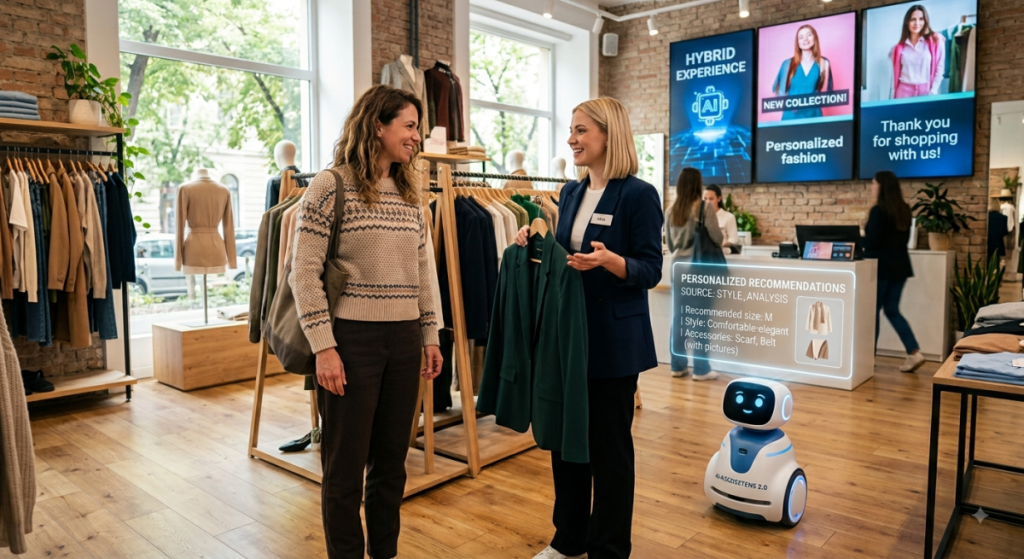
On the other hand, shopping centers and physical stores could become even more important. If routine purchases are delegated to AI, then consumers will increasingly visit stores for things AI cannot fully replace like social interaction, brand engagement, food experience, wellness, community engagement and entertainment.
Landlords often say, “when the tenant thrives, the asset flies.” As a seasoned expert of the field, how do you think retail property owners can accommodate their tenants in their AI journey?
Honestly, in the CEE and SEE region we’re not quite there yet. It’s still largely theoretical, but I’m sure in CEE and SEE, adoption will not be uniform. Large institutional owners and international retailers will move faster, while smaller landlords and tenants may be held back by cost, data quality, skills, and infrastructure. That is why the role of professional bodies such as RICS is important: to help the market adopt AI in a responsible, transparent and professionally accountable way.
Nonetheless, the direction is clear. Landlords can help make shopping centers “AI-ready:” strong bandwidth and no dead coverage zones, since AI depends on large data flows. They can also support smaller tenants, who may lack the resources of major chains, by developing model store concepts to help them adopt AI. On operations, buildings full of sensors — motion, heat, CO2 — feed the BMS, and AI layered on top of these can boost efficiency, though I wouldn’t give it free rein: an engineer should still set the rules and ideally stay involved in daily oversight.
What’s retail-specific is real-time footfall heat-maps: smart cameras have the ability to segment visitors by age or gender and trigger targeted messaging through displays or store apps. It’s complex and won’t happen overnight, but retailers with strong apps and data already will pull further ahead. The market is likely to polarize, much as it did with e-commerce.
“Regulation shouldn’t be seen solely as a constraint.”
Beyond infrastructure and operations, property owners need to become true partners to their tenants. That means supporting retailers with knowledge, data and collaborative innovation: anonymized footfall data, customer behavior analytics and shared digital services can help tenants make better-informed decisions on workforce planning, merchandising and marketing.
The most successful shopping centers of the future won’t just provide retail space, they’ll act as technology and business partners, helping tenants innovate, grow and stay competitive. All in all, data and data quality will become more important, while connectivity and IoT integration will be essential.
Staying with the landlord’s point of view, owners and managers also show a tendency towards turning to AI solutions for footfall analytics, dynamic leasing, or tenant mix optimization. How do you see regulations influencing or perhaps limiting these efforts?
Wherever footfall analytics, leasing and tenant mix are involved, regulation will play a role, particularly the GDPR and the European AI Act.
AI’s growing role in areas like targeted advertising and tenant communication adds another layer to this, which is one of the reasons RICS’s new “Responsible Use of AI in Surveying Practice” standard is such an important reference point: at its core, it’s about using AI transparently and keeping a qualified person accountable for the outcome, rather than letting it run unchecked. That kind of clarity is exactly what gives landlords and tenants the confidence to adopt AI more widely.
At the same time, regulation shouldn’t be seen solely as a constraint. Clear rules can strengthen trust in AI solutions, which in turn accelerates wider adoption across the industry.
As RICS represents professionals across the built and natural environments, how do you see AI changing the way retail assets are valued, or the way leases themselves are structured in the future?
AI is unlikely to replace professional judgement in valuation, but it will significantly improve the quality and speed of market analysis, comparable evidence and scenario modeling. Ultimately, valuers will spend less time collecting data and more time interpreting it.
From a RICS perspective, the key point is that AI should support professional judgement, not replace it. It can help valuers process comparable evidence, test scenarios and identify market patterns more quickly, but the valuer remains responsible for the assumptions, methodology and final opinion. As AI becomes more embedded in valuation, transparency, data quality and professional accountability will become even more important.
RICS RESPONSIBLE USE OF AI STANDARD
Effective from March 9, 2026, the RICS Responsible Use of Artificial Intelligence in Surveying Practice professional standard establishes a global framework for the responsible use of AI across the built and natural environment sectors. It emphasizes that responsibility for professional advice and decisions must remain with qualified professionals and should not be delegated to AI systems. The standard covers key areas including data governance, risk management, procurement and due diligence, reliability of AI outputs, and client communication. Developed in response to the growing use of AI in professional practice, it aims to support transparency, accountability and trust in AI-assisted decision-making. By establishing clear guardrails for AI use, the standard helps organizations balance innovation with professional and ethical responsibilities. It also reinforces the importance of human oversight, ensuring that AI supports rather than replaces professional judgement.
Source: RICS, Responsible Use of Artificial Intelligence in Surveying Practice
Gartner suggests that AI agents could soon play a central role in how consumers shop, though the pace of adoption will depend on factors like trust, regulation, and business economics. Either way, it seems AI is moving from being an add-on feature to becoming part of the core infrastructure of commerce. Do you agree with that shift, and what would it mean for retail real estate specifically?
I broadly agree. AI is becoming as standard a tool as Excel or Photoshop. What’s different for retail real estate is how much wider its use can be, since retail is fundamentally B2C, unlike the more B2B-driven office and industrial sectors. The real opportunity is enhancing customer experience and enabling frictionless commerce, alongside efficiency gains in building operations. That means a building’s digital infrastructure will matter as much as its physical one, arguably more than today.
This also opens the door to “digital twins,” not just of buildings but of customers themselves, with AI agents eventually acting as digital actors in their own right. That’s a real transformation, not just new software layered on old processes; it requires genuine change management and workforce development.
As for shoppers sending an avatar or robot to shop for them — that feels distant, and I don’t believe it’ll become the norm, though a niche of consumers will likely be open to it. It will have consequences for retail real estate as well.
Retail assets heavily dependent on repetitive, functional shopping (groceries, household goods, certain pharmacy products, general essentials) may face greater pressure than destinations built around experience and engagement. Potential beneficiaries could include unique restaurants, food concepts, cafes, wellness-related services (healthcare, fitness etc.), entertainment concepts, luxury brands, flagship stores.