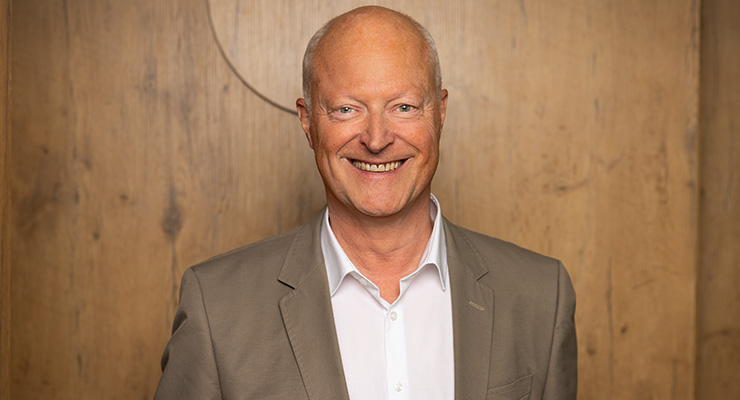
ACROSS: You have recently taken on the role of European Key Account Manager at Redevco. What is the purpose of the role, and what do you want to achieve by managing key tenant relationships at a European level?
Filip De Bois: Redevco is currently invested in 9 countries across Europe and the UK, with 250 professionals in seven offices. The total AuM is around €10.5b comprising some 340 assets, and approximately 2,500 contracts with tenants. A few hundred of these leases are with international retailers operating across several countries. We may be doing business with the same tenant in Germany, Belgium, the Netherlands or the UK without always knowing what colleagues in the other countries are negotiating.
My role is about connecting these different countries and relationships. Our local teams are extremely important because real estate is a local business. They negotiate locally and know their markets and assets best. But it is valuable to connect the offices and our relationships with international retailers, align the teams and share learnings, templates and guidelines.
Not only do I focus on protecting and enhancing the relationships with our existing tenants, I am also seeking for new brands and retailer names that can provide growth opportunities, and in addition I am exploring beyond retail in search of other type of tenants that can diversify our tenant mix, hotels for example.
What does that coordinated approach to international retailers look like?
Take a big fashion brand, for example. We have many negotiations ongoing with various labels of the brand. There might not always be perfect coordination between Spain, Germany, Belgium and other markets. If I can help connect those activities and make the different teams work more closely together, that is an important part of my function, and hugely beneficial to both the tenant and Redevco.
Operating with strong local teams, with for example shared research and sustainability functions, we already connect regularly, but we needed someone looking at the bigger picture and putting the different pieces together is a must in the rapidly evolving retail landscape.
Retailers are increasingly operating pan-European, with multi-country strategies. What does that change for landlords?
It means that we have to be on top of these retailers’ strategies and formats. With the international retailers already in our portfolio, it is crucial to understand where they are expanding, what formats they are looking for, who our contacts are and where we can find good matches and opportunities.
At the same time, there are international retailers entering new regions that we want to connect with and understand. Like in any other industry, knowing your customer is key to servicing them properly.
In addition to retail parks, that is about 50% of our total AuM, Redevco is also big in high-street retail, mixed-use schemes and developments. Especially, these retail real estate concepts are interesting for business beyond retail, like hotels and leisure operators. The objective is to be fully up to date about the trends and developments in these sectors and to know where different businesses want to expand and how.
“The more we know about each other, as tenant and landlord, the better we can match our needs and create opportunities together.“
Filip de Bois, European Key Account Manager Redevco
Can you describe Redevco‘s approach when working with a retailer pursuing a Europe-wide expansion strategy? Do Redevco and retailers actually coordinate their expansion strategies?
Absolutely. We ask retailers about their expansion plans and their „white spots.“ Where can we help you? What are your expansion plans and what formats are you looking for?
Take our major high-street redevelopments, for example. It is important that retailers are aware of what these often prime locations have to offer. If we know what retailers want in terms of locations, expansion plans, floor space and building requirements, we can anticipate their needs long before a project is finished and work with future tenants to ensure that the assets work for them. In London, we redeveloped an asset on Oxford Street, retail and offices, and as we have good connections with Puma, we were able to accommodate them in opening their first European flagship store. With other redevelopments ongoing in Geneva, Hamburg and Paris, it is key to work with potential tenants in an early stage of the project.
It is about putting the different needs together, based on expansion plans, white spots and formats.
The same applies to existing relationships. We have a good relationship with Carrefour in Belgium, for example. If we are looking to acquire retail parks in Spain where Carrefour is present, it makes sense to talk to Carrefour in Spain and understand its strategy and ideal format.
The more we know about each other, as tenant and landlord, the better we can match our needs and create opportunities together.
Does that also extend to investment, repositioning and development decisions?
Yes. We know quite a lot about the strategies of international retailers, and we try to align our strategies with theirs. Hypermarket operators, for example, are working on new formats and reducing the size of their stores. We discuss these developments with them and, depending on their strategies, we try to align our own investment strategy.
It is a two-way process. The retailer needs to understand what we are doing, and we need to understand where the retailer is going.
What does that coordination involve in practice? Are you also sharing information and market intelligence?
We try to. It is not always easy, but we try to get as much information as possible from retailers. Turnover and EBITDA figures, for example, are not always easy to share. But we try to be as transparent as possible because it is good for the tenant to understand our strategy and vice versa.
Within Redevco, we share information extensively. We have a common database, shared tools and contact lists, so colleagues in Germany can be aware of what is happening in Spain, for example.
My role will also involve aligning guidelines, whether on sustainability, templates or other aspects of our work. We also share development experience: where did things go wrong, what can we learn, and how can we improve?
We did a solar-panel project in Belgium, for example, and were able to apply what we learned there to a project in Germany. We are also working on charging stations with larger convenience tenants. Sharing that experience helps us move forward.
“I can act as the glue and connect the different countries.”
Filip de Bois, European Key Account Manager Redevco
Where does the European level actually create additional value compared with managing the relationship at asset or country level?
The more we know about each other, both the local teams and the tenants, the more we can develop a sense of partnership.
If, for example, we are looking in Spain for an electronics retailer for a 2,000-square-meter space, we can use our connections with companies in that space that we know already. We know which companies are looking for 1,000 square meters and which are looking for 3,000. The more we know about each other, the better we can find the right matches.
It is also important for existing tenants because retailers are constantly adapting their formats. Some are going bigger, others smaller, and the growth of online business is leading some retailers to reduce their physical footprint.
That can create opportunities. If a tenant has a 3,000-square-meter store but wants to move to a new 1,000-square-meter concept, we can work together on a new deal for a smaller store. That gives the retailer an opportunity to implement its new concept, while also creating space for another tenant in the scheme.
These are the kinds of opportunities we can discuss across borders with existing tenants as well as with retailers we want to bring into the portfolio.
Can knowledge gained from one tenant relationship, asset or market influence decisions elsewhere in the portfolio?
Definitely. We have carried out projects with international retailers in different countries and cities, and we share both the good and the bad experiences with the local teams.
Our development managers meet regularly, as do our asset managers. They share experiences from projects and contracts: what we can do better, what did not work so well, and what we can improve the next time.
Timing is a good example. We can learn how to plan developments better, how to work together with tenants and, where possible, how to avoid closing stores during construction works. It is about sharing experience and doing better next time.
“Ultimately, we are looking for advantages for our shareholders and clients, but also for the tenants.”
Filip de Bois, European Key Account Manager Redevco
I have often heard that „understanding local“ is essential. How do you coordinate across Europe without losing that local understanding? And what are the biggest challenges when dealing with very different markets, regulations, customers and assets?
The local business remains the most important part. Our colleagues in the different countries know the assets and the retailers.
If, for example, the expansion person of one of the familiar retailers in Germany is looking for opportunities, the German team is best placed to negotiate with them because they know each other and the market.
If we can then find an opportunity to take that relationship a second step across countries, that is where I come in. I can act as the glue and connect the different countries.
So the local teams remain absolutely essential. My role is an addition to what they do, not a replacement for it.
Sustainability is a good example of the challenge. Each country has different regulations and laws. At the same time, we have one global sustainability team, our targets and our values. The local asset and transaction management teams work closely with our central sustainability department to develop guidelines and implement measures that respect our global values while taking local requirements into account.
What, in your view, distinguishes a genuinely strategic tenant relationship from simply having a large number of leases with the same retailer across Europe?
It is about strong local teams working as one team, good coordination between those teams and strong partnerships with international retailers. Regular meetings, both internally and with the retailers, are important to build stronger relationships.
If a retailer can come to me at MAPIC and say, “Let’s have a coffee. What are you doing with Redevco in France, Spain or the Netherlands, and where can we meet?” then I can be an important point of contact, connecting the retailer to the wider Redevco platform.
That is ultimately what the role is about: connecting people, connecting markets and bringing the different opportunities together.
This article was originally published in ACROSS 4/2026.