by Giles Membrey, Managing Director, Rioja Estates

Seaside towns around the UK are facing a familiar set of challenges – seasonal economies, fragile high streets, ageing infrastructure and the long shadow of changing consumer behaviour hastened by the increasing popularity of online shopping. And yet these places also possess advantages that many inland towns lack – a strong tourist draw, a distinct sense of place, and the potential to reinvent themselves as year-round destinations.
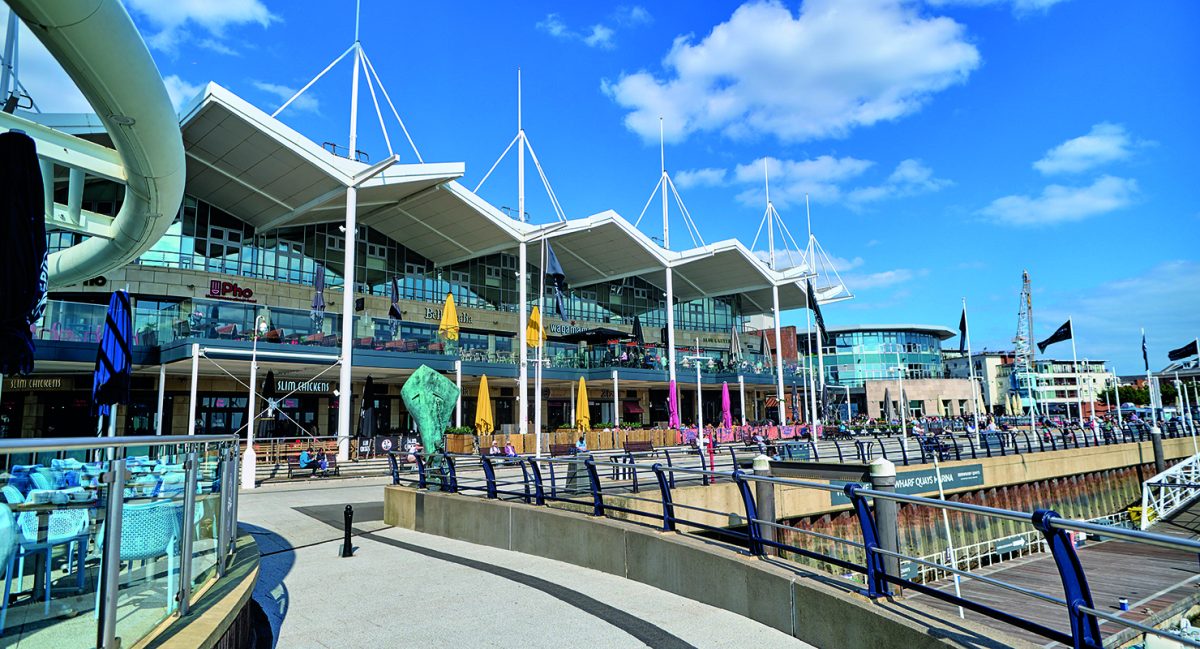
Increasingly, outlets are emerging as catalysts for that reinvention, as demonstrated by schemes such as Gunwharf Quays in Portsmouth, Bridgend in South Wales, Atlantic Wharf in Bideford, Freeport in Fleetwood and Honfleur in Normandy, France.
Instead of being simple shopping destinations, modern outlets are mixed-use, experience-led developments combining retail, leisure, hospitality and public realm. Their ability to attract large, diverse audiences and generate sustained footfall makes them uniquely suited to the regeneration needs of coastal communities.
Attractive Year-Round Destinations
Perhaps the most significant advantage outlets bring to seaside towns is their ability to extend the visitor season. Traditional coastal economies rely heavily on summer peaks, leaving businesses exposed during the off-season, whereas outlets are designed to operate as year-round destinations. With average dwell times of four to five hours and regional catchment areas drawing visitors from up to 90 minutes away, outlets bring a steady flow of visitors even in quieter months, supporting local employment and stabilising the wider economy.
A common concern is whether outlets draw trade away from existing high streets. However, evidence increasingly shows the opposite. Because outlets tend to host brands not normally found in traditional shopping centres or high streets, they complement town centers rather than competing with them. Visitors attracted by the outlet’s retail and leisure offer frequently venture into the wider area to explore seafront attractions, independent shops, heritage sites and hospitality venues. The outlet becomes a gateway, not a barrier, to the rest of the town or city.
Booster for Local Economy
Tourism is one of the strongest predictors of outlet success. Seaside towns, with their beaches, promenades, piers and family attractions, are natural candidates. Crucially, today’s outlets reflect changing visitor expectations, with guests increasingly seeking experiences rather than just transactions. Many outlets now integrate cinemas, family entertainment, restaurants and landscaped public spaces, positioning themselves as leisure destinations as much as shopping destinations.
Beyond their immediate retail offer, outlets deliver economic and social value that is often underestimated. Perhaps the most visible benefit is job creation. A typical outlet supports hundreds of roles across retail, hospitality, facilities management, security, logistics and guest services, many of them year-round and accessible to local people. This stability is particularly important in coastal towns where employment patterns can be volatile.
Benefits for Local Population
Outlets also act as catalysts for skills development. Many operators work closely with local colleges and training providers to create pathways into retail, customer service, digital marketing, hospitality and facilities management. Apprenticeships, work-experience placements and accredited training programmes become part of the ecosystem, giving young people and career-changers a route into long-term employment.
Tourism benefits are equally significant because visitors who may previously have come just for the beach or promenade now have an additional reason to visit, stay longer and spend more. This strengthens the hospitality sector, boosts hotel occupancy and supports attractions, museums and independent businesses that rely on steady footfall. In many cases, the outlet becomes part of the town’s tourism identity, sitting alongside the seafront, pier or waterfront as a core component of the visitor offer.
Coastal communities face a structural challenge that inland towns do not: with the sea on one side, their catchment area is effectively halved. Accessibility therefore becomes critical. Strong road and public transport connections, clear wayfinding and seamless links to regional population centres help outlets draw from a wider area while also improving connectivity for the town itself.
Scalable and Place-Sensitive Model
Perhaps the most transformative impact, however, is the role outlets play in attracting inward investment. Their ability to deliver high footfall, strong brand partnerships and sustained economic activity sends a powerful signal to the market. Investors, restaurateurs, hotel operators and leisure providers are far more likely to commit to a town that demonstrates confidence, momentum and a clear trajectory of growth.
We know that many seaside towns face climate-related challenges such as coastal erosion and flooding. Modern outlets are therefore increasingly designed to align with local sustainability ambitions through environmental measures, sustainability certifications, improved bicycle and pedestrian access, enhanced public transport connections and biodiversity initiatives.
Outlets succeed in seaside locations because they fit the needs of coastal regeneration. They attract visitors, extend the season, create jobs and generate inward investment while supporting the existing town centre rather than undermining it. Alongside new public spaces that enhance quality of life, they help reposition coastal towns as vibrant, year-round destinations.
At a time when coastal communities are seeking bold, deliverable developments that can shift their economic trajectory and raise their position in the retail hierarchy, outlet-led regeneration offers a proven, scalable and place-sensitive model.

About the Author
Giles Membrey is the Founder and Managing Director of Rioja Estates Ltd. He was responsible for setting up the first factory outlet centers in the UK and for several further outlet projects across Europe (Hungary, Slovakia, France).
Currently he is overseeing a number of retail and mixed-use schemes across the UK and Europe and working on Outlet investment and development throughout Europe.
Giles was Chairman of the ICSC Outlet Section for European Outlet Conferences for five years. He is working with a number of major investment and development companies including: U&i Plc, Westfield, Buckminster, Savills Investment management, Europa capital, Hudson advisors, Lonestar and Starwood.
Originally published in ACROSS Magazine Issue 2/2026

Explore the complete edition and download your complimentary digital copy now.