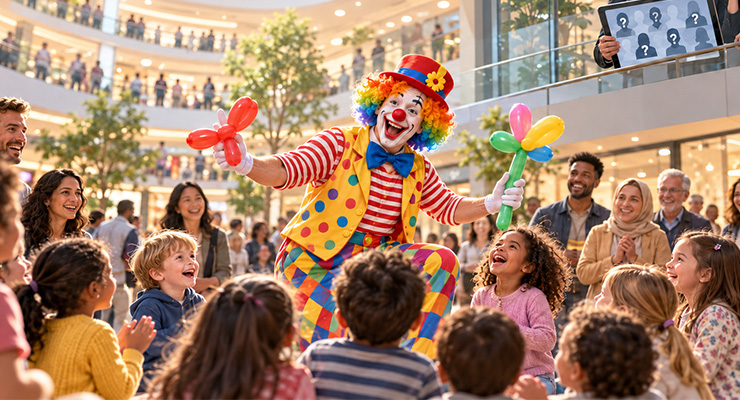
It‘s a Saturday in March. The marketing plan was approved in November: new spring collection, a well-known influencer at the main entrance at 12:00, a face-painter in the kids‘ corner and a clown making balloon animals by the escalators. Posters are up, social ads are running, and the tenants have been told.

Then it rains. Not a little. The kind of rain that keeps families at home. On top of that, the municipality has closed one lane on the road outside for pipe work, and by 11:30 the car park queue reaches the roundabout.
On Monday the footfall report is red and the tenants are unhappy. Someone in the management meeting asks: „Should we have booked two clowns?“.
I sat in that meeting, on the other side of the table. Before Placewise I ran a shopping center, and I was measured the way most of us still are: tenant satisfaction, footfall and sales. I believe in those numbers. They pay the rent. But after many years of looking at them, I think we have been drawing the wrong conclusions from them.
The paradox of the saturday
If you only look at short-term metrics, the clown is hard to beat. The effect is immediate, easy to explain and visible to tenants. Kids pull their parents in, the influencer gives a spike on Instagram, and footfall goes up for a few hours.
What we don‘t like to say out loud is that most of what moves those metrics is outside our control. Weather, road work, a football final on TV, fuel prices, whatever happens in the world that week. Any of these can ruin, or rescue, a well-planned campaign. We take credit for the sunny Saturdays and blame the rainy ones.
“AI for the sake of AI is just a more expensive clown.”
It also matters what kind of center you are. A local, grocery-anchored center lives off the people around it. They come on Tuesday for milk, Thursday for the pharmacy, Saturday for shoes for the kids. A big destination scheme next to a train station lives off people passing through, many of whom it will never see again. Two very different businesses, yet we often measure them the same way.
For the local center in particular, the most valuable asset isn‘t the Saturday event. It‘s the thousands of people who come back – or even worse – don‘t come back, every week anyway. And in most centers, we don‘t know who they are.
The loyalty trap
In the previous issue of ACROSS, it was argued that shopping center loyalty programs are losing relevance. They are mostly discount driven, and shoppers can get the same, or almost the same, discount directly from the retailers. Almost every tenant has its own loyalty card now.
I agree with the diagnosis. I don‘t agree with the conclusion.
If a center program is just another discount card, then yes, it‘s redundant. But that was never the point. Think about why a tenant signs a lease in a shopping center in the first place. It isn‘t the floor tiles. It‘s the footfall. They pay to be where the people already are, and to benefit from the traffic everyone else creates. The whole business model of a shopping center is a shared audience.
The same logic applies to data
A single Decathlon, Normal or YoYogurt store might have a few thousand people in its local database. A well-run shopping center can recruit 10 to 20 times that, from the same catchment and the same people.
We usually assume Decathlon and Normal don‘t share an audience. One sells running shoes, the other shampoo and cheap chocolate. But the woman who buys running shoes at Decathlon on Tuesday is often the same woman who fills a basket at Normal on Saturday. Neither retailer knows that. The center could.
That is the real value of a center-owned database. It‘s not a discount card but a shared audience that no single tenant can build alone. It works exactly like footfall, only digital, measurable, and a lot less dependent on the weather.
The deal has to be fair
Turning physical footfall into long-lasting digital relationships only works if one rule holds: the value to the shopper has to be greater than what we ask of her.
“Give me your data and I‘ll give you discounts“ can still work, as long as the benefit is exclusive and only available to members. But shoppers expect more now, and so do tenants. They pay into the marketing budget, and they want more for their money than a newsletter nobody opens.
At Placewise we see the demand shifting. Centers ask less for „a loyalty program“ and more for integrations and smooth customer journeys, where membership fits into something the shopper is already doing.
More and more members are recruited at moments when the shopper already has a reason to say who they are:
- Wi-Fi login, where they are already asking for something.
- Parking, where license-plate recognition plus free parking for members is often the strongest offer a local center has.
- Gift cards, which turn a one-off purchase, often by someone new to the center, into a known customer.Receipt scanning, which finally shows what happens after the door opens.
- EV charging, kids‘ club and event sign-ups.
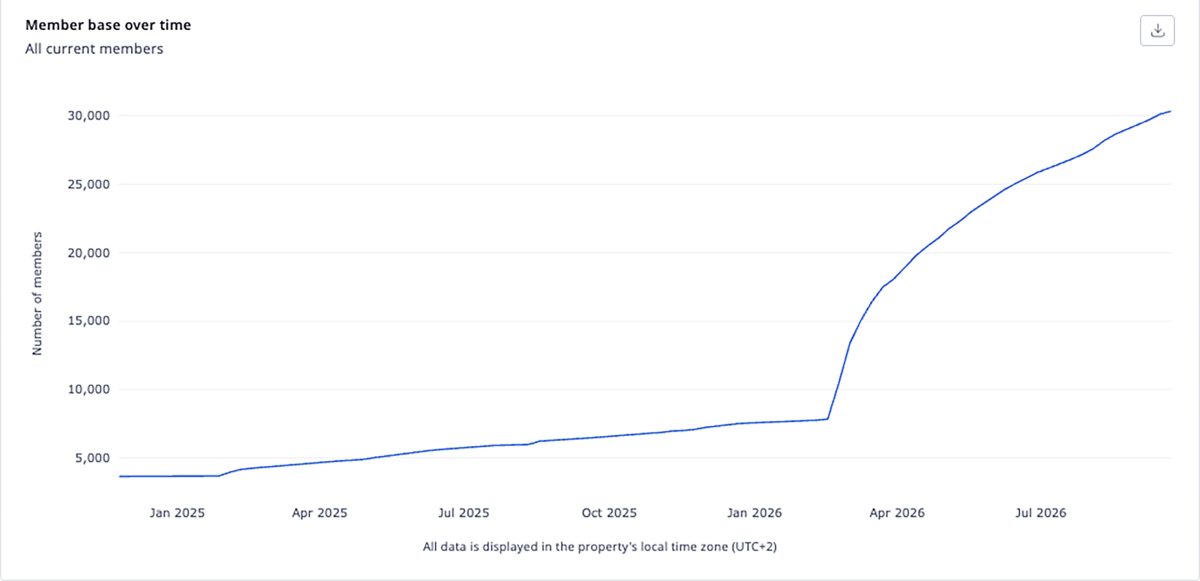
The effect can be dramatic. One of the centers we work with launched a parking integration in early 2026. In the 14 months before, its member base grew from around 3,700 to 7,800. Six months after launch, it had passed 30,000. Same center, same catchment, same tenants. What changed was that joining became the easiest way to park.
“We take credit for the sunny Saturdays and blame the rainy ones.”
Yes, even the clown counts. The face-painting becomes a recruitment moment instead of a one-day cost. What these have in common is that none of them asks the shopper to do something extra. They remove friction from something they were going to do anyway.
AI that knows its place
Turning physical footfall into long-lasting digital relationships only works if one rule holds: the value to the shopper has to be greater than what we ask of her.
Everyone is talking about AI. I have seen enough presentations where the word „AI“ does the job a strategy should have done. So let me be clear: AI for the sake of AI is just a more expensive clown. It looks impressive on Saturday, and nothing has changed by Monday.
Used right, though, AI is a very good helper. It does the work a marketing team of two never has time for. That‘s why Placewise is launching a MCP Connector (you can talk to ChatGPT, Claude or similar in human language to understand your database and to plan your next campaign).
Take the same shopper. She registered through the parking system last autumn. She scans her receipts because it gives her free parking. The data shows she shops sports and beauty, mostly on weekday evenings, and that she never buys children‘s clothes, although she often comes with a child.
A well-designed system can help the center send her the Decathlon campaign on a Tuesday afternoon instead of a generic Saturday newsletter.
It can tell the children‘s wear tenant that this is an audience worth an offer. It can notice she hasn‘t been in for five weeks and trigger a parking benefit before she‘s lost to the retail park down the road.
“The whole business model of a shopping center is a shared audience.”
And on a rainy Saturday, it can tell members living ten minutes away that the car park is quiet and the kids‘ corner is open.
None of this is science fiction. It‘s receipt data, parking data and membership data joined up, with ML/AI doing the sorting, timing and suggesting.
People still decide what the center stands for. The machine just makes sure the right message reaches the right person at the right time, which is what we always said marketing was supposed to do.
So what should we measure?
I‘m not saying stop booking the clown. Kids love him, and kids bring parents to the mall. But I would ask every center manager and asset owner reading this one question:
After your last big event, how many of those people do you know by name today?
If the answer is close to zero, you didn‘t run a campaign. You rented a crowd for a day.
Now ask the harder question: how many of the people who stayed home do you know by name?
They are the families the rain kept away that Saturday.
If you know who they are, you can still reach them with an invitation for next weekend, a free parking offer, or a message that the kids‘ corner is open.
If you don‘t, they were never really yours to lose.