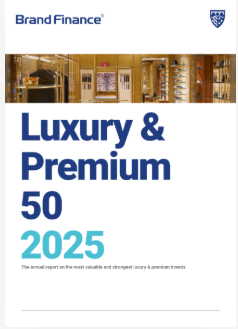

Consumer demand may show signs of slowing down. But not within the luxury sector, as Brand Finance’s latest Luxury & Premium 50 ranking shows. In 2025, the world’s top luxury brands reached a combined USD 317 billion in brand value – up 43% since 2019. And the sector continues to outperform the wider global market, supported by resilient appetite, strategic pricing, and strong brand equity.
France remains the global luxury powerhouse, contributing 49% of total brand value – nearly triple Italy’s share. Apparel continues to anchor the sector, accounting for 32 brands and 70% of total value.
Porsche Leads Luxury Brand Ranking
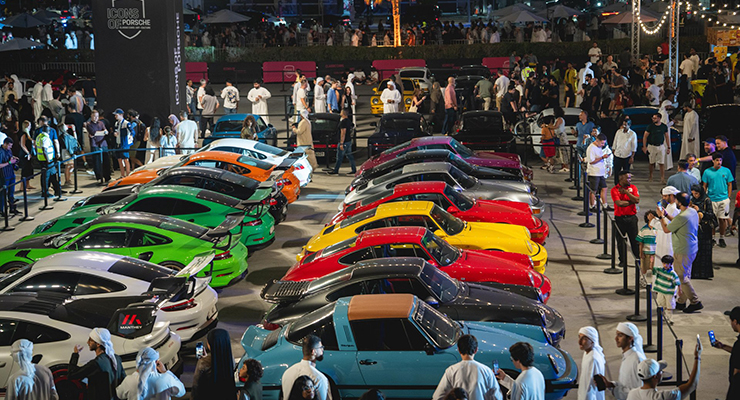
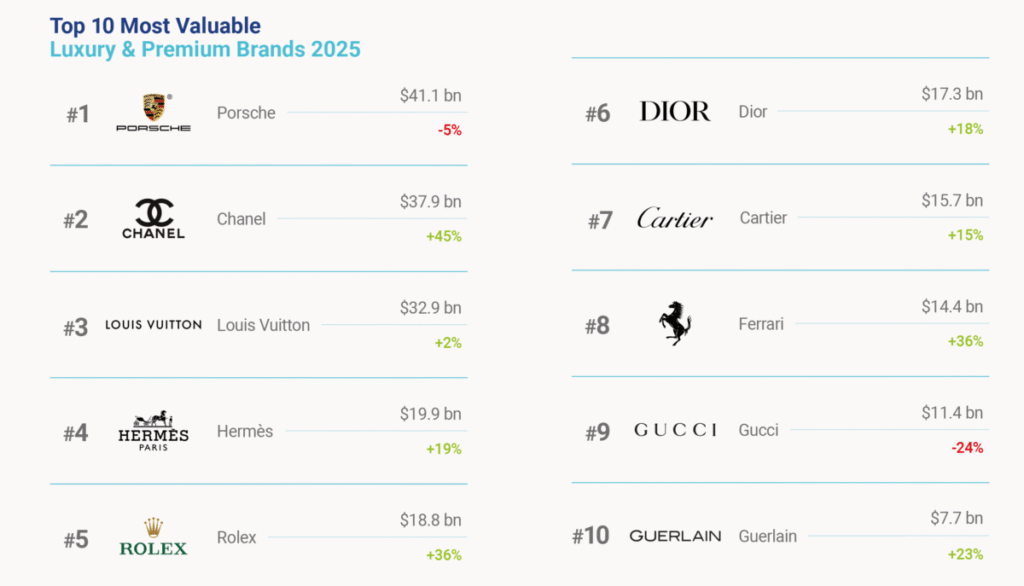
Porsche remains the world’s most valuable luxury brand at USD 41.1 billion, but Chanel delivered the biggest story of the year. Rising 45% to USD 37.9 billion, Chanel overtakes Louis Vuitton and becomes 2025’s fastest-growing luxury brand, powered by expanded retail presence, creative leadership, and a strong brand narrative under CEO Leena Nair.
Rolex and Ferrari also posted standout gains – up 36% each – reflecting sustained demand for watches and the power of disciplined scarcity in luxury automobiles. Dior and Hermès remain among the sector’s most stable and valuable players, while Guerlain re-enters the top 10 following strong fragrance performance.
Brand Strength: Dior Takes the Crown
Five luxury brands earned Brand Finance’s elite AAA+ rating in 2025. Dior now ranks as the strongest luxury brand globally with a BSI of 93.5, driven by rising familiarity, online popularity, and perfect reputation scores in the US. Ferrari follows with exceptional emotional appeal and strong leadership under CEO Benedetto Vigna. Lancôme also enters the top 10, helped by extraordinary brand strength in China.
Sports Partnerships Power Brand Equity
Luxury brands are increasingly turning to premium sports to deepen cultural relevance. Rolex – longtime partner of Wimbledon and major golf tournaments – demonstrates how these alliances drive both recognition and preference. Since 2020, Rolex’s brand value has more than doubled, highlighting the financial and emotional impact of values-aligned sponsorships.
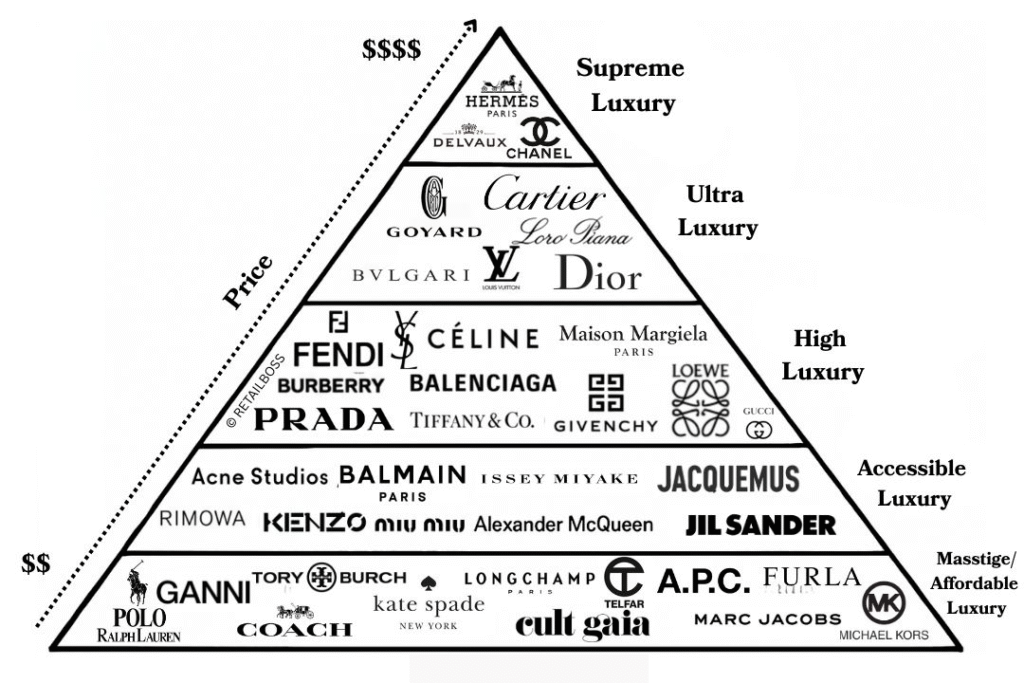
The Five Tiers of Luxury
But speaking of luxury, it must be noted that there is no single definition of the luxury market. Perceptions of which brands truly embody luxury vary widely.
To illustrate this, RetailBoss has created a luxury pyramid showing how global fashion brands are positioned across five tiers – from tightly controlled haute couture maisons like Chanel, Hermès, and Delvaux at the pinnacle of supreme luxury, to accessible prestige labels such as Furla, Longchamp, and Ralph Lauren at the base.
Luxury’s Next Chapter
While 2025 marks a high point, the sector also faces new realities. The luxury brands that continue to grow are those investing in brand storytelling, controlled distribution, cultural relevance, and experiential marketing.
As the sector moves into a more moderated growth phase, value creation will depend increasingly on the depth of consumer connection – not just the prestige of the logo. In fact, consumers are shifting spending toward experiences, and the resale market is expanding rapidly, as the flourishing market for second-hand watches indicates. According to Brand Finance, one in five buyers planned to purchase a second-hand watch last year.