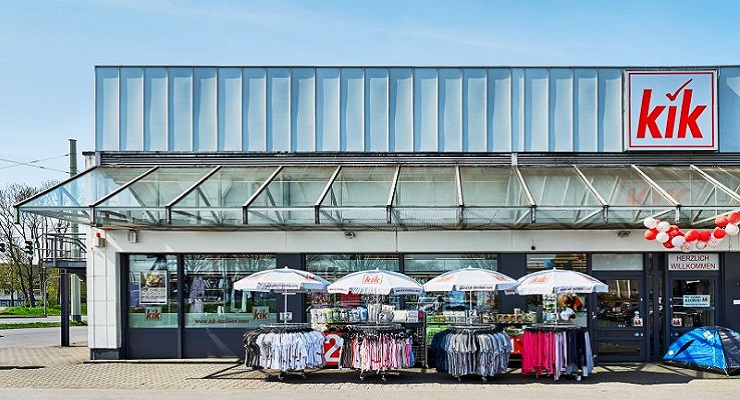
Germany’s textile discounter KiK is preparing a significant downsizing of its European store network. According to CFO Christian Kümmel, the company plans to reduce its footprint by around 225 stores to just over 4,000 locations by the end of 2026. In total, up to 300 closures are foreseen across Europe, alongside just 75 new openings.
The message from the dpa interview is clear: KiK is pivoting from expansion to efficiency. “We are trimming our portfolio for profitability,” Kümmel said, pointing to structural issues in the retailer’s previous growth strategy.
Crucially, he acknowledged that expectations tied to rapid rollout did not materialise. “The formula ‘we open five new stores and gain five times as many customers’ has not worked out 100 percent,” Kümmel noted.
In some cases, stores were opened in extremely close proximity. “We expanded too densely. We are now scaling that back,” he added — an unusually candid admission that KiK’s large-scale expansion may have overshot demand in parts of Europe.

A Correction Long Anticipated
While the scale of the closures is striking, the move itself is not unexpected. Reports about a potential downsizing of KiK’s store network have been circulating since autumn 2025, when the company first announced plans to close unprofitable locations as part of a broader restructuring.
At the time, industry sources suggested that around 400 stores could be affected, particularly in Germany. KiK itself remained vague, stating only that it was reviewing its network to “identify cost and efficiency potential” and ensure long-term competitiveness.
The dpa interview now provides the clearest confirmation yet that these earlier signals are translating into concrete action — and on a European scale.
Historically, KiK had already been closing around 100 stores per year, but this was more than offset by new openings. The current plan marks a decisive break with that pattern, prioritising consolidation over continued expansion.
New Leadership, New Direction
The strategic reset also coincides with significant changes in KiK’s leadership. Long-time CEO Patrick Zahn stepped down in 2025 after nearly two decades with the company, having overseen a period of strong international expansion.
Since then, a new management team has been taking shape. Christian Kümmel assumed the role of CFO, while Agnieszka Jaworska joined at the end of 2025 with responsibility for key customer-facing areas including buying, assortment and marketing.
These appointments signal a shift in priorities — from rapid footprint growth towards operational efficiency, sharper assortment strategies and improved profitability.
Market Pressures Intensify
KiK’s move reflects broader challenges facing discount and value retailers across Europe. While the segment continues to attract price-conscious consumers, purchasing behaviour is changing.
“Our loyal customer base is growing,” Kümmel said, but he also acknowledged increasing restraint: “We see that some purchases are being skipped.”
Consumers are becoming more selective and price-sensitive, while competition is intensifying on multiple fronts. Established brick-and-mortar players such as Woolworth, NKD and Action are expanding, while ultra-fast online platforms like Shein and Temu are capturing market share with aggressive pricing and аssortment breadth.
KiK currently operates in 14 European countries, making the restructuring a continent-wide issue. In Austria alone, the retailer runs more than 220 stores and employs around 1,500 people. It remains unclear whether the revised European targets will lead to additional adjustments in individual markets.
Kümmel stressed that layoffs are not planned, with affected employees expected to be redeployed within the company wherever possible.
From Scale to Sustainability
KiK’s retrenchment highlights a broader shift in European retail: expansion alone is no longer a guarantee of success. Instead, profitability, efficiency and precise market positioning are moving to the forefront.
For KiK, the current restructuring is less a sudden reaction than the culmination of a process that has been unfolding for months. The dpa interview makes one thing clear: the era of unchecked expansion is over — replaced by a more disciplined approach to growth.