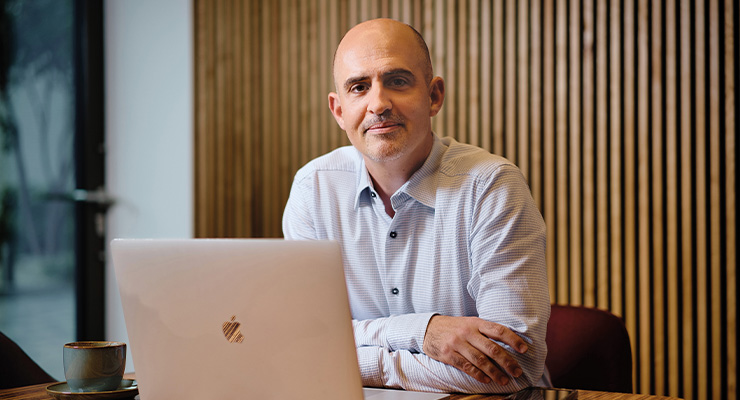
ACROSS: Investments in retail real estate shape places for decades. Capital influences not only markets but also how people live, shop, and spend time. What vision guides your investment propositions?
Steffen Hofmann: The most important question we can ask ourselves is whether a particular property will still be relevant to consumers in the future. Many people immediately focus on rents, occupancy rates, or how successful the initial leasing phase will be.
Those things matter, of course. But the real question is what happens afterward. What happens when leases expire? Will tenants still want to stay? Will consumers still choose that place? Because in the end, consumers decide. Not investors. Not banks. Not valuers. The consumer votes daily at the cash register. The tenant sees that result first. Every day. Every evening.
The numbers tell them whether consumers still find the location relevant. And when a lease comes up for renewal, that tenant will ask a simple question: Do I still make money in this place?
That is why relevance is decisive.
How would you define relevance?
A retail property becomes relevant when it adds value to everyday life. Convenience is one part of it. But there is also something less tangible. People want to go to places where they feel comfortable. Places they enjoy visiting.
I once described placemaking as the art of creating an emotional connection with the customer at the point of sale. Creating an experience people want to return to. That is why I believe placemaking will be one of the defining disciplines of successful retail real estate in the future.
That sounds convincing, but investors also need measurable indicators. How do you determine whether a location will still be relevant in ten, twenty years?
We start with the fundamentals. There is a huge universe of data, and retail real estate remains, first and foremost, a location business. We look at purchasing power, centrality, unemployment levels, population density, demographic trends, and competitive structures. Population growth or decline matters. The age structure matters. Is the area attracting younger people and encouraging entrepreneurs to take risks? Is there innovation? Is there economic activity? What does the competitive landscape look like?
“The future belongs to places that remain relevant.”
We call it bottom-up research. The question is not which asset class is fashionable at the moment. The question is whether a specific location has the foundations to remain successful for the next decade or longer.
But data alone is not enough. When we visit a town, we don‘t just look at the property we are analyzing. We walk the surrounding streets. We look at neighboring buildings. Is investment happening? Is the district improving? Or is everything slowly deteriorating?
Infrastructure also matters: Can customers reach the location easily? Is public transport available? Is the customer journey intuitive? Or does every visit feel like hard work? Then, of course, there are the traditional KPIs: turnover, frequency, sales productivity, lease lengths, downtimes, occupancy rates. They all tell part of the story.
And there is another important question investors often ask: If I want to sell this asset in ten years, who will buy it from me? Will there be two potential buyers? Or twenty? Having options makes a huge difference.
Retail has been under pressure for years. How do you assess the transformation of the sector?
I actually think retail is not unique in this regard. Look at media. Look at education. Look at banking. Look at the automotive industry. Look at fund management. Digitalization is transforming almost everything. Retail is simply one of the sectors that has already gone through a significant part of that transformation. Amazon has been around for thirty years. The iPhone is approaching twenty. These developments are not new anymore.
E-commerce has changed consumer behavior. We all know that. The integration between online and offline retail has progressed enormously. It can still improve, but the sector has already traveled a long way.
What concerns me right now are entirely different factors influencing investment decisions. Geopolitical instability. Inflation. Construction costs. Energy supply. Operational costs are a particularly important issue in retail. Ideally, retail properties should generate the energy they consume themselves. Five years ago that sounded ambitious. Today it feels like a logical direction.
And then there is investor sentiment. When geopolitical tensions rise, when wars, climate risks and pandemics dominate the headlines, when uncertainty increases, a grey cloud settles over the market.
Suddenly everybody becomes more cautious. Investors want higher returns for the risks they perceive around their investment decision. Banks demand higher risk premiums. Tenants want lower rents. Consumers spend less money. The entire system starts pulling in different directions.
“The consumer votes every evening at the cash register.”
Six months later, the geopolitical situation may perhaps not be much better, but sentiment changes, confidence is returning, and people start looking ahead again. Market psychology matters so much.
How do you personally deal with uncertain market environments? Do you become more defensive, or do you see opportunities?
I would answer that on two levels. Personally, I am a confident person. I believe human beings can be equipped to make good decisions, even in difficult situations. I do not believe fear should guide decision-making. Not every crisis raging on this planet must affect my inner life. Not every project that enters difficult waters should cost me sleep.
Professionally, the answer depends entirely on the client‘s profile. If I am advising an opportunistic investor, today‘s market can offer extraordinary opportunities. In many sectors assets can be acquired at prices that would have been difficult to imagine a few years ago.
There are fewer players competing for the same thing. For risk-takers, that can be an attractive entry point.
But imagine another situation. A risk-averse owner has a property that clearly requires significant reinvestment. The KPIs indicate that a comprehensive action plan is necessary. New conceptual ideas are required. Human and financial resources are needed. Management attention is to be consumed.
Then the right answer may be completely different. Perhaps the best decision is to sell, and let it all go. Possibly another group is much better positioned to execute the repositioning strategy.
Interestingly, both recommendations can be correct in the same market setting. That is why there is no universal answer. Recommendations depend much on the investor profile, its strategy, its available resources, and the asset‘s overall trajectory.
Which retail formats do you believe will shape the future?
I believe the next phase of retail real estate will be defined more by creative transformation than by ground-up development activity.
Most European markets already have extensive retail space. In addition, we now have a virtual layer of retail through e-commerce. At the same time, development economics has become increasingly challenging. Land is expensive. Construction costs are high. Approval processes are lengthy. Regulation is complex. Development financing is scarce. That naturally shifts attention toward existing assets.
Having said that, one of the most urgent repurposing opportunities for standing properties can be found in former department store locations.
Across Europe, many of these buildings occupy exceptional urban locations. Yet in many cases the traditional department store model no longer works. I do not believe the future lies in replacing five- or six-story department stores with another five- or six-story retail building. For these properties, the future is mixed-use. However, transformation takes time. A lot of time. People often underestimate this. In Germany alone, we are dealing with dozens of former department store sites. Similar situations exist in the UK and elsewhere.
These urban sites, which everybody knows, may look like fantastic opportunities. A strong backing for their comprehensive transformation will be needed from local planning councils, though. So, we should be realistic. Transformation timelines of five to fifteen years are entirely possible.
Mixed-use has become almost a mantra in the industry. Is it always the right answer?
No. I think the term “mixed-use“ is sometimes treated as a cure-all. Of course, mixed-use neighborhoods have a strong future. Urban districts benefit from diversity. Growing cities require different functions to coexist. But that does not mean every single building has to contain every possible use.
A successful district works because different places contribute different strengths. One property may focus more on retail. Another more on healthcare. Another on residential use. Another on hospitality uses or co-working environments.
The objective should not be to make every building identical. And we should never forget the economics.
“Not every crisis should change your conviction.”
Converting retail space into healthcare, offices, or housing sounds attractive in a conference presentation. In reality, it costs a great deal of money. Sometimes conversion makes sense. Sometimes reducing space may be the smarter option. Every transformation must ultimately pass an economic reality check.
Demographic change is reshaping Europe. How does that influence your investment outlook?
Demographics are fundamental. If a region is losing population, particularly younger population groups, that obviously influences long-term prospects. On the other hand, that does not automatically mean an investment becomes unattractive.
The best retail park in town may remain an excellent investment property because it keeps fulfilling an essential role for local communities. People still need to satisfy their daily needs. That holds particularly true for food, drugs, cosmetics, and all kinds of small everyday services. Here, healthcare is clearly becoming more important. Medical services will play a larger role in many retail environments – especially where we find a higher share of aging population.
But I also think we should look beyond healthcare. One area that fascinates me is sports-anchored real estate.
We are seeing new communities forming around sports destinations. Padel is probably the best current example. Around the courts, lounges and cafés emerge. Restaurants emerge. Social spaces emerge. People are not only playing sports. They are having fun. Hanging out. Spending time together. Communities are forming. That creates opportunities for gastronomy, retail, and services. It creates places where people want to gather. And ultimately, that is precisely what placemaking is about.
At a recent ACROSS Retail Talk, you argued that the industry cannot simply continue as before. What needs to change?
The first step is accepting that things have moved on. There is no going back. Step two, however, is recognizing that physical retail still has a future. I am convinced it does. Not just for the next five years. For the next twenty, thirty, or forty years.
Human beings want to go out and do things. We are made to explore and yearn for real places. We need movement and physical interaction.
We need spaces where we encounter other people. Retail is not the only reason people leave their homes, but it remains an important one – and ideally an enjoyable one.
The challenge is to create places that deserve to be visited. Places that are relevant. Places that are good fun. Places that offer something worth leaving the sofa for.
We have already seen examples of this transformation. Traditional supermarkets have improved dramatically over the past decade. Shopping environments have become more attractive. Product presentation has improved. Even a highly functional shopping trip can become a pleasant experience. Outlet centers across the European continent have shown how architecture and atmosphere can create something resembling a holiday feeling.
And then there are examples such as the newly established Food Garden at Main-Taunus-Zentrum, one of Germany‘s oldest and largest shopping centers. A large former department store was replaced by a carefully curated restaurant court, which has become a popular dining destination in its region.
In the first moment, that sounds irrational. How can demolishing a vertical retail property with previously more than 15,000 square meters and rebuilding perhaps half of this on the ground floor only make economic sense? I obviously don’t know any financials for the concrete case; however, speaking generally, if those 7,000 or 8,000 square meters capture the spirit of the time and simply perform significantly better, increase frequency, improve dwell time, strengthen the entire shopping experience, and create an even more attractive destination overall, then the strategy pays off.
That requires some boldness. It requires conviction. And it requires the willingness to rethink things that may have worked for decades.
To wrap it all up: The retail properties that will succeed in the future are the ones that remain relevant. And relevance always starts with people.
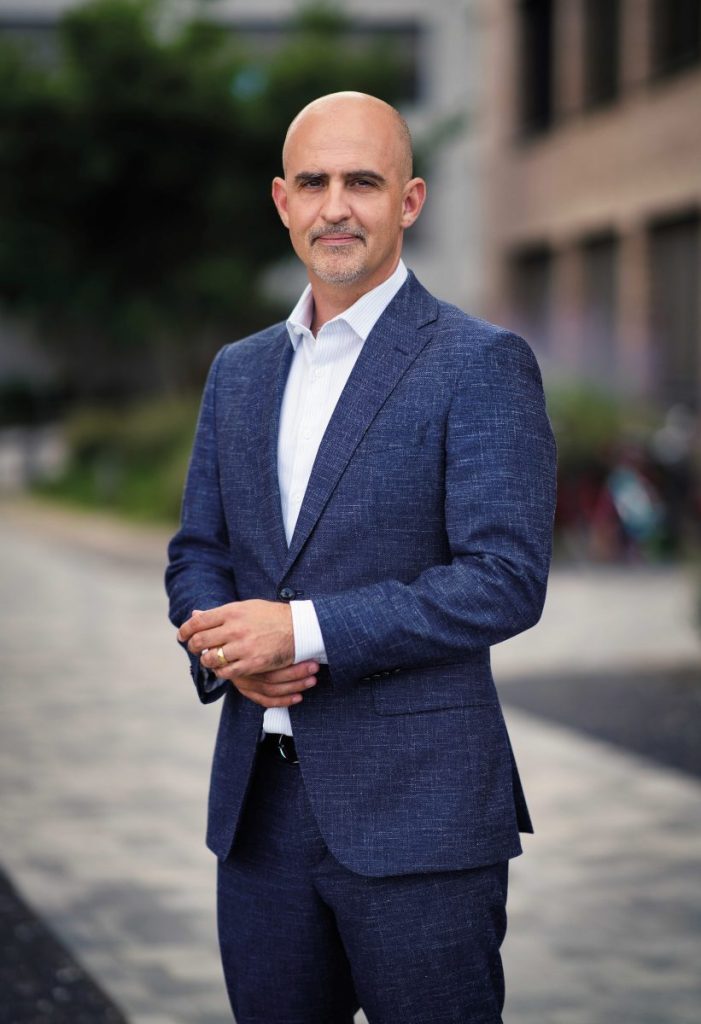
About Steffen Hofmann
Steffen Hofmann is Managing Partner and founder of ambas Real Estate, established in 2014. He formerly worked for Henderson Global Investors and Commerz Grundbesitz Investment Having operated across 12 European markets, he brings extensive international investment expertise. He is a member of the GCSP Advisory Board and lectures at IREBS on asset management for retail real estate.
This article was originally published in ACROSS 3/2026.