Building Value Within the Asset: CC Real’s Retail Real Estate Operating Approach
Peter Sempelmann
Twenty years after starting out in a small container in Zagreb, CC Real has evolved into a privately owned investment and asset-management platform. For the company‘s founders owning an asset is only the beginning. The value is created in what happens next.
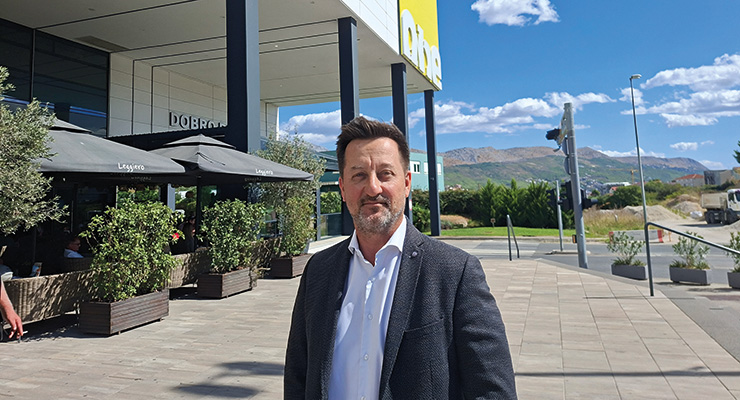
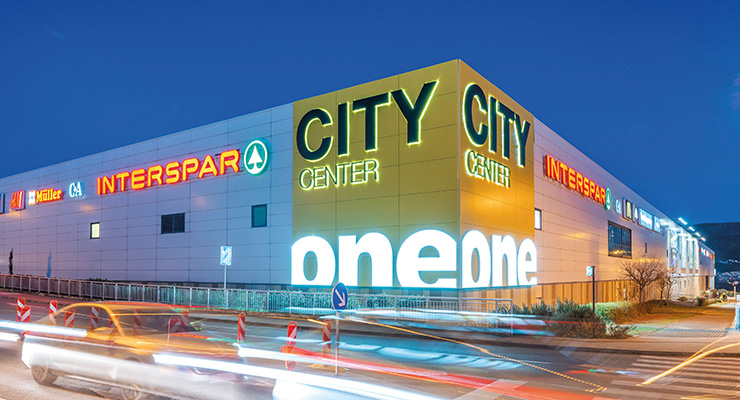
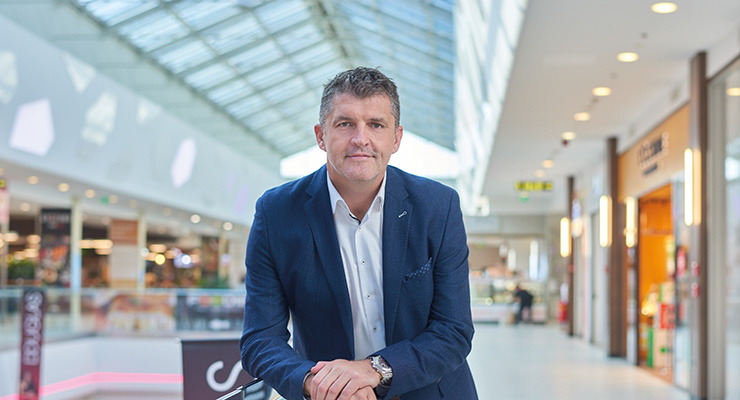
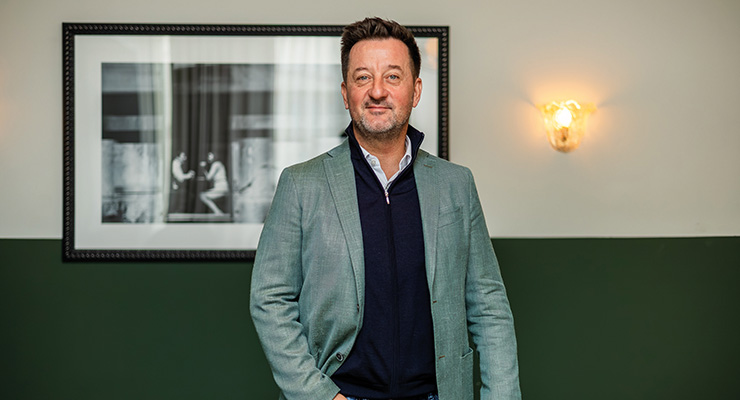
Sven Vorih is standing in front of City Center One Split, squinting into the bright Dalmatian sun. “I hate having my picture taken,” he says. After more than 20 years in the business, he still has not quite got used to being in front of the camera. But it is part of the job for the Co-Founder and Co-CEO of CC Real, particularly when he is showcasing a shopping center that has just undergone a major transformation.
CC Real invested more than €22.5 million in City Center One Split between 2023 and 2025, despite the fact that the center was already performing strongly. The aim was to keep it relevant, strengthen its tenant mix and further improve its commercial performance.
When Vorih joined the company in January 2006, he could hardly have imagined that he would one day be standing in front of one of its flagship assets in this role. Back then, the company, founded by his business partner Fabian Kaufmann and Kaufmann’s father, had a very different objective: develop shopping centers and sell them.
Then the financial crisis changed the game.
Assets that were supposed to be developed and sold had to be held. That meant operating them, financing them, managing tenants and investing in them for much longer than originally planned. In Croatia, CC Real built up an operating portfolio that included two major shopping centers, representing some €300 million in investment, and began working with Morgan Stanley as an institutional partner.
What initially looked like a constraint became the foundation of the company’s current model. Holding assets meant learning what actually drives their performance. It meant discovering that a property can change significantly in value through active management, even when the underlying location and building remain the same.
The company subsequently expanded beyond Croatia and into Austria and Finland. In 2020, it also entered private debt through Madigan Capital, which CC Real fully acquired at the end of 2025. Today, the group reports more than €3.5 billion in assets under management, a portfolio of around 550,000 sqm and more than 250 professionals. Its European asset-management activities account for around €2.4 billion, with the remainder largely attributable to private debt in Australia.
In retail, CC Real’s approach is not to apply a standard formula to every shopping center.
“Every location is different. It has to be individually analyzed. What is the actual need of the catchment area? That is something we must never forget,” says Fabian Kaufmann.
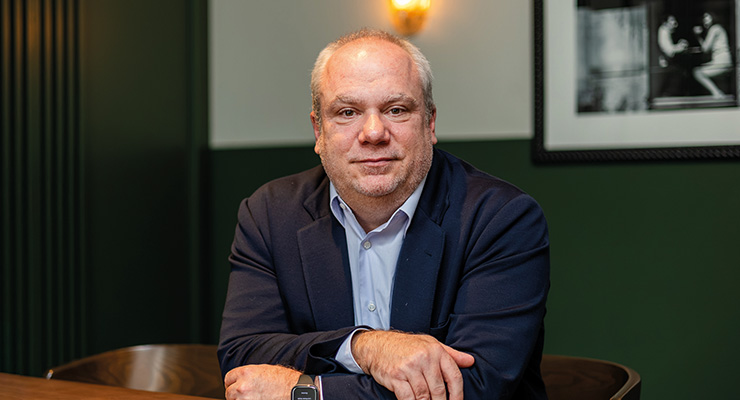
That makes the company’s development background relevant even today. Co-Founder and Co-CEO Sven Vorih puts it more bluntly:
“CC Real is in our genes an architect, a developer, and every shopping center the company looks at should offer something that can be changed or improved.”
The question is therefore not only what an asset is worth when it is acquired, but what the property can become and whether its income will remain sustainable over the longer term. “Excel is very patient,” Kaufmann says.
The principle also applies to the relationship with tenants. During the pandemic, CC Real reached agreements with around 95% of its tenants within a few months, despite different legal frameworks in its markets.
The City Center One Split redevelopment provides a useful example of what that philosophy means in practice.
Investing While The Asset Is Still Good
City Center One Split was not a classic turnaround case. Occupancy was already high, footfall was strong and tenants were performing well. Yet CC Real decided to invest millions in the property, affecting more than 17,500 sqm and 44 tenants.
“It was running perfectly. The footfall was great. The tenants were 100% full. But we had the idea we had to change something,” says Vorih.
The thinking was preventative rather than reactive:
“If you want to hold it, make it when it’s good and keep it for a longer term to invest.”
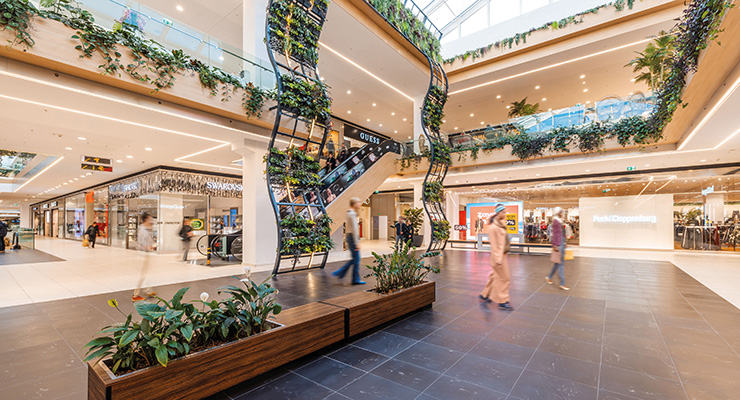
The redevelopment went beyond cosmetic improvements. Interiors and public areas were upgraded, tenant concepts changed, dining and leisure were expanded and a new entertainment cluster was introduced next to the cinema.
The project also included significant energy-efficiency measures and achieved DGNB Gold certification. CC Real estimates annual electricity savings of around 665,000 kWh and annual CO2 savings of around 90 tons.
“If you want to hold an asset for the long term, you have to invest when it is good, not wait until you have a problem.“
Sven Vorih, Co-Founder and Co-CEO CC Real
Just as importantly, CC Real wanted to strengthen the center’s position as a destination for Split’s residents rather than treating it primarily as a coastal tourist asset. The company describes this explicitly as a resident-first strategy.
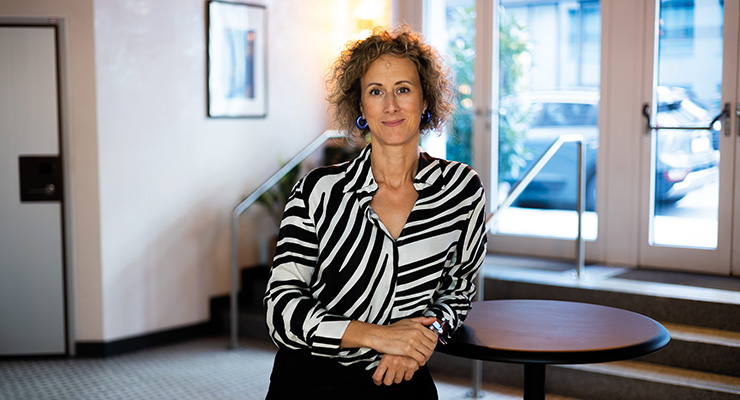
“Whatever tourists we are getting along with the tourist season, that’s great. But our focus is actually local people,” says Neda Buljević Vlačić, CC Real’s Managing Director SEE.
That distinction influenced both the physical redevelopment and the tenant mix of City Center One Split. In the Dalmatian mall, fashion still accounts for the largest share of the center’s tenant mix, but its share has been reduced as CC Real has expanded categories that are more difficult to replicate online and more relevant to physical experience.
According to the company’s figures, fashion currently accounts for 48.6% of the mix, household for 25.8%, entertainment for 9.8%, hypermarket for 9.1%, food court for 4.3% and services for 2.3%. “In Split, we decided that we would enlarge the entertainment and F&B part,” says Krunoslav Dominikovic, Director Leasing.
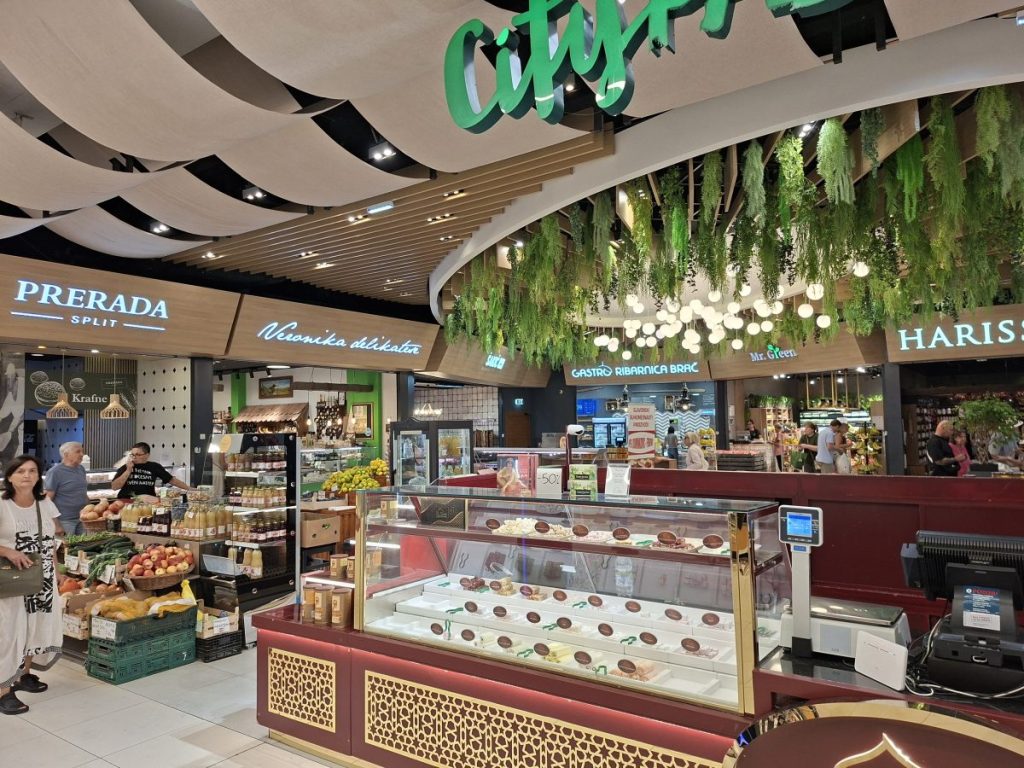
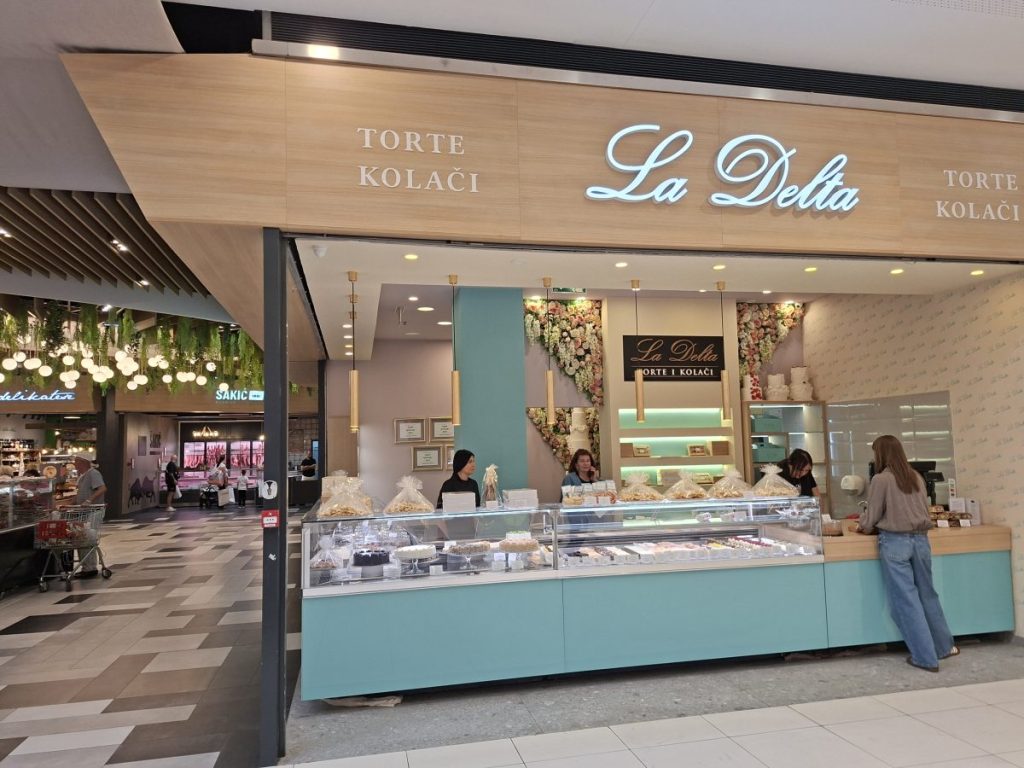
The change is much more tangible when walking through the center. At the main entrance, in the space formerly occupied by dm, CC Real created a marketplace built around independent local food retailers.
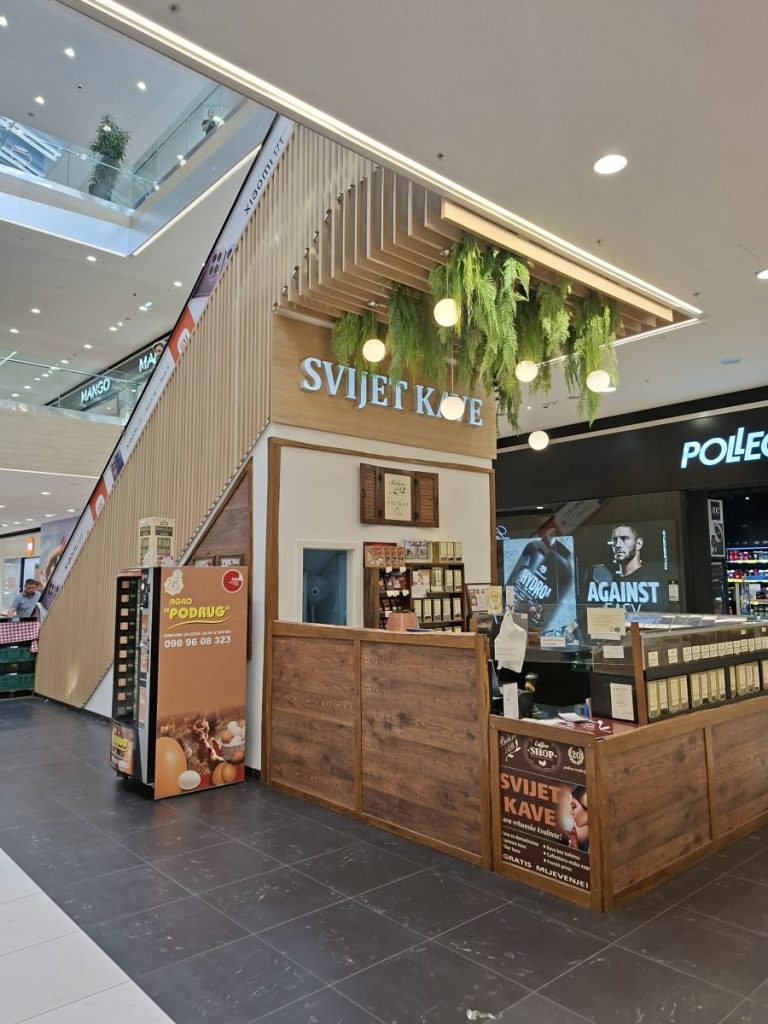
The offer includes local fruit and vegetables from Prerada Split, Croatian specialties from Veronika Delikaten, butcher Sakic, fishmonger Gastro Ribarnica Brac, organic food from Mr. Green, local coffee from Svijet Kave and bakery La Delta, among others.
The concept initially created concerns for Interspar, the center’s largest tenant, which saw a cluster of food retailers directly in front of its entrance as potential competition. In practice, however, the two offers have proved complementary. The local retailers operate at different price points and provide products and shopping experiences that are distinct from a the offer of the large supermarket with its broad assortment and attractive prices.
“Local people especially love the offering,” Vorih explains.
The marketplace has become an additional attraction rather than a direct substitute for the supermarket, helping to draw more people into the center and benefiting Interspar through higher footfall and sales as well.
Entertainment follows the same principle. Next to the Cineplexx cinema, CC Real introduced Kontraloop, a combined gastronomy and entertainment concept offering bowling, darts, shuffleboard, foosball, pinball, billiards and arcade games alongside a restaurant and bar. It extends the center’s relevance beyond conventional shopping hours and gives people a reason to stay longer.
It also matters on Sundays. Under Croatia’s current rules, shopping centers can open on only 16 Sundays a year. CC Real deliberately chose not to use those Sundays during the summer tourist season.
“Everybody else decided to open in summer, during tourist season, but we decided differently, having the local people and their needs in mind,” Vorih explains.
The logic behind the changes is ultimately commercial. Dominikovic says CC Real closely tracks turnover by category and uses this information to determine where space should go next. Fashion has become increasingly exposed to online competition, while food, health, F&B and entertainment show different dynamics.
“The most important topic for us is how attractive the tenant is for the customers, not just how much they are willing to pay,” he argues. This also changes the way rent is viewed. “Tenants are willing to pay even the highest rent if their occupancy cost ratio is at a secure level that they can earn and make money there.”
The example of the food court illustrates the point.
Dominikovic: “At the beginning, on the Excel sheet, when you reduce fashion square meters and put them into F&B, you will be in minus. But at the end of the year, if you create a successful food court with the proper tenants, you may even be in the plus with turnover rent.”
A successful tenant is therefore not simply one that pays a high rent on paper, but one that is healthy and earning money.
“Tenants want to be part of a successful destination. And we need tenants that are healthy and earning money.”
Krunoslav Dominikovic, Leasing Director CC Real Croatia
From Redevelopment to Institutional Asset
In 2025, CC Real transferred a stake in City Center One Split to InterCapital Real Estate Fund Alfa and Raiffeisen Pension Fund. The company describes the transaction as Croatia’s first direct pension-fund investment in real estate.
For CC Real, the significance lies in what happened before the transaction. The company had held the asset for 16 years, invested in it, repositioned it, upgraded its physical environment and managed the tenant mix before institutional capital entered. Vorih sees the partial exit as the outcome of that work. The asset was not actively marketed when the eventual buyer approached CC Real, but the institutional investor had seen what had been done in Split and became interested.
“One side of the story is the exit. The other side is having enough of the products, enough of the assets that are investment-grade assets,” says Neda Buljević Vlačić: “For Split, we have shown basically that it’s possible to do both. We prepared the asset for this investment and, in the end, we were able to exit the project by selling it to institutional investors.”
Croatia has experienced strong economic growth and rising consumption in the years since joining the European Union in 2013. Shopping-center and retail-park supply is still expanding, particularly in coastal areas and smaller cities. But the retail market is also becoming more competitive.
For CC Real, the next test may therefore be less about how much additional space enters the market and more about how existing assets are managed.
“To a certain extent, I think the main difference is going to be who is the manager of those assets,” says Neda Buljević Vlačić.
That question will become particularly relevant as newer retail parks approach lease-renewal cycles. Their initial leasing success will eventually have to translate into sustainable occupancy, tenant performance and customer demand.
At the same time, labor costs are rising as unemployment remains very low. For retailers, Dominikovic says, labor is now one of the biggest cost pressures. The landlord therefore has to understand the economics of the tenant rather than simply push rents upward.
“There needs to be a track record for the market, but there also need to be enough investment-grade assets for institutional investors to buy. And you need credible exit possibilities.”
Neda Buljević Vlačić, Managing Director CC Real SEE
Not Every Market Needs to Be Entered
The company is now looking beyond its traditional markets, but its expansion strategy is selective rather than purely geographic.
Kaufmann points to Croatia and neighboring CEE markets as particularly attractive, while also identifying Italy, France and Iberia as markets where CC Real sees opportunities, with Germany proving a rather tough nut to crack.
The underlying logic is consistent. CC Real wants markets where the company can acquire existing assets at a level that leaves room for active management and value creation. That does not automatically mean entering every market where an opportunity appears.
The company has learned to be selective, and to walk away when the investment case does not offer enough room to create value.
As Kaufmann puts it: “If we find the right objects, with the right stories behind them, where we actually see growth, then we will definitely acquire them.”
“A Property Has to Offer a Clear Value-Creation Story”
ACROSS: What are you looking for in the retail market today?
Fabian Kaufmann: We are very selective when it comes to acquisitions. What we are really looking for are brownfield situations where the location and the fundamentals are right, but where we see room to improve the asset through active management and, where necessary, redevelopment. We stopped looking at Greenfield as the natural starting point a long time ago. That does not mean we would never do one, but an existing property has to offer a clear value-creation story.
What does that mean in practical terms?
You have to look at every asset individually. Every location is different from the next one, and you cannot put one blueprint over all shopping centers. We ask what the actual catchment needs, what the customers are looking for and whether the tenant mix is appropriate for that location. The difficult part is that the larger you become, the stronger the tendency is to standardize. Then you end up recognizing the operators rather than the location.
Is pricing currently the main issue?
It is increasingly about the sustainability of the income. As a buyer, I have to ask whether the rent I am buying today will still be achievable when the leases expire. There are markets where the seller’s expectation and the sustainable future rent are still quite far apart. You can buy an asset for 100 today, but if the income is not sustainable, it may only be worth 80 in a few years. That is why we are prepared to walk away. We have learned that saying no to an acquisition can be just as important as buying one.
“A Property Has to Offer a Clear Value-Creation Story”
ACROSS: City Center One Split was already performing well. Why invest another €22.5 million?
Sven Vorih: It was running perfectly. Footfall was great, the tenants were 100% full and the numbers were stable. But the center was more than ten years old, and we believed we needed to change something while it was still performing well. If you want to hold an asset for the long term, you have to invest when it is good, not wait until you have a problem.
What changed commercially?
We changed much more than the appearance. More than 40 tenants were affected. We reduced some fashion space and enlarged entertainment and F&B. We wanted people to stay longer and to bring some of the trends we had already seen in Western Europe and America to Split. The investment was also about creating an asset that would remain relevant for the next ten or 15 years. The results are quite visible. Net tenant sales are now approaching €200 million, and we expect to finish 2026 above that level. That would put sales at roughly €4,000 per square meter. Occupancy is still close to 100%.
Did the redevelopment also affect the exit?
Definitely. We had not actively put the center on the market. InterCapital was looking for an asset in the region and saw what we had done in Split. They saw that the owner had invested significant money and believed in the asset. That helped create the institutional transaction. The point is that we are giving the added value before the exit.
This article was originally published in ACROSS 4/2026.
We use cookies on our website to give you the most relevant experience by remembering your preferences and repeat visits. By clicking “Accept All”, you consent to the use of ALL the cookies. However, you may visit "Cookie Settings" to provide a controlled consent.
This website uses cookies to improve your experience while you navigate through the website. Out of these, the cookies that are categorized as necessary are stored on your browser as they are essential for the working of basic functionalities of the website. We also use third-party cookies that help us analyze and understand how you use this website. These cookies will be stored in your browser only with your consent. You also have the option to opt-out of these cookies. But opting out of some of these cookies may affect your browsing experience.
Necessary cookies are absolutely essential for the website to function properly. These cookies ensure basic functionalities and security features of the website, anonymously.
Cookie
Duration
Description
cookielawinfo-checkbox-advertisement
1 year
Set by the GDPR Cookie Consent plugin, this cookie is used to record the user consent for the cookies in the "Advertisement" category .
cookielawinfo-checkbox-analytics
11 months
This cookie is set by GDPR Cookie Consent plugin. The cookie is used to store the user consent for the cookies in the category "Analytics".
cookielawinfo-checkbox-functional
11 months
The cookie is set by GDPR cookie consent to record the user consent for the cookies in the category "Functional".
cookielawinfo-checkbox-necessary
11 months
This cookie is set by GDPR Cookie Consent plugin. The cookies is used to store the user consent for the cookies in the category "Necessary".
cookielawinfo-checkbox-others
11 months
This cookie is set by GDPR Cookie Consent plugin. The cookie is used to store the user consent for the cookies in the category "Other.
cookielawinfo-checkbox-performance
11 months
This cookie is set by GDPR Cookie Consent plugin. The cookie is used to store the user consent for the cookies in the category "Performance".
CookieLawInfoConsent
1 year
Records the default button state of the corresponding category & the status of CCPA. It works only in coordination with the primary cookie.
elementor
never
This cookie is used by the website's WordPress theme. It allows the website owner to implement or change the website's content in real-time.
viewed_cookie_policy
11 months
The cookie is set by the GDPR Cookie Consent plugin and is used to store whether or not user has consented to the use of cookies. It does not store any personal data.
Functional cookies help to perform certain functionalities like sharing the content of the website on social media platforms, collect feedbacks, and other third-party features.
Performance cookies are used to understand and analyze the key performance indexes of the website which helps in delivering a better user experience for the visitors.
Analytical cookies are used to understand how visitors interact with the website. These cookies help provide information on metrics the number of visitors, bounce rate, traffic source, etc.
Cookie
Duration
Description
_ga
2 years
The _ga cookie, installed by Google Analytics, calculates visitor, session and campaign data and also keeps track of site usage for the site's analytics report. The cookie stores information anonymously and assigns a randomly generated number to recognize unique visitors.
_gat_gtag_UA_135750163_2
1 minute
Set by Google to distinguish users.
_gid
1 day
Installed by Google Analytics, _gid cookie stores information on how visitors use a website, while also creating an analytics report of the website's performance. Some of the data that are collected include the number of visitors, their source, and the pages they visit anonymously.
Advertisement cookies are used to provide visitors with relevant ads and marketing campaigns. These cookies track visitors across websites and collect information to provide customized ads.