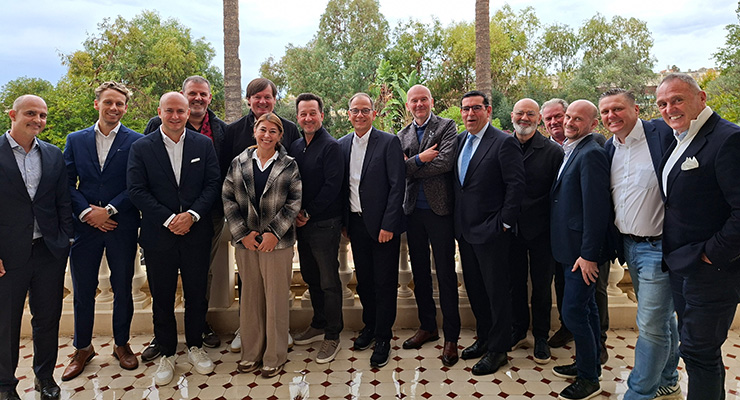
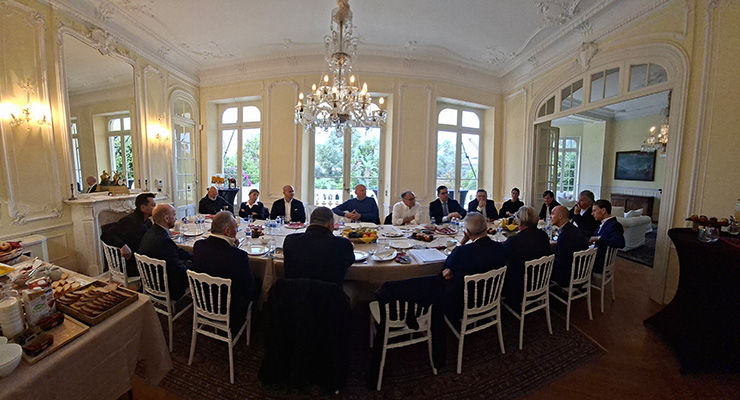
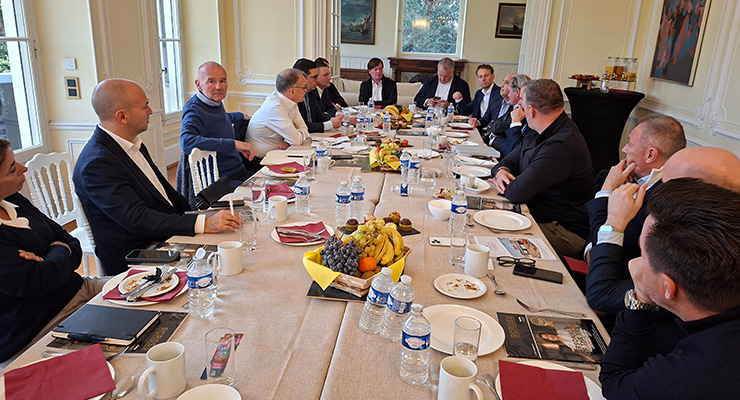
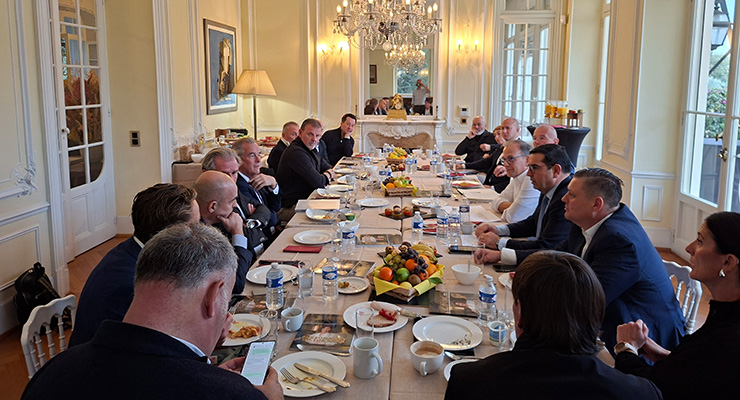
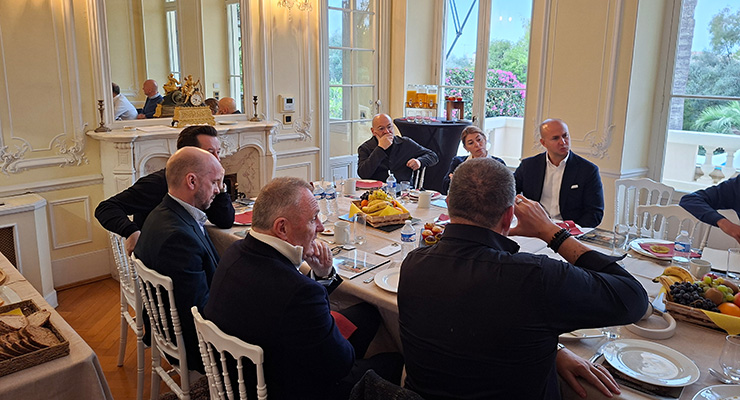
Artificial intelligence, digitalization, and changing consumer behavior are accelerating the pace of change across retail. Yet at the ACROSS Advisory Board Meeting in Cannes, the discussion on the future of retail and retail real estate quickly moved beyond technology.

As Ben Chesser of Coniq pointed out, AI has dramatically shortened development cycles and raised client expectations. What once took a year can now be achieved in weeks. But the challenge is no longer simply adopting new tools, but adapting entire organizations to a much faster environment.
For Ibrahim Ibrahim of Portland Design, the more fundamental shift concerns the audience itself. Retail real estate can no longer be understood primarily as a property business. It needs to be seen through the lens of culture and the communities that form around it. He described four interconnected forces that will shape the future: culture, content, community, and code, the latter referring to data and technology.
This perspective also changes the way physical space is valued. If a shopping center becomes a platform for engagement, content, and communication, its role extends well beyond facilitating transactions. Physical destinations can attract attention, create communities, and generate experiences that reach audiences far beyond their actual visitors. Ibrahim suggested that the industry may eventually need to rethink its revenue and valuation models accordingly, placing greater emphasis on the value of attention and engagement.
The Customer Is Shaping the Industry
The relationship between retail and its customers is changing fundamentally. As Will Odwarka of Heartatwork Consulting observed, younger generations have different expectations, values, and ideas about how they spend their time. The industry has spent years discussing millennials, only to find itself now adapting to Gen Z and Gen Alpha. Their preferences can change quickly, often driven by social media and digital communities.
For physical retail, this creates both a challenge and an opportunity. Brands that emerge online can become highly desirable almost overnight, while trends can disappear just as quickly. Pop-ups and temporary concepts offer one way for shopping destinations to respond, test new brands, and generate interest. But they need to be more than short-lived attractions. As Thomas Reichenauer argued, the ultimate objective should be to identify concepts with the potential to establish a lasting presence.
The discussion also highlighted the importance of social-media-driven destinations. Angelus Bernreuther pointed to the popularity of collectible products such as Labubu, which can draw considerable crowds and attention. In these cases, the attraction is not necessarily the conventional retail offer. It is the community and shared interest surrounding a product or trend.
At the same time, Morten Morken of Placewise raised a concern about the direction many operators are taking. While the industry talks about collaboration and shared responsibility for customer engagement, marketing budgets are often being reduced, with retailers increasingly expected to attract customers themselves. This risks undermining the very cooperation that shopping destinations need to remain relevant.
Experience Starts With the Basics
The discussion about customer experience took an unexpected turn toward one of the most basic elements of any shopping destination: its washrooms.
Klaus Striebich shared an example from Deji Plaza in Nanjing, China, where individually designed washrooms across the mall’s eight levels have become attractions in their own right. Their visual appeal has generated extensive exposure on social media. Giles Membrey added that the West Midlands Designer Outlet Village in Birmingham had invested more than £1 million in a major washroom refurbishment.
The examples illustrate a broader point. Experience does not always require spectacular entertainment concepts or expensive attractions. Sometimes, attention to everyday details can make a powerful difference. Clean, well-designed facilities, intuitive navigation, and a consistently high standard of service all contribute to how visitors perceive a destination.
Reinhard Winiwarter challenged the industry to look more critically at its own claims. Customer experience has become a familiar phrase in presentations and marketing materials, but the actual visitor experience does not always live up to the promise. A more honest assessment of what shopping centers offer, and how well they deliver it, may be one of the most important steps forward.
Technology Cannot Replace People
For all the attention paid to AI and digital tools, the human element remains a defining feature of physical retail. Thomas Reichenauer pointed to specialist retailers that have built successful businesses around knowledgeable, well-trained staff and outstanding customer service. Technology can make shopping more convenient, but it cannot automatically replace the reassurance and expertise that personal interaction provides.
The responsibility for developing people should not rest solely with retailers. Winiwarter argued that shopping center operators also have a role to play in improving service quality and supporting the people who work in their buildings.
Ian Sandford of Eurofund Group took this argument a step further, drawing attention to the working conditions of cleaning and security personnel. If operators expect these employees to create a welcoming environment for visitors, they must also provide decent facilities and a workplace in which people feel valued. Customer experience begins behind the scenes, long before a visitor enters a store.
Education and talent development were therefore recurring themes. Yurdaer Kahraman emphasized that the industry needs to invest in training, but also to think beyond individual companies. Employees may move between organizations, yet their skills and knowledge remain within the sector. Shared education initiatives could help build a stronger talent base and make retail real estate more attractive to younger professionals.
A More Difficult Investment Environment
Alongside the discussion of innovation and customer experience, the Board also addressed the financial realities facing owners and operators. Rising operating costs, energy prices, security requirements, and the growing divide between strong and weaker assets are putting pressure on the business.
Steffen Hofmann of ambas Real Estate highlighted the consequences of declining asset performance and rising costs. When a property reaches negative net operating income, its ability to cover financing costs becomes a serious concern. Refurbishment and investment decisions become increasingly difficult, while refinancing can turn into a major obstacle. He also pointed to the complexity and cost created by regulation and the need to simplify both properties and their operations.
Another tension concerns the growing need for flexibility in leasing. Retailers and landlords increasingly need shorter commitments and more adaptable commercial arrangements to respond to changing markets. Yet lenders continue to favor the security of long-term leases. As Sven Vorih explained, this can put owners in a difficult position: the flexibility needed to keep an asset competitive may conflict with the conditions required to secure financing.
The challenge is to find financial structures that recognize the changing nature of retail while still providing the stability investors and banks require.
When Retailers Become Owners
One of the more striking developments discussed in Cannes was the growing involvement of retailers in shopping center ownership. Yurdaer Kahraman cited the example of Turkish fashion retailer LC Waikiki, which has acquired several shopping centers, including substantial properties rather than simply retail units.
The trend challenges the traditional division between retailers and real estate owners. In some markets, retailers have the capital, market knowledge, and decision-making speed to move into property ownership. They may also have a clearer understanding of the customer communities they want to serve.
The Board saw this development as an opportunity rather than simply a challenge to established ownership models. When retailers and property owners are invested in the same business, the relationship can move beyond the traditional landlord-tenant negotiation. As one participant observed, both sides are then working from the same position, with a shared interest in creating the best possible destination for the customer.
This could represent a new level of collaboration, bringing together retail expertise, real estate knowledge, and a more direct understanding of consumer needs.
The Need to Think Differently
The discussion also underlined the value of looking beyond Europe for inspiration. Will Odwarka called for more international perspectives, particularly from markets such as China and Southeast Asia, where retail, food and beverage, entertainment, and other services are often integrated in ways that challenge established European thinking.
The point is not to copy every international concept, but to understand what works and why. As Reinhard Winiwarter emphasized, examples from other regions are most valuable when they offer a clear lesson for the European market.
Ultimately, the question raised at the beginning of the meeting remained relevant throughout the discussion: What is genuinely new in retail real estate? The answer may not lie in one technology, format, or business model. Rather, it lies in a broader shift in perspective. The customer is shaping the industry more directly than ever. Physical space is becoming a platform for culture and community, not just commerce. People and service remain essential, even as technology advances. And the traditional boundaries between retailers, owners, and operators are becoming less rigid.
For the industry, the task is not simply to keep up with change. It is to rethink how value is created, how destinations remain relevant, and how the different players can work together to shape what comes next.