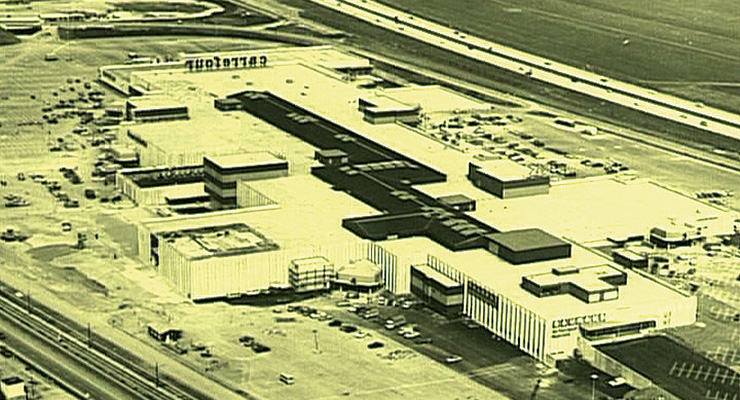
On September 22, 1976, the Shopping City Süd opened its doors in Vösendorf, south of Vienna. Conceived by Austrian entrepreneur Hans Dujsik and inspired by the American shopping center model, the project introduced a new type of retail destination to the Austrian market. With approximately 100,000 square meters of sales area and 160 stores at opening, it was a development of a scale that was unusual for the country at the time.

Fifty years later, the destination, now known as Westfield Shopping City Süd, has grown into one of Europe’s largest shopping destinations. Its current complex comprises 205,600 square meters of leasable space, 330 retail, hospitality and leisure brands and concepts, and more than 5,200 jobs. The anniversary offers an opportunity to look back at how the center developed, and how its role has changed alongside the retail industry.
A New Retail Model for Austria
The origins of SCS date back to the early 1970s, when Hans Dujsik began planning a shopping city south of Vienna. The concept was based on the American shopping center model, bringing a broad range of retail formats together in a destination supported by extensive parking and road access.
The location was central to the concept. Situated south of Vienna and close to important transport connections, SCS was designed to attract customers from a broad regional catchment area. Its opening marked a significant change in the Austrian retail landscape, shifting part of the retail offer away from traditional urban shopping streets toward a large, car-oriented destination.
The scale of the project was also reflected in its early performance. In 1977, just one year after opening, the first IKEA store in Austria opened on the site. That same year, SCS recorded approximately 7.5 million visitors and sales of around two billion Austrian Schilling (over 145 mio. €), according to Westfield’s historical overview.

Expansion Beyond Shopping
SCS did not remain a static retail complex. Its development over the decades reflects a broader shift in the shopping center industry, as operators increasingly incorporated hospitality, entertainment and leisure into the customer proposition.
A major expansion followed in 1988, adding approximately 40,000 square meters of sales area and around 70 stores and hospitality businesses. IKEA was also directly connected to the main shopping center. In 1994, the opening of the Multiplex introduced a new entertainment component, including a nine-screen cinema with approximately 2,200 seats, restaurants and additional retail space.
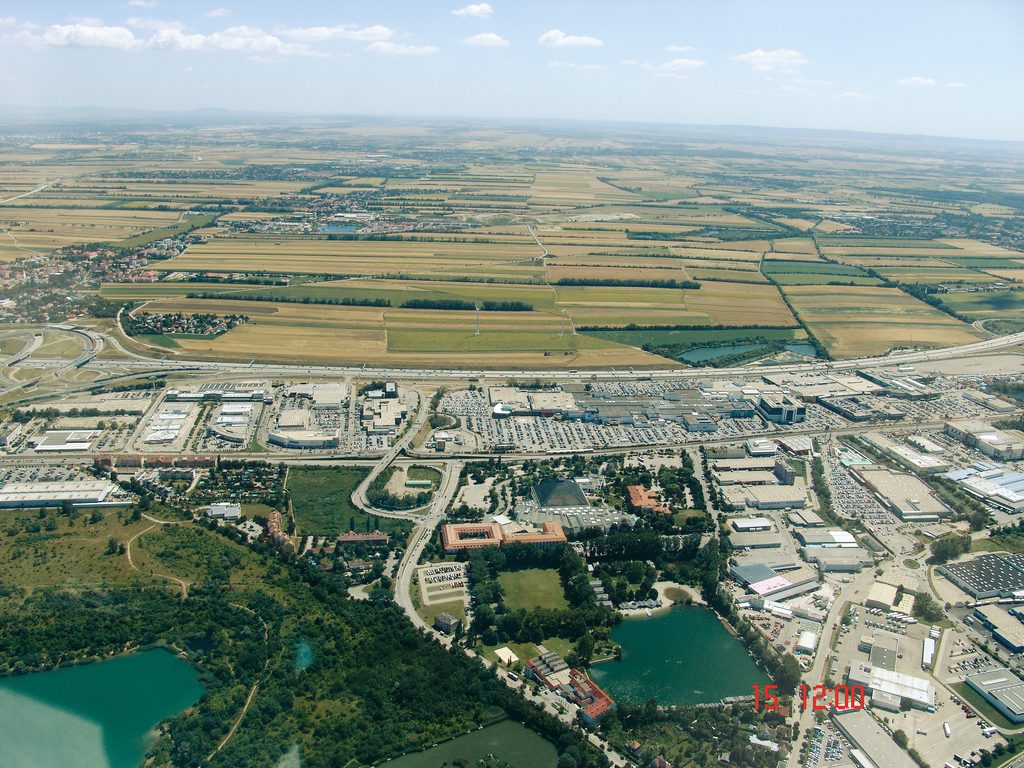
A further milestone came in 2002, when a continuous connection between the main building, IKEA and the Multiplex was completed. The result was a nearly one-kilometer-long, connected complex. The development strengthened the relationship between shopping, food and beverage, and entertainment, while extending the time customers could spend at the destination.
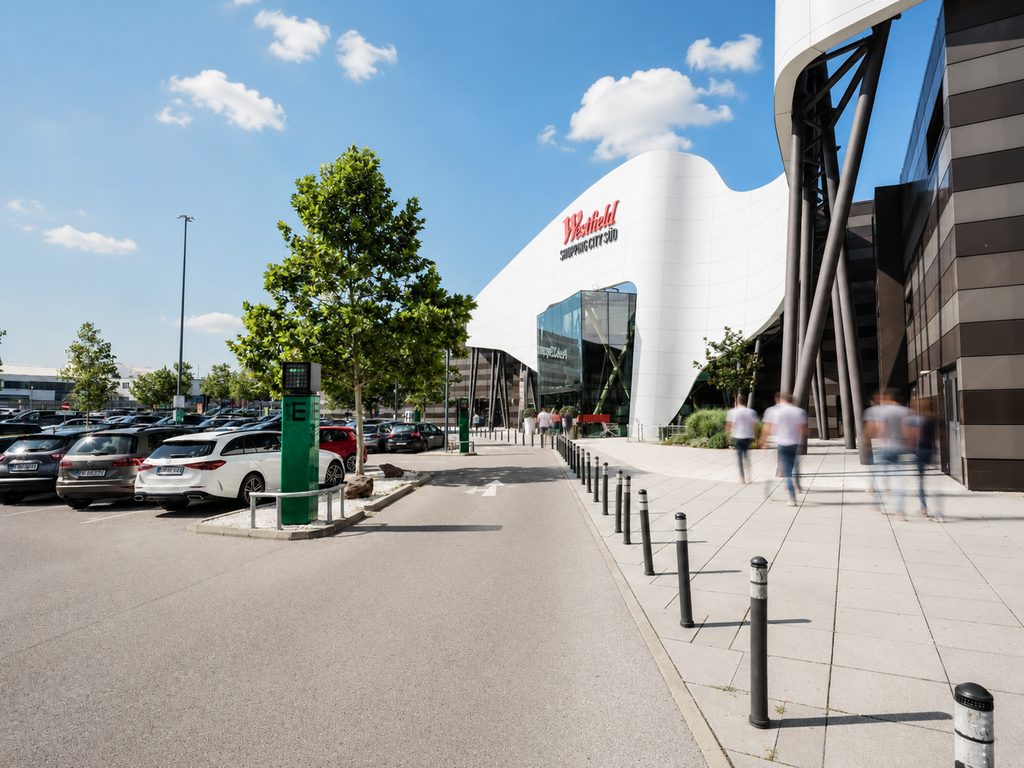
The evolution also included changes outside the main mall. In 2010, the SCS Park opened on the site of the former Motorcity and Sale City Süd, adding another retail area to the overall destination.
A New Ownership and Investment Phase
In 2008, the Shopping City Süd was acquired by Unibail-Rodamco, now Unibail-Rodamco-Westfield. The change of ownership was followed by a comprehensive modernization program, completed in 2013. More than €100 million was invested in areas including design, building technology and outdoor facilities.

The investment reflected the changing expectations placed on established shopping centers. Rather than relying solely on size and tenant numbers, destinations increasingly needed to maintain their physical environment, improve customer experience and respond to new patterns of retail and leisure consumption.
The center’s transformation continued after the modernization. In 2021, SCS adopted the Westfield brand as part of a wider rebranding initiative. The move connected the Austrian destination to Unibail-Rodamco-Westfield’s international network of retail-led destinations.
Retail, Leisure and the Next Generation of the Destination
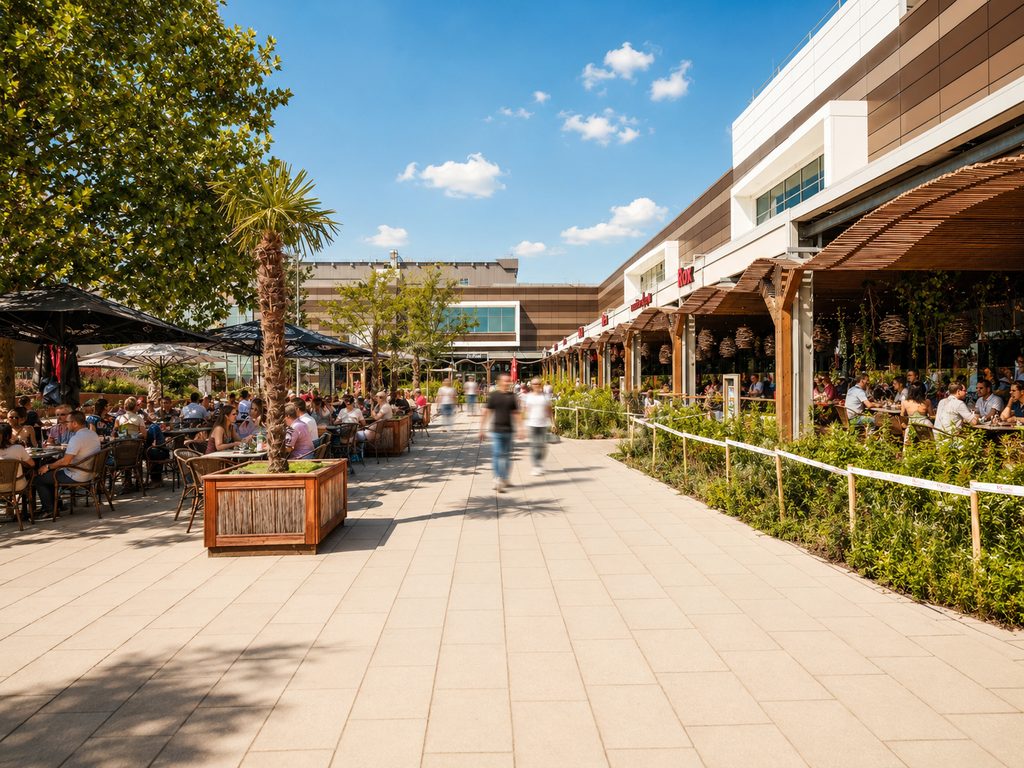
The more recent development of Westfield Shopping City Süd has placed additional emphasis on leisure, entertainment and hospitality. The center currently includes more than 60 food and beverage businesses across approximately 13,000 square meters, alongside a cinema and gaming, family entertainment and sports concepts.
The Multiplex has been a particular focus of this evolution. In 2023, the new Cineplexx Westfield SCS opened, followed by the DSTRCT entertainment center in 2024. The latter occupies approximately 5,000 square meters and further strengthens the leisure offer at the destination.

This development reflects a broader direction in shopping center management: established retail destinations are seeking to offer more reasons to visit beyond conventional shopping. Food, entertainment, services and social experiences have become increasingly important parts of the overall tenant and customer proposition.
For SCS, this is not a complete departure from its history. The destination has been expanding its retail and leisure offer for decades. What has changed is the scale and strategic importance of these additional uses within the overall center.
A Long-Term Retail Real Estate Asset
The history of Shopping City Süd also illustrates the importance of long-term asset development. The original 1976 project has been expanded, connected, modernized, rebranded and supplemented with new uses over five decades.
Today, Westfield Shopping City Süd describes itself as Austria’s largest shopping and leisure destination. Its 205,600 square meters of leasable space, 330 brands and concepts, and more than 5,200 jobs underline its continuing economic significance in the region. The destination is located at an important transport junction south of Vienna and remains one of Lower Austria’s major employment and commercial locations.
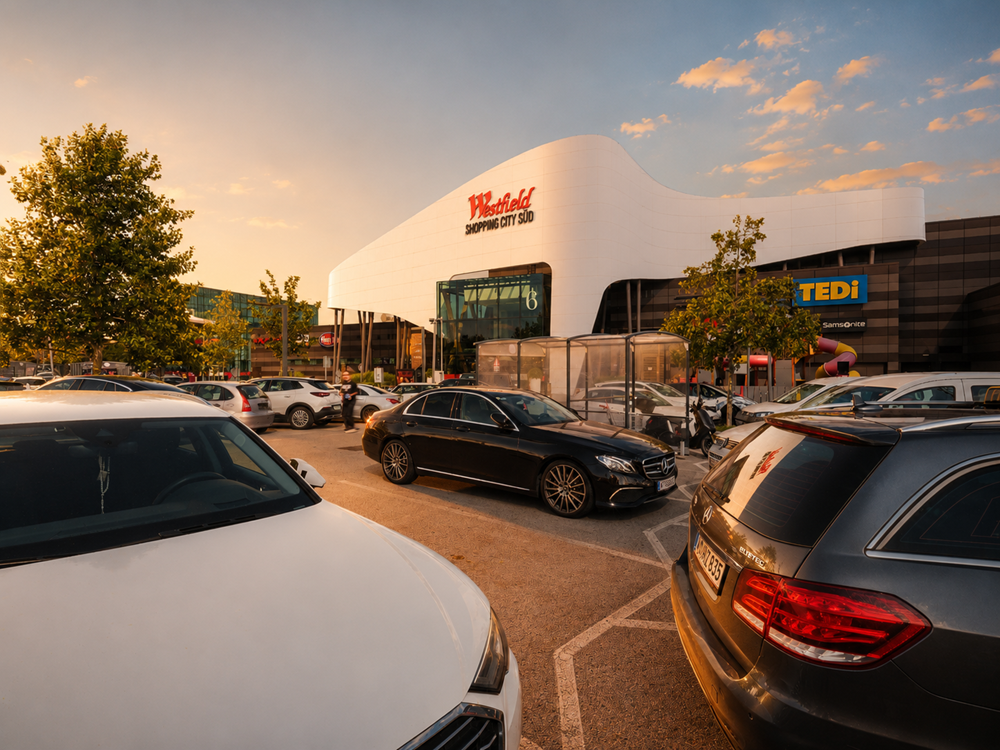
The anniversary arrives at a time when shopping centers are being assessed not only by their retail area, but also by their ability to remain relevant as destinations. The ongoing expansion of food and beverage, entertainment and leisure at SCS shows how a large retail asset can adapt its offer over time.
Fifty years after its opening, the Shopping City Süd is therefore both a historical landmark in Austrian retail and an example of the ongoing transformation of the shopping center model.
FACT BOX SHOPPING CITY SÜD
Opening: September 22, 1976
Location: Vösendorf, south of Vienna
Current leasable area: 205,600 sqm
Brands and concepts: 330
Employment: More than 5,200 jobs
Original size: 100,000 sqm / 160 stores
Owner change: Unibail-Rodamco, 2008
Westfield rebranding: 2021