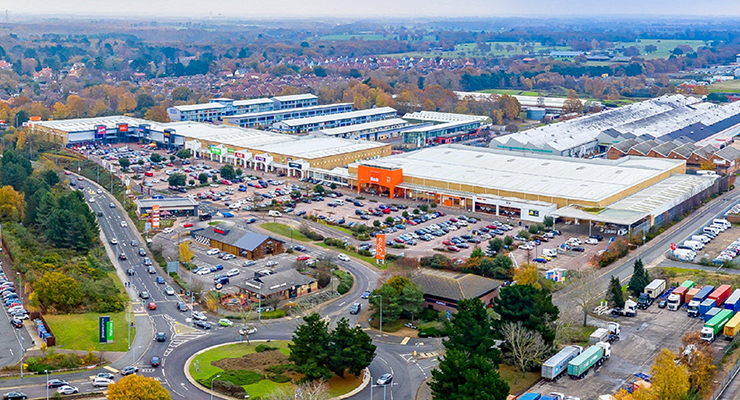
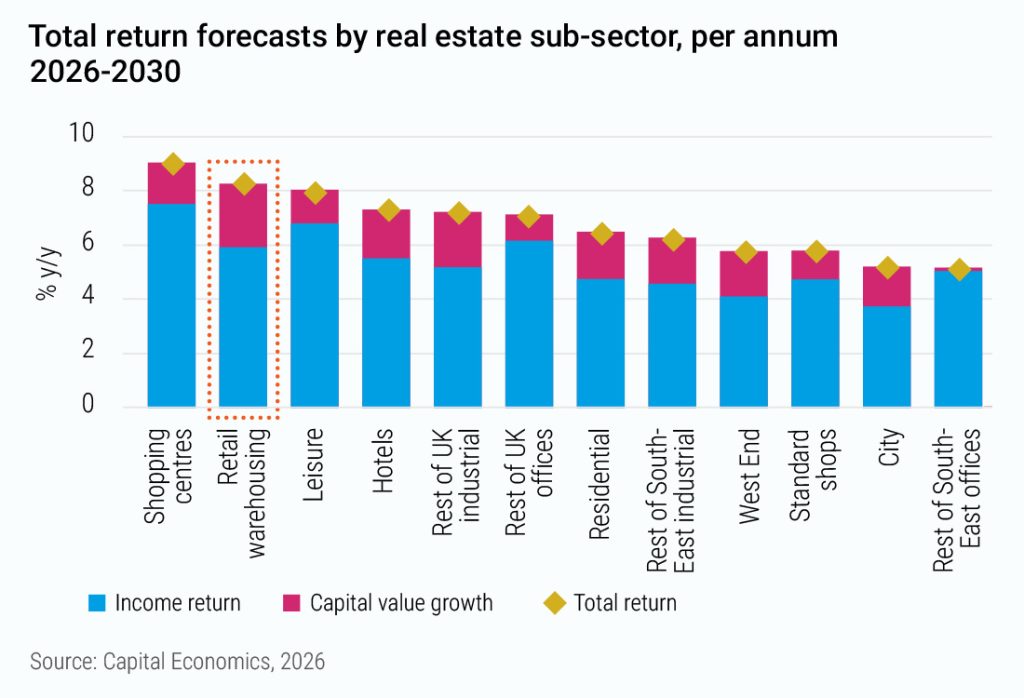
UK retail parks are forecast to deliver annual total returns of 8.3% between 2026 and 2030, according to research by Columbia Threadneedle Investments and Capital Economics. The outlook is underpinned by low vacancy, limited new development, and retailer demand for accessible, cost-effective locations.
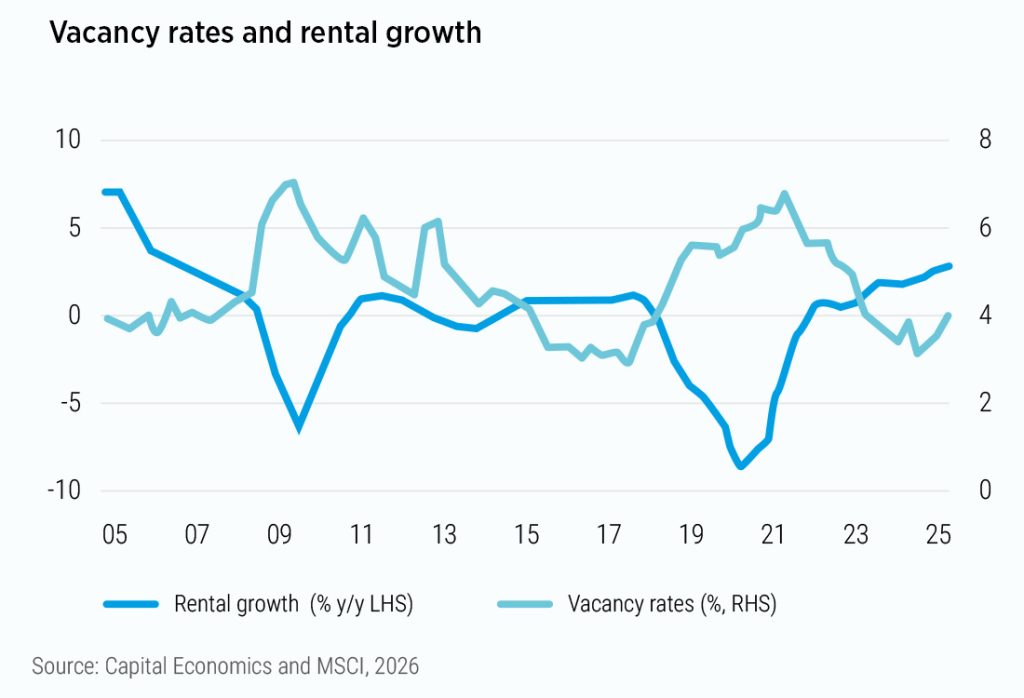
The report, The Case for UK Retail Parks, puts vacancy at approximately 3.5%. New development has slowed significantly: between 2020 and 2025, annual construction averaged less than 250,000 sq ft, compared with around 4.1 million sq ft per year in the 1990s. Planning constraints, higher construction costs, and limited development viability have restricted new supply.
Value and Convenience Support Demand
Retail parks are benefiting from consumers’ continued focus on value and convenience. Their accessible locations, free parking, and larger units also allow retailers to combine physical stores with online fulfilment and Click & Collect. UK Click & Collect sales rose from £8.9 billion in 2019 to £22.3 billion in 2025.
Value-focused operators have expanded their presence. Discount grocery and variety retailers now account for 22% of retail park floorspace, more than double their share a decade ago. They represented 86% of new out-of-town grocery openings in 2024, compared with 57% in 2020.
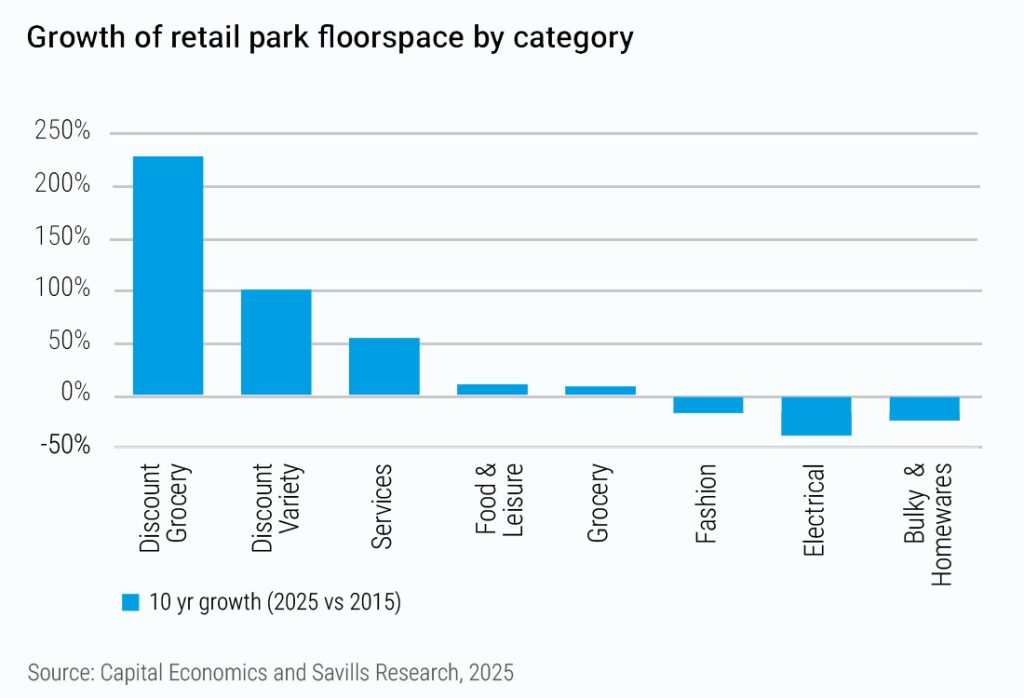
The tenant mix is also extending beyond discount retail. Retailers including Next and Marks & Spencer are using retail parks to complement their traditional high-street locations.
Occupier Costs Remain Competitive
Retail parks offer retailers a comparatively low-cost physical format. Rent as a proportion of retailer sales fell from 8% in 2019 to 5.3% in 2025, according to the report. Average rents stand at approximately £17.50 per sq ft, while typical service charges are below £2 per sq ft.
The format also has exposure to categories where physical stores remain important, including food and grocery, DIY, homewares, and furniture. Restaurants, cafés, cinemas, and gyms can further broaden the offer.
Supply Constraints Shape the Outlook
With limited new development and vacancy at around 3.5%, the researchers expect supply constraints to support rental growth and capital values over the medium term. Their forecast places retail parks among the stronger-performing UK commercial real estate sectors through 2030, although shopping centers are expected to deliver higher total returns.
Tom Elviss, fund manager at Columbia Threadneedle Investments, points to the combination of structural demand and constrained supply as a key support for the sector. The resulting outlook places retail parks among the stronger-performing segments of the UK commercial real estate market through 2030.