Ten years ago, the formula seemed simple: build it, fill it, manage it. Shopping centers across Central and Eastern Europe were riding a wave of retail expansion, and demand from international brands was strong enough to mask many strategic weaknesses. That era is over.
Today, the environment has fundamentally shifted. E-commerce has matured. Consumer expectations have risen sharply. Purchasing power is under pressure in many markets. New retail formats, from convenience-driven retail parks to experiential lifestyle destinations, are competing for the same visitor and the same euro. And the high street, long written off, has quietly regained relevance in several CEE cities.
In this context, the question is no longer whether a shopping center needs to evolve. The question is how, and with what clarity of vision. Because a shopping center is no longer just a place to shop. It is a place. And the centers that understand that distinction are the ones that are winning.
1. Reading Your Environment Before Acting
Every successful repositioning starts with the same thing: an honest diagnosis. Not a benchmarking exercise, not a comparison of GLA or tenant mix with the regional average, but a genuine reading of what is happening in the specific catchment area of a specific asset.
Who are the visitors today, and who could they be tomorrow? What are their habits, their expectations, their mobility patterns? What are they choosing instead of coming to the center, and why? These questions sound straightforward, but answering them requires both data and market intuition. In CEE markets, where consumer behavior is evolving rapidly and local nuances are significant, that intuition cannot be imported from a Western European playbook.
Belgrade offers a particularly vivid illustration of this dynamic. Over the last decade, and with an acceleration that has been nothing short of exponential in recent years, this relatively compact city has seen a wave of new retail supply that has fundamentally reshuffled the cards and reshaped its entire retail landscape. In a market that concentrated so much change into such a short period, the pressure on existing assets to reposition, refocus, and redefine their place has been immediate and unforgiving. In that sense, Belgrade is not just a case study. It is a laboratory, one of the most instructive in the region, for understanding what retail repositioning really demands.
2. Reconfiguring the Tenant Mix: Both a Science and an Art
Once the diagnosis is clear, the most visible lever of repositioning is the tenant mix. But tenant mix reconfiguration is frequently misunderstood, reduced to a simple exercise of replacing underperforming tenants with stronger ones, as if the challenge were merely a question of availability and negotiation.
In reality, a tenant mix is a narrative. It tells a story about what the center is, who it is for, and what experience it offers. Every category, every brand, every format either reinforces or contradicts that story. The categories that anchor footfall have also changed: health and wellness, food and beverage, leisure and entertainment, and everyday services have become essential components of a relevant tenant mix, not because they are trendy, but because they respond to how people actually use their time and make decisions about where to go.
Lease structure matters as much as tenant selection. The duration, flexibility, and financial terms of leases shape the center‘s ability to adapt over time. A well-designed leasing strategy can create the conditions for progressive transformation, with phased entries and exits that maintain commercial continuity while the mix evolves.
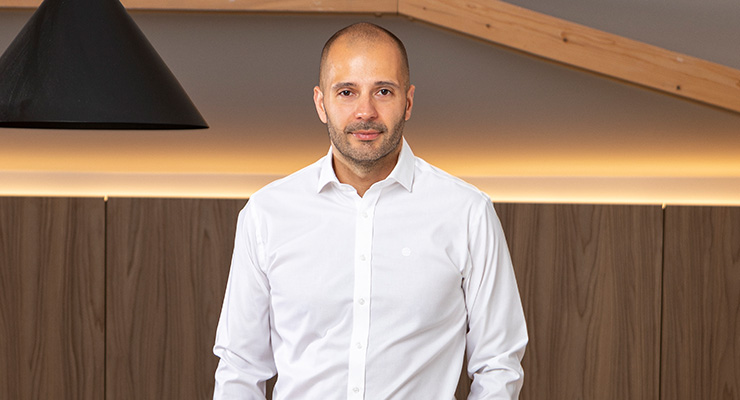
Three assets in Belgrade illustrate how different the right answer can be. Nemanja Bucinac worked on all three, first as Leasing Director at MPC Properties on Ušće and Mercator Center, then through Stonedge Advisory on ADA Mall.
Ušće Shopping Center was for many years the reference point for retail in Belgrade, attracting visitors from both banks of the river in a market where meaningful competition simply did not exist. When Galerija opened, twice the size and with a strong food and beverage offer setting a new market standard, Ušće faced a challenge that went beyond competition: it had to define itself for the first time. The strategy focused on making the best possible use of existing surfaces, significantly expanding the F&B and experiential offer within the same footprint, and redefining the tenant mix around a clearer identity and a more focused catchment. The answer was not more space, but smarter space.
Mercator Center presented a different challenge. Built around a hypermarket as its primary anchor, the center had a loyal but functionally driven visitor base. The repositioning objective was to reduce dependency on grocery traffic and create new, independent reasons to visit. This meant introducing a diverse, quality-driven F&B offer at both ends of the mall, with concepts ranging from a steakhouse to a brunch destination, generating footfall throughout the day and extending average visit duration.
ADA Mall, a more modern asset, faced the proximity of Galerija on the same bank of the river, competing directly for the same catchment. The response was a disciplined consolidation and refinement of the tenant mix, sharpening the center‘s positioning to its specific zone and ensuring that its offer was coherent, competitive, and clearly differentiated.
3. Repositioning is Multidisciplinary
One of the most common mistakes in retail repositioning is to treat it as a leasing problem. Change the tenants, improve the occupancy rate, and the center will follow. This approach produces results that are partial at best and counterproductive at worst. A genuine repositioning is multidisciplinary by nature. The tenant mix is one lever among many. Layout and circulation patterns determine how visitors move through the center. The architectural identity and the physical condition of the asset send signals that no marketing campaign can override. The customer experience, from parking to wayfinding to the quality of common areas, shapes perception as much as the brands inside.
Every decision made in one area affects all the others. A new anchor tenant in the wrong location does not generate the expected footfall. A refurbished common area that is inconsistent with the positioning of the retail offer creates confusion rather than confidence. A marketing campaign that promises an experience the center cannot yet deliver accelerates disappointment rather than loyalty.
Repositioning is also not a project with a defined end date. It is a process, and it requires sustained commitment. The landlord-tenant relationship is central to that process: managing the phasing of entries and exits, supporting tenants through the transition, maintaining occupancy levels while the mix evolves, and negotiating with the discipline and the long-term view that short-term pressure often undermines.
4. Positioning, Branding and Market Perception
A repositioning that is not perceived is a repositioning that has not happened. The communication and branding dimension of retail asset repositioning remains one of the most consistently underestimated.
The identity of a shopping center is built through every signal it sends: its name, its visual identity, the quality of its digital presence, the events it hosts, the way it communicates with its community. When a center evolves, those signals must evolve with it, coherently and deliberately. A center that has invested in a new F&B offer, refreshed its common areas, and attracted stronger tenants, but has not updated the way it presents itself to the market, will find that perception lags reality by years.
This matters for two audiences simultaneously. For consumers, positioning and branding shape the decision to visit and the expectation they arrive with. For potential tenants, the image of the center determines which brands are willing to consider it, at what rental level, and under what conditions. A center that is perceived as stagnant will attract tenants looking for cheap space, not tenants who will reinforce its repositioning. The image of the asset is part of the product.
Brand and marketing positioning are therefore not a finishing touch. They are a strategic dimension that must be planned from the outset, ensuring consistency across all touchpoints, from physical to digital.
5. Capital Discipline: Investing Right When Resources are Already Under Pressure
There is an inherent paradox at the heart of retail repositioning: the assets that need it most are often those that have already experienced a contraction in revenues, footfall, and financial headroom. They are being asked to invest when their capacity to invest has already been reduced.
This makes capital discipline the foundation of a credible strategy. Spending freely on initiatives that feel like progress but do not generate measurable return consumes the resources needed when the right opportunity finally arrives.
The areas where owners and asset managers most commonly misallocate are instructive: cosmetic refurbishment that improves appearances without addressing structural weaknesses; excessive fit-out contributions granted to fill space quickly, without sufficient selectivity about whether those tenants actually serve the repositioning objective; decorative upgrades that signal change to visitors without creating the conditions for a genuinely different experience.
The discipline required is to test every capital allocation decision against two questions: does this investment serve the repositioning objective, and does its expected return justify its cost at this stage of the process? These questions are easier to ask than to answer. But they separate a repositioning that builds lasting value from one that depletes resources without changing the trajectory.
6. Placemaking as the Guiding Principle
Underlying every dimension of retail repositioning is a question that is rarely asked explicitly but that shapes every decision: what place do we want to be?
The question is not what kind of center, nor what retail offer — but what place, in the fullest sense, we want to create.
The distinction matters because it reframes the objective. A retail offer can be replicated. A place cannot. A place has a character, a community, a set of experiences and associations that make it specific and irreplaceable within its context. The shopping centers that are thriving in the current environment are those that have moved beyond the logic of commercial supply and demand and toward the logic of placemaking.
In CEE and the Balkans, this shift carries particular weight. Shopping centers in this region have historically played a social role that goes beyond retail, serving as genuine gathering places for urban communities, especially in cities where public space has been limited or underinvested. That social function is not a remnant of an earlier era. It is an asset. Placemaking is therefore not a concept reserved for urban development or public space design. It is the strategic lens through which every repositioning decision should be made. Which tenants create reasons to gather, not just reasons to buy? Which events and activations build community rather than simply generate footfall? Which physical interventions make the center feel like it belongs to its neighborhood? In a changing market, the centers that will remain relevant are those that have become, genuinely and durably, a place.
Conclusion
The CEE retail market is not in crisis. It is in transition, and transition, for those who know how to read it, is an opportunity.
The centers that will define the next decade in this region are not necessarily the newest or the largest. They are the ones led by owners and advisors who are willing to look honestly at their situation, invest with discipline and intention, communicate with clarity, and above all, keep asking the question that matters most: what place do we want to be?
The work done at Ušće, ADA Mall, and Mercator Center in Belgrade is evidence of what that question looks like in practice, and what it can produce when it is asked seriously.
The market is changing. The best destinations are changing with it.
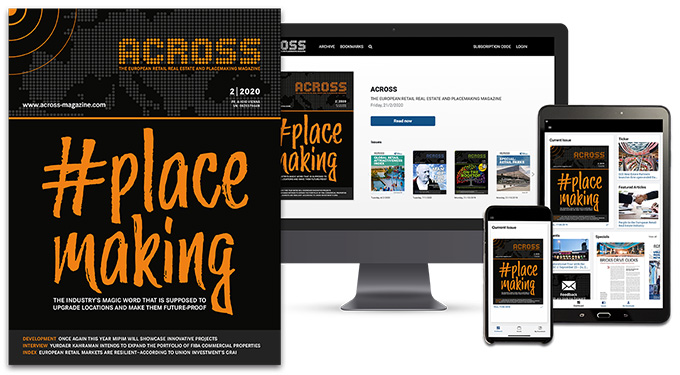
This article was originally published in ACROSS 4/2026.