Attention has become one of marketing’s most valuable currencies. As consumers grow increasingly selective about the content they engage with, advertisers are shifting their focus from maximizing reach to earning genuine attention. That change is beginning to reshape not only advertising strategies, but also the role of shopping centers within the media landscape.
One reason for this shift is a growing phenomenon commonly referred to as digital advertising fatigue. According to research published in the International Journal of Advanced Research in Commerce, Management and Social Science, constant exposure to digital advertising contributes to banner blindness, ad avoidance and declining consumer engagement, forcing marketers to rethink how they measure campaign effectiveness.
The Attention Economy Changes Marketing
The shift reflects a broader transformation within the advertising industry. For decades, media planning centered on reach and frequency. Today, attention is increasingly regarded as the more valuable metric. If consumers actively filter advertising from their daily lives, simply increasing exposure is unlikely to improve campaign performance.
Instead, marketers are looking for environments where consumers are naturally receptive to discovering products and brands. This growing emphasis on context rather than interruption is renewing interest in physical spaces, where advertising becomes part of the customer experience instead of competing for attention on an endless digital feed.

Shopping Centers Offer a Different Environment
A recent study by Westfield Rise, Unibail-Rodamco-Westfield’s in-house retail media agency, together with attention measurement specialist Lumen Research, suggests that shopping centers may benefit from this shift.
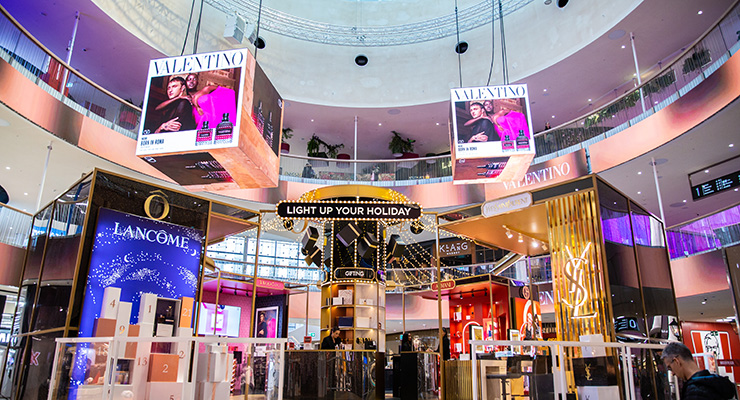
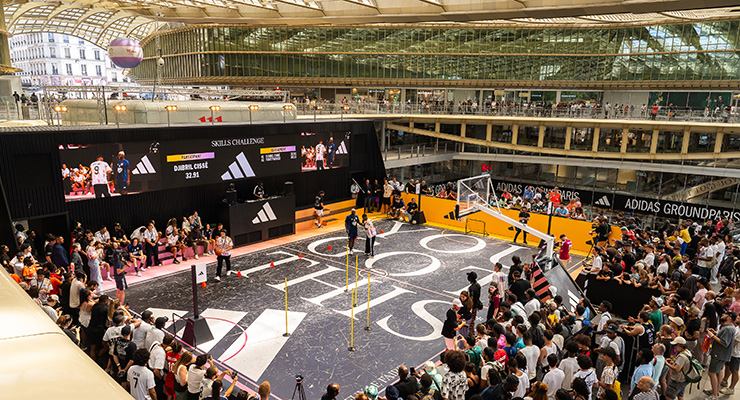
Using eye-tracking technology and a study involving 1,600 UK consumers, the research compared how people engaged with advertising across different media environments. According to the findings, experiential brand activations inside Westfield shopping centers generated attention levels comparable to cinema advertising, while the company’s digital media formats outperformed conventional digital out-of-home benchmarks.
Perhaps more importantly, consumers who first encountered advertising inside a shopping center showed significantly stronger recall of related social media campaigns. The findings suggest that physical and digital media can reinforce one another rather than compete.
Although the research focuses exclusively on Westfield destinations, it reflects a broader question that is becoming increasingly relevant for the retail real estate industry: can shopping centers become valuable media environments as well as retail destinations?
Attention Becomes a Retail Asset
The implications extend far beyond advertising performance. If consumer attention is becoming a commercial asset, shopping centers possess several advantages that are difficult to replicate in digital environments.
Across Europe, many shopping center owners are expanding their business models through retail media networks, digital screens, experiential marketing, customer data platforms and brand partnerships. These activities complement traditional rental income while creating new ways for brands to engage consumers closer to the point of purchase.
Unlike digital advertising, shopping centers combine several characteristics that are difficult to replicate online. They attract visitors with relatively long dwell times, encourage discovery and social interaction, and provide brands with opportunities to combine physical experiences with digital campaigns.
In many respects, this mirrors developments in e-commerce. Companies such as Amazon have shown how advertising and first-party customer data can evolve into significant revenue streams alongside their core retail business. Physical retail destinations are now exploring similar opportunities by monetizing footfall, customer engagement and media inventory.
An Emerging Business Model
The Westfield Rise study does not prove that digital fatigue alone is driving stronger advertising performance in shopping centers, nor should its findings automatically be applied to every retail destination. Nevertheless, it supports a growing body of research suggesting that attention is becoming one of marketing’s most valuable resources and that physical environments can play an increasingly important role in capturing it.
For retail real estate owners, this represents more than a new advertising opportunity. As shopping centers continue to evolve into mixed-use destinations combining retail, food, leisure, entertainment and services, retail media is emerging as another component of the value proposition.
In the attention economy, shopping centers are evolving beyond places where consumers spend money. They are becoming environments where retailers, brands and landlords all compete for, and increasingly benefit from, one of today’s scarcest resources: consumer attention.