Capital is looking for opportunities in European retail real estate. Germany, however, is not yet benefiting fully from that momentum. High transformation costs, regulatory hurdles and uncertainty over future use continue to complicate investment decisions.

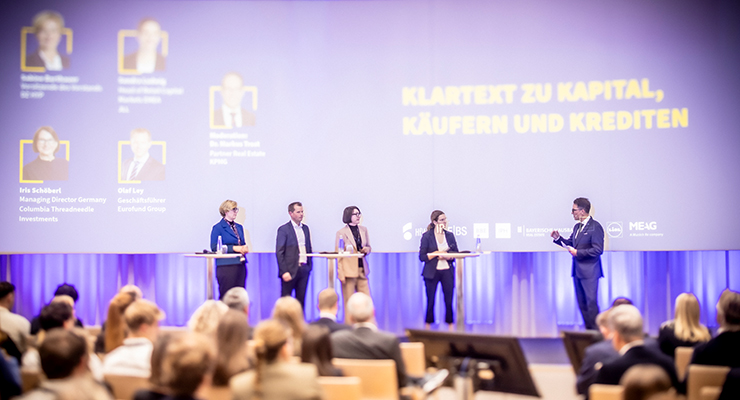
At the German Retail Real Estate Day in Munich (Deutscher Handelsimmobilientag, DHIT), Sabine Barthauer (DZ HYP), Sandra Ludwig (JLL), Iris Schöberl (ZIA) and Olaf Ley (Eurofund Group) discussed what investors need, where opportunities remain, and what must change to get more deals moving.
Germany Is Competing for Capital
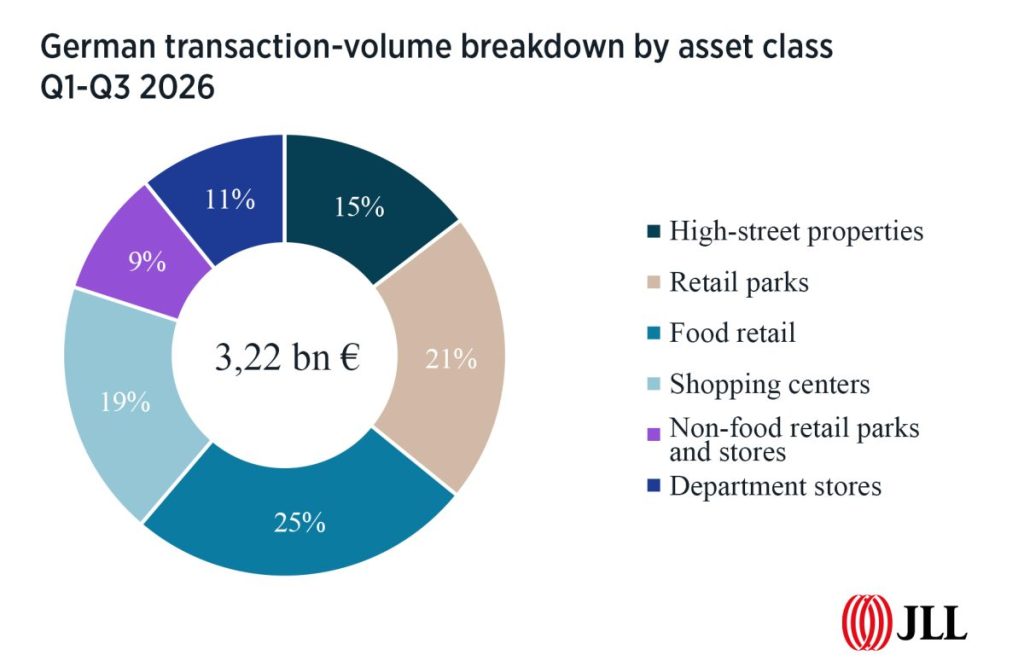
Germany’s retail real estate investment market remains active, but investors are increasingly price-sensitive. JLL recorded approximately €3.22 billion in transaction volume in the first nine months of 2026 and forecast around €6 billion for the full year, compared with €6.5 billion in 2025.
Domestic investors accounted for 59% of transaction volume through September, up from 53% in 2025. International capital nevertheless remains crucial for larger deals: foreign investors represented more than 70% of the investor pool for transactions above €100 million. JLL also recorded more than 180 bids for German retail assets in 2026, representing a total bid volume of over €4 billion.
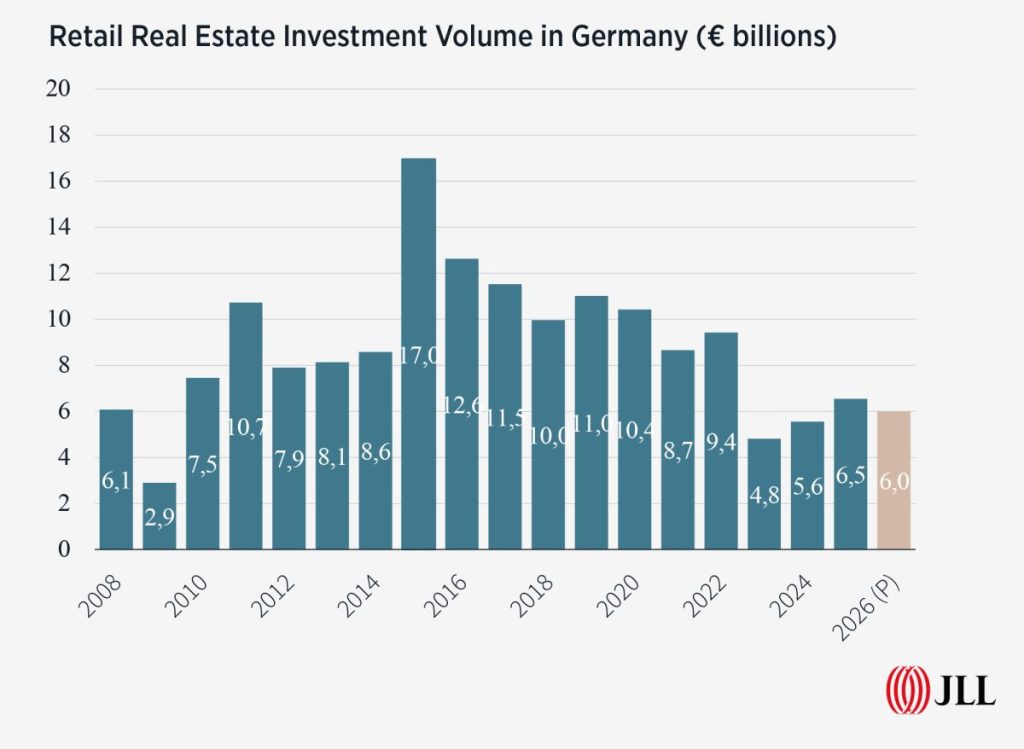
The figures point to renewed activity, but not indiscriminate buying. Investors are looking for the right assets at the right price.
The asset-class breakdown underlines the appeal of necessity-driven retail. Food retail accounted for 25% of German retail investment volume in the first three quarters of 2026, followed by retail parks at 21%. Shopping centers and high-street properties each represented 19%, while non-food specialist retail accounted for 9%.
Across Europe, retail investment volume rose 10% year over year in the same period. Shopping centers accounted for 31% of European retail investment, ahead of high-street properties at 25% and retail parks at 24%. The figures suggest that investor interest extends beyond necessity-driven formats, with shopping centers continuing to attract substantial capital.
For Germany, the challenge is to convert that interest into transactions. Investors have alternatives, and uncertainty over costs, approvals and future use can make other markets more attractive.
“International investors remain crucial for larger German retail real estate transactions.”
Sandra Ludwig, JLL
Banks Want Cash Flow and Flexibility
For Sabine Barthauer, Chair of the Management Board at DZ HYP, financing starts with the fundamentals of the asset. Banks need reliable cash flow, but they also want to know whether a property can withstand vacancies, tenant changes and repositioning.
“Banks need stable cash flows, but also the flexibility to reposition properties and weather periods of vacancy.”
Sabine Barthauer, DZ HYP
That assessment goes beyond the building itself. Location, catchment area, purchasing power and the relevance of the tenant mix all matter. A property must serve an identifiable audience and give people a reason to visit.
Barthauer pointed to cities such as Münster and Freiburg as examples of markets where purchasing power, tourism and cultural appeal can support retail beyond Germany’s largest metropolitan areas. Food concepts, pop-ups and experiential offers can also help attract visitors, provided they respond to local demand.
For banks, a credible transformation strategy must be backed by sufficient liquidity and the flexibility to adapt. Owners need to monitor footfall, vacancy, sales and visitor profiles, and respond before a property’s performance deteriorates. A strong concept matters, but so does the capacity to keep it relevant.
“The key is to understand the location, know the target audience, and align the property with its needs.”
Sabine Barthauer, DZ HYP
Transformation Needs the Right Entry Price
Olaf Ley of Eurofund Group knows how difficult that calculation can be. At Rhein-Ruhr Zentrum in Mülheim, acquired in 2023, Eurofund is planning an investment of up to €180 million, including €90 million for the first phase.
“The entry price must reflect the investment and the complexity of the transformation.”
Olaf Ley, Eurofund
The center had a vacancy rate of around 25%, yet continued to attract approximately 4.7 million visitors annually. The redevelopment is intended to create a convenience-oriented hub alongside a renewed fashion and sports offer, with improvements to access, food and leisure. The plan also includes new family-oriented entertainment.
The project illustrates the challenge of transforming a large, established shopping center while keeping it operational. Ley acknowledged that the complexity of managing the property during redevelopment had been underestimated. Rather than pursue a rapid transformation followed by an exit, Eurofund shifted toward refinancing and a longer holding period.
The lesson is clear: transformation costs, operational complexity and the time needed to deliver a new concept must be reflected in the investment decision.
“Transformation creates value only when the new concept is in demand, legally feasible, financeable, and economically viable over the long term.”
Iris Schöberl, ZIA
As the panel discussion made clear, entry price is decisive. Investors need to factor in capital expenditure, future rental income and the possibility that additional space will require substantial conversion. Lenders, in turn, need to test the business plan against different scenarios, including a downside case in which leasing or redevelopment falls short of expectations.
A property may offer significant upside, but that does not make every price viable.
Retail Parks and Shopping Centers: Different Investment Profiles
JLL’s figures show that German investors continue to favor necessity-driven formats, particularly food retail and retail parks. Their tenant mix and business models can make income streams easier to assess.
Shopping centers present a more complicated proposition. Their performance depends on a broader tenant mix, active asset management and the ability to maintain relevance as consumer behavior changes. Large centers also require more capital, limiting the pool of investors able to acquire them.
International investors remain especially important in the larger and more complex segment of the market. Family offices and private equity investors are also active, although their investment horizons and return expectations differ from those of long-term institutional owners. During the panel discussion, participants noted that some private equity investors target annualized returns of 15% or more, placing considerable pressure on acquisition prices and exit strategies.
Long-term investors may be prepared to take a different view of prime high-street assets, particularly in locations where the underlying land is scarce. But that approach applies only to a limited number of properties. It cannot sustain the market as a whole.
For most assets, the numbers must work under realistic assumptions, not just in the best-case scenario.
Regulation Is Adding to the Risk
Iris Schöberl, President of the German Property Federation (ZIA), argued that Germany is making investment unnecessarily difficult. Her criticism was not directed at the need to assess risks, but at the uncertainty created by administrative procedures, unclear responsibilities, repeated expert reports and lengthy approval processes.
A project can become uneconomic while waiting for permission to proceed. The problem is particularly acute when an existing retail property needs a new use to remain viable.
Schöberl called for a more flexible legal framework for conversions of commercial property, including a more practical approach to changes of use. Adapting a vacant retail unit to a food concept or another use should not automatically trigger a lengthy process if the proposed use is appropriate for the location and building.
The issue is especially relevant to former department stores and other large retail properties. Their future may depend on combining retail with food, leisure, healthcare, education, culture, offices or residential uses. Such projects are already difficult to finance and execute. Unpredictable approval procedures add another layer of risk.
“Capital is mobile. A building permit is not,” Schöberl said.
Investors can assess commercial risks such as interest rates, construction costs and changing consumer demand. They have far less control over shifting regulations, unclear responsibilities and years of waiting. Those risks affect the return they require and can determine whether a project proceeds at all.
From Retail Space to a Destination
For Ley, the opportunity lies in identifying a viable future for assets that no longer perform as they once did. Eurofund’s projects illustrate how repositioning can involve more than replacing tenants.
At Silverburn in Glasgow, Eurofund strengthened the tenant mix with major flagship stores and new leisure concepts. Sales in 2024 were 42.5% above 2019 levels, while footfall reached 15 million. The company also reported a substantial reduction in vacancy since the acquisition.
At UBBO center in Lisbon, Eurofund reconfigured the underused central space into an area with food stalls, seating, greenery and event space. The aim was to create a more attractive place to spend time and broaden the destination’s appeal.
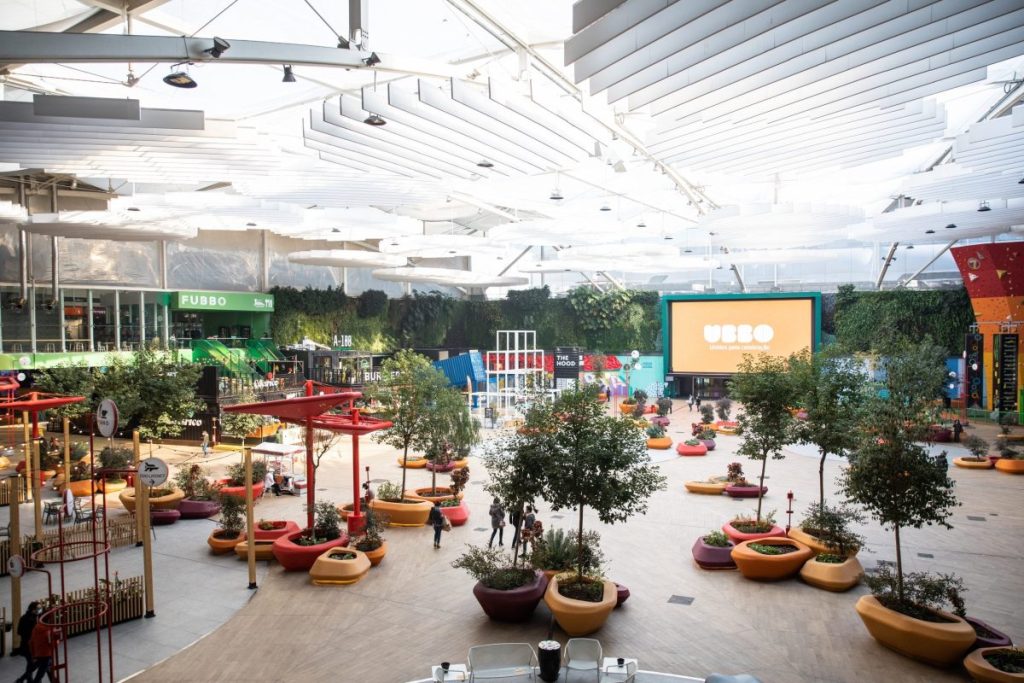
These projects illustrate different ways to strengthen a retail destination, from improving the tenant mix to making better use of shared space. But they are not universal formulas. The right approach depends on the location, customer base and property’s physical and commercial constraints.
That distinction matters particularly for former department stores and vacant high-street properties. Mixed use can create new income streams, but only if the uses fit the location and can be delivered economically. Not every building can support every proposed function, and not every transformation will generate an adequate return.
Making the Investment Case Work
The discussion in Munich came back to three connected requirements: a realistic acquisition price, a credible plan for the property and a framework that allows the plan to be executed.
Banks need to recognize viable opportunities without compromising their assessment of risk. Investors must account for redevelopment costs, operational complexity and downside scenarios from the outset. Policymakers and local authorities need to make approvals more predictable and enable buildings to adapt to changing demand.
For Germany, the challenge is not simply to attract more investment. It is to make viable projects possible by aligning acquisition prices, expected returns and the costs of transformation, while creating a regulatory framework that allows projects to move forward.
Capital is available, but it will flow only where the investment case is credible and the conditions for delivery are in place.