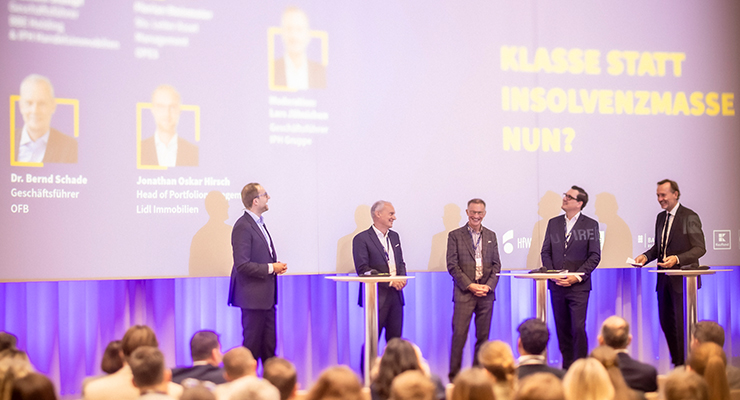
The collapse of René Benko’s Signa Group intensified the upheaval in German retail real estate. The insolvency, followed by store closures and further insolvencies across the retail sector, left cities, landlords, and investors facing difficult questions about the future of their properties. Buildings that had once served as major retail anchors suddenly needed new tenants, new concepts, and, in many cases, substantial investment.
Traditional department stores, however, were already under pressure from changing shopping habits, declining demand for conventional retail space, and the high costs of operating large urban properties. Signa’s collapse accelerated a structural shift that was already underway.
At the German Retail Real Estate Day in Munich, industry experts discussed how these properties can be brought back to life. Their message was clear: there is no universal solution. Successful transformation starts with the needs of each location, a viable mix of uses, and a realistic assessment of the investment required.
A Structural Shift, Not Just a Signa Legacy
For Joachim Stumpf of IPH Group, the Signa insolvency is part of a much broader transformation of brick-and-mortar retail. Nonfood retail space in Germany is expected to shrink by 10 million square meters by 2035, according to figures presented by Stumpf. He also pointed to approximately 14,400 store closures between 2024 and 2026, reflecting the pressure on traditional department stores and independent retailers alike.
The challenge is therefore not simply to find new tenants for vacant space. It is to determine what a property and its surrounding area actually need, and whether the economics support a new concept.
Stumpf argued that department stores can still play a role, but only if they respond to their local markets, invest in their offer, and provide reasons for customers to visit. That requires substantial capital. Without investment in store design, merchandising, foodservice, and the overall customer experience, even well-located properties will struggle to regain their relevance.
Nor does every former department store need to remain a department store. Stumpf pointed to the growing role of complementary uses such as foodservice, leisure, fitness, healthcare, offices, and hotels. In smaller cities, public institutions such as libraries, adult education centers, and cultural facilities can also help restore activity.
The starting point, however, must always be the individual location. A concept that works in a prosperous urban district may not be viable in a weaker catchment area. Acquisition costs and the investment required for conversion must reflect that reality.
Rebuilding the Urban Destination
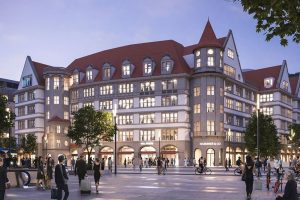
The transformation of Munich’s Alte Akademie illustrates how a former retail property can be reimagined as a broader urban destination. The project originally was announced by Signa and already launched in 2020.
Today, OPES is developing the historic property around a mix of retail, offices, long-stay apartments, and gastronomy. The Signa project has been revised. Plans now include approximately 5,500 square meters of retail space, 13,000 square meters of offices, 115 long-stay apartments, and three foodservice units.
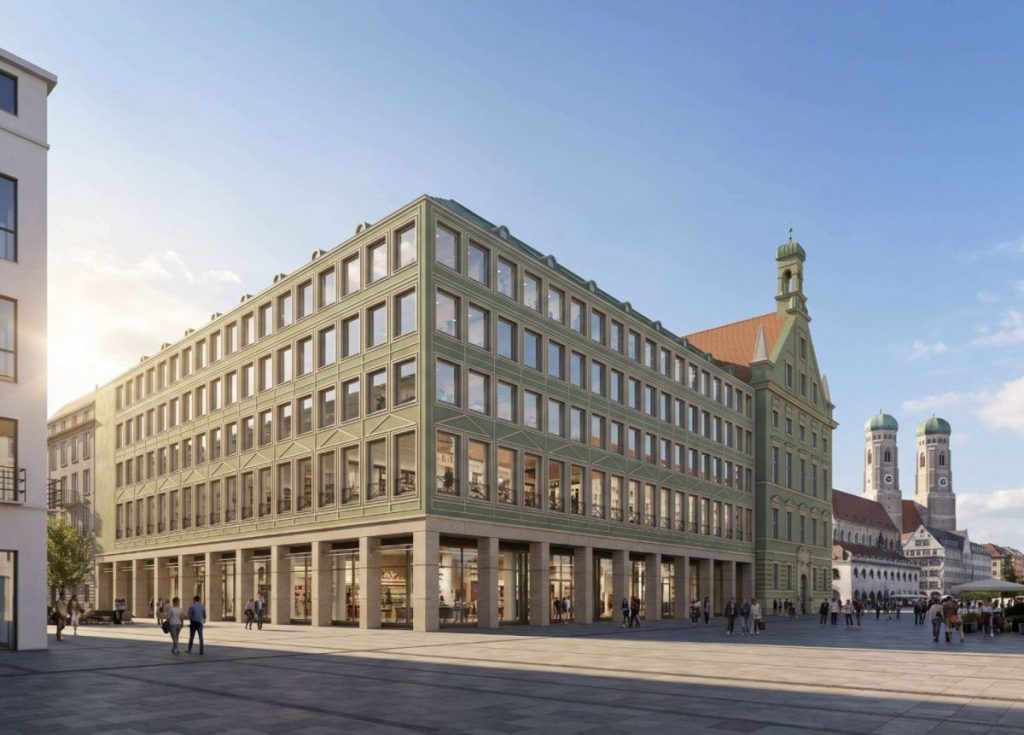
For Florian Steinmaier of OPES, the objective is not simply to fill vacant space, but to create a place where different uses support one another. Retail can attract visitors, offices provide activity during the working day, hospitality brings guests, and gastronomy creates opportunities for people to meet and spend time.
The building’s historic character is part of that proposition. Steinmaier states that OPES sees and treats heritage protection not as a constraint but as a source of identity. The project also demonstrates the complexity of transforming an established urban property, where technical requirements, planning decisions, and the needs of future tenants must be reconciled.
A similar principle underpins OFB’s plans for Munich’s Rotkreuzplatz. As Bernd Schade explained, the location itself has not lost its relevance; its existing use model has become outdated. OFB is therefore examining a mixed-use concept combining retail, offices, a hotel, and residential uses.
The aim is to spread activity across the day and broaden the property’s economic base. But the mix must work both commercially and operationally. Construction and fit-out costs, rental income, tenant demand, and the investment appeal of the completed property all have to be considered alongside the goal of creating a more attractive place.
Food Retail as an Anchor for Everyday Life
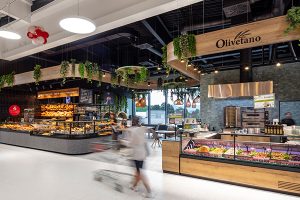
Food retail offers another route to giving former department-store properties a new role. Jonathan Oskar Hirsch, Head of Portfolio Management at Lidl Germany, presented examples in Berlin-Wedding and at Tempelhofer Damm, where former Karstadt properties have been converted to accommodate new retail and complementary uses.
The projects illustrate how former department-store space can be divided into more focused formats. At Tempelhofer Damm, the new concept includes food retail alongside nonfood discount, drugstore, organic grocery, and home-furnishing offers. In Wedding, the proposed mix includes nonfood discount, textile discount, fitness and wellness, entertainment, and self-storage.
For Lidl, the case for food retail goes beyond the supermarket itself. Grocery shopping generates regular visits and can support the wider location. Hirsch cited research showing that consumers make an average of 1.8 grocery-shopping trips per week, while shopping remains a leading reason for visiting city centers.
But the fit must be assessed carefully. Accessibility, the store’s position within the property, parking, and the interaction with other uses all affect performance. Complementary tenants can generate additional visits, but their operating hours and space requirements must also be compatible. A use that appears attractive on paper may create practical conflicts if, for example, several activities compete for the same parking capacity at peak times.
No One-Size-Fits-All Solution
The panel discussion, moderated by Lars Jähnichen of IPH Group, returned repeatedly to the same point: successful transformation depends on more than a change of use. Investors must be willing to commit capital, owners need a realistic view of the property’s potential, and the resulting concept must respond to the local market.
For former department stores, the alternatives range from a reworked retail offer to mixed-use developments and neighborhood-oriented destinations. Food retail can provide recurring footfall; offices, hospitality, leisure, and public uses can extend activity beyond shopping hours. Yet none is an automatic answer.
The Signa collapse has made the need for change more visible. What happens next will depend on whether owners and investors can turn that pressure into viable projects, with concepts that work for both the property and the people around it.