The digitization of retail real estate has transformed everything from leasing and facility management to footfall analytics and customer engagement. Yet one area has remained surprisingly traditional: the buying and selling of advertising space within shopping centers.
Romanian company Generatik wants to change that.
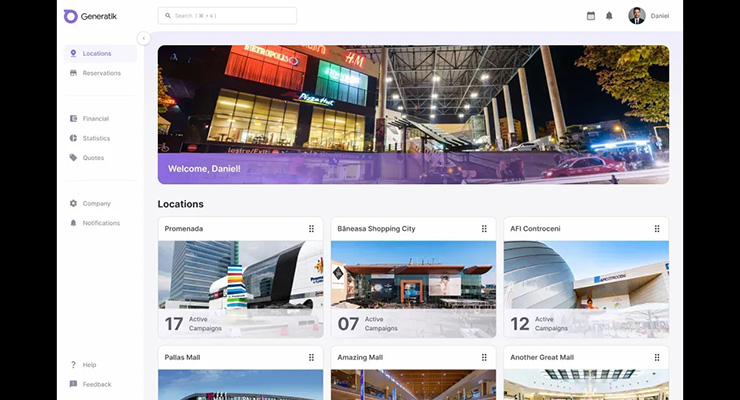
Launched by Brand Management, a company with more than two decades of experience in indoor advertising, Generatik positions itself as a digital platform for planning, booking, managing, and monitoring advertising campaigns in shopping centers and other high-traffic indoor locations. Its proposition is straightforward: bring the transparency, speed, and convenience of digital media buying to physical advertising.
The company says it can reduce a process that traditionally takes weeks of emails, phone calls, spreadsheets, availability checks, and manual coordination to around 20 minutes. The platform combines inventory management, availability, pricing, campaign planning, booking, implementation, and reporting in a single interface.
The ambition goes beyond making an existing process more efficient. Generatik wants to create a multi-operator marketplace in which advertising inventory across different shopping centers can be discovered, compared, and purchased through one platform.
From Fragmented Processes to a Digital Marketplace
The problem Generatik identified is relatively simple. Shopping centers have extensive advertising inventory, ranging from digital screens to banners, totems, window and floor displays, backlit panels, and event spaces. But much of this inventory has traditionally been managed through individual relationships and manual processes.
Generatik’s approach is to turn these spaces into clearly defined, bookable products. According to the company, each advertising space on the platform has its own location data, format specification, audience profile, availability calendar, and price.
The platform currently manages more than 3,000 individual advertising spaces. At full rate-card value, Generatik puts the annualized value of the listed inventory at approximately €54 million, although actual advertising revenue is lower.
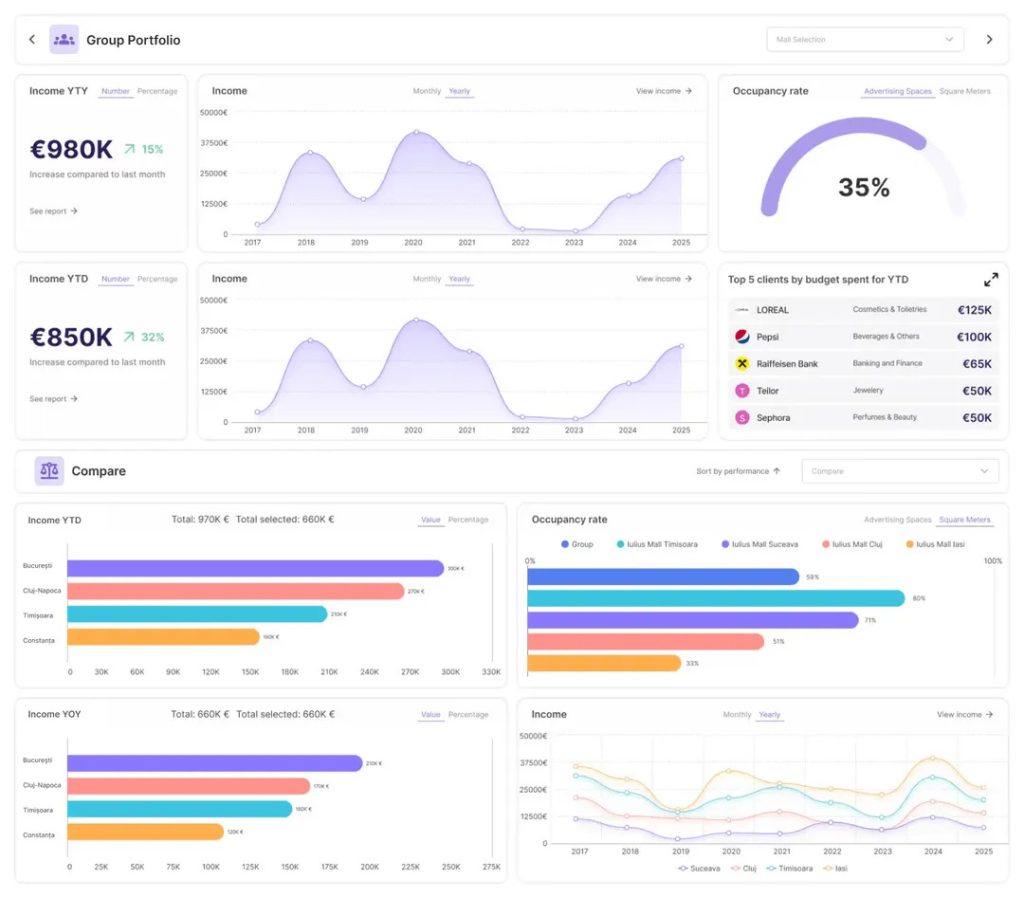
The company says 15 leading Romanian shopping centers are currently represented on the platform, attracting around 12 million visitors per month. That corresponds, according to Generatik’s analysis of operator figures, to close to one-third of total shopping center traffic in Romania.
For advertisers, the proposition is access to a larger pool of inventory through a single interface. For shopping center operators, the objective is to make their advertising assets easier to sell and manage.
Turning Advertising Into a Managed Asset
This landlord perspective may ultimately be the more interesting part of the proposition for the retail real estate industry.
Generatik argues that advertising should be treated less as an ancillary activity and more as a managed revenue line. Operators can retain control over their inventory and pricing while gaining a digital layer for managing availability, bookings, occupancy, and performance.
The platform’s business model reflects this approach. Shopping center operators pay an annual fee covering the digitization and maintenance of their advertising inventory, while Generatik also receives a commission when orders and advertising budgets are generated through the platform. According to the company, no capital expenditure is required from the operator.
A testimonial from ParkLake Shopping Center in Bucharest illustrates the intended change in perspective.
“For the center management, that is the difference between selling space and managing a media asset.”
Cătălin Cucian, Center Manager at ParkLake, Sonae Sierra, says Brand Management has handled the center’s indoor advertising for years and that Generatik has made the business scalable by providing real-time visibility into availability, bookings, and pricing.
That shift from selling individual advertising placements to managing a measurable media asset is central to Generatik’s proposition.
Beyond Digital Screens
Generatik’s positioning also differs from the programmatic digital out-of-home market.
Programmatic DOOH platforms have increasingly automated the buying of digital screens, while retail media networks operated by major landlords provide sophisticated advertising environments within individual property portfolios. Generatik is targeting the space between these models.
Its platform combines digital screens with traditional physical advertising formats in the same media plan. A campaign can, for example, combine a totem, a mesh banner, and a digital screen across several shopping centers.
The company argues that this is important because a substantial part of shopping center advertising remains physical rather than digital. By digitizing the booking and management of these formats, it aims to bring them into the same planning environment as digital media.
Generatik describes the result as an API-based, multi-vendor marketplace rather than a media channel belonging to a single landlord.
From Romania to Europe
The company’s first year provides the basis for a more ambitious expansion strategy.
According to Generatik, campaigns ordered through the platform had reached €3.92 million at rate-card value by 2026. The company stresses that this represents its first year of activity, with inventory becoming bookable progressively as individual shopping centers completed onboarding.
Its next step is international. For 2027, Generatik identifies Poland and Spain as its two priority markets. The company is currently looking for partnerships with shopping center owners, operators, asset managers, and local commercial partners.
Poland is seen as the natural first step in Central and Eastern Europe, while Spain offers a large Western European market with high footfall and a more fragmented ownership structure. Generatik says it ultimately aims to include major shopping centers in 14 EU countries over the next five to six years.
The strategy can take several forms, ranging from pilot agreements with individual centers to portfolio-level arrangements with owners and management companies.
The Data Layer
The platform’s longer-term ambition also extends beyond transaction efficiency. Generatik is developing machine-learning capabilities designed to recommend advertising spaces based on campaign objectives, audiences, historical performance, and availability. The company is also working on an auction-based mechanism for premium advertising positions.
This could become particularly relevant for the most sought-after locations within shopping centers, such as major entrances, atriums, or escalator areas. Rather than allocating these spaces through traditional negotiation, an auction model could allow demand to determine their market value and provide operators with additional pricing data.
Generatik also links this development to The Mall Effect Index, its annual research initiative conducted with Reveal Marketing Research.
The 2026 edition of the index recorded a score of 70, up from 65 in 2024 and 67 in 2025. Advertising recall reached 82%, while 64% of respondents said they had made a purchase after seeing an advertisement in a shopping center. Average spending per mall visit reached 383 RON. The research is based on three annual waves comprising a total of 2,410 respondents.
The index is intended to provide a longitudinal perspective on consumer behavior inside shopping centers and, ultimately, to connect advertising exposure with purchasing behavior. Generatik says future development will include more granular analysis by mall type, city, and consumption category.
A Broader Retail Media Question
Generatik’s ambitions reflect a wider question facing shopping center operators: if retail media is becoming an increasingly important part of the marketing mix, how much of that opportunity can physical retail capture?
The company argues that European retail media investment is growing rapidly while much of the spending remains concentrated on e-commerce environments. Physical shopping centers, meanwhile, continue to attract large audiences but often lack the digital infrastructure needed to make their media inventory as accessible and measurable as online inventory.
Its proposition is therefore not to position physical advertising against digital media, but to make the two easier to plan together.
That may be the more significant opportunity. Shopping centers already possess the audience, the physical environment, and the advertising surfaces. What has often been missing is the infrastructure connecting those assets with media budgets in a standardized, measurable way.
Generatik is betting that this infrastructure can turn mall advertising from a fragmented operational activity into a scalable retail media business.
Whether that ambition can be replicated across markets with very different ownership structures, advertising ecosystems, and retail media maturity remains to be seen. But the Romanian company is now positioning itself to find out.
Voices From the Market
The early feedback from shopping center professionals points to the operational problem Generatik is attempting to solve.
Selma Ali, Specialty Leasing at CPI Property Group, describes the difference in practical terms:
“I stopped getting approximate answers.”
According to Ali, specialty leasing and advertising frequently compete for the same square meters, making availability and timing difficult to coordinate. She says Brand Management’s system provides faster and more reliable information about which spaces are available and when they become free.
For Generatik, that is precisely the point: before the marketplace can optimize prices, apply machine learning, or expand internationally, it has to make physical advertising inventory visible, searchable, and bookable. The company now wants to take that proposition beyond Romania.