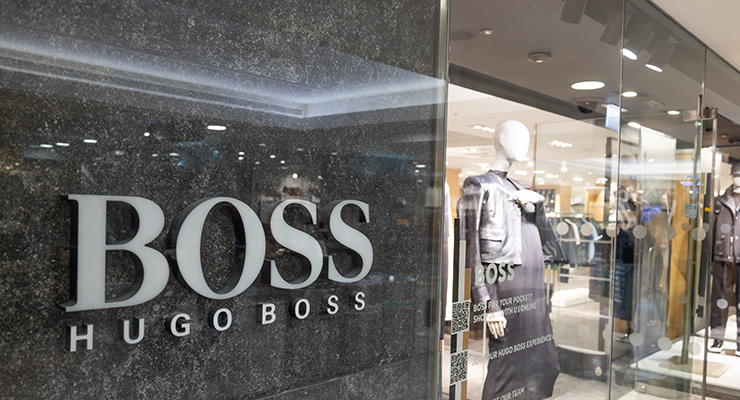
One of the most closely watched corporate battles in the European fashion industry this year has ended without a winner—at least for now. The British retail conglomerate Frasers Group, controlled by entrepreneur and billionaire Mike Ashley, has failed in its attempt to secure a majority stake in German premium fashion company Hugo Boss. Yet despite falling short of outright control, Frasers has emerged from the takeover attempt as the company’s dominant shareholder, holding 47.89% of the shares and voting rights.
The outcome leaves Hugo Boss independent, but also raises questions about the future relationship between one of Europe’s most ambitious retail investors and one of Germany’s best-known fashion brands.
A Bid That Never Convinced
The takeover battle began in June when Frasers launched a voluntary public offer for Hugo Boss, valuing the company at approximately €2.7 billion. The British group offered €38 per share, a price that met legal requirements but was immediately criticized by Hugo Boss management as inadequate.
From the outset, Hugo Boss’s leadership mounted a coordinated defense. In July, both the Management Board and Supervisory Board unanimously recommended that shareholders reject the offer, arguing that it failed to reflect the company’s intrinsic value and future growth potential.
“The offer price neither reflects the intrinsic value of the company nor its medium- to long-term value creation potential,” the company stated in its formal response.
The criticism centered on the relatively modest premium attached to the offer. The €38 bid represented only a 4.8% premium to Hugo Boss’s share price before the offer became public and just 4.3% above the three-month average trading price.
Independent fairness opinions from Bank of America and Goldman Sachs supported management’s assessment that the offer was financially inadequate.
The Strategy Behind the Resistance
The rejection was not merely about price. Hugo Boss management argued that shareholders would be better served by allowing the company to continue executing its recently unveiled “CLAIM 5 TOUCHDOWN” strategy, which defines the company’s direction through 2028.
Under CEO Daniel Grieder, Hugo Boss has undergone a significant transformation over the past five years. The company has repositioned itself from a traditional menswear specialist into a broader lifestyle brand, investing heavily in digital capabilities, marketing and younger consumer segments.
The strategy aims to strengthen brand equity, improve distribution quality and enhance operational efficiency, while targeting sustainable profitability and stronger cash generation.
“HUGO BOSS has a compelling strategy, a strong financial profile and a clear path toward substantial long-term value creation,” CEO Daniel Grieder said while urging shareholders not to tender their shares. “We are firmly convinced that the offer price does not adequately reflect the intrinsic value and long-term potential of the company.”
Supervisory Board Chairman Stephan Sturm echoed that view.
“After a comprehensive and independent review, we concluded that the offer price is financially inadequate and does not reflect the value and future potential of HUGO BOSS,” Sturm stated.
Frasers’ Long-Term Fashion Play
For Frasers Group, the bid was part of a broader strategy rather than a purely financial investment. The British retailer, which owns Sports Direct and holds stakes in several fashion and retail businesses, has spent years building positions in premium and luxury brands across Europe. Recently, the group acquired British department store operator Harvey Nichols.
In Germany, Frasers has already demonstrated its appetite for strategic investments. In March 2026, the group acquired a 6 % stake in sportswear giant Puma and Burberry. Previously Frasers had shown interest in acquiring SportScheck.
The Hugo Boss move also appears consistent with Frasers’ broader evolution as a retail investor. Long known for Sports Direct, the group has increasingly expanded into premium fashion and retail through acquisitions and strategic shareholdings. Together with investments such as Puma, Burberry and the acquisition of Harvey Nichols, the attempted takeover of Hugo Boss points to a growing presence in higher-end consumer segments.
Interestingly, Hugo Boss itself argued that the offer was less about transforming the company and more about allowing Frasers to increase its ownership position. According to the company’s formal assessment, the offer contained no significant proposals for changes to Hugo Boss’s business activities or strategic direction.
This suggests that Frasers viewed Hugo Boss as a strategically attractive asset whose value could be unlocked over time rather than through an immediate restructuring program.
Regulatory Approval Was Not the Obstacle
Unlike many high-profile takeover attempts, regulatory concerns never became a significant hurdle.
In July, the European Commission approved the potential acquisition, concluding that the transaction would not create competition concerns due to the companies’ relatively limited market positions.
The deal primarily affected the markets for premium apparel, footwear and accessories, where regulators saw no threat to competition.
The decisive factor was therefore not Brussels, but shareholders.
Independence Maintained—For Now
When the offer period ended on August 13, Frasers had succeeded in increasing its stake substantially but not enough to gain control. Following the transaction, the British group held 33.05 million shares, equivalent to 47.89% of Hugo Boss’s share capital.
The result leaves Hugo Boss in an unusual position. The company remains independent and continues to be governed by its existing management and supervisory structures. At the same time, nearly half of the company is now owned by a single strategic investor.
Rather than declaring victory, Hugo Boss sought to strike a conciliatory tone after the offer’s conclusion.
“We appreciate the trust and support our shareholders have shown throughout the offer period and welcome Frasers Group’s support for our long-term strategic direction,” said Daniel Grieder after the results were announced.
Stephan Sturm similarly emphasized the importance of maintaining a constructive relationship with the company’s largest shareholder.
What Happens Next?
The failed takeover does not necessarily mark the end of the story. Frasers has demonstrated both its commitment to Hugo Boss and its willingness to deploy significant capital to increase its influence. Hugo Boss, meanwhile, faces the challenge of proving that its strategic transformation can deliver the value creation promised by management.
The timing is not ideal. Hugo Boss continues to operate in a difficult consumer environment. In the second quarter of 2026, sales declined by 10% to €905 million, while EBIT fell 28% to €59 million amid weak demand across key European markets.
For now, shareholders have chosen management’s vision over Frasers’ offer. Yet with Frasers holding almost half of the voting rights, Hugo Boss has gained not only a powerful shareholder but also a stakeholder with a long-term strategic interest in the business. Whether the British retailer remains a supportive investor or eventually returns with a renewed bid may become one of the most closely watched questions in the European fashion industry.
The takeover may have failed. The battle for influence at Hugo Boss may only be beginning.