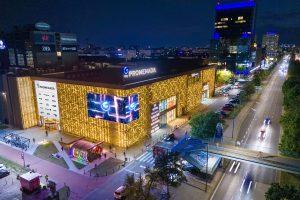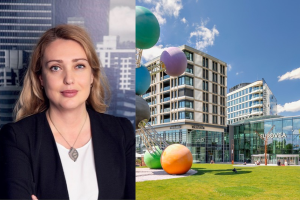
When I look at Eurovea through the lens of communications and marketing, its brand does not begin with the logo on the building or at the entrance to the shopping center. It begins much earlier – as visitors approach the Danube, step onto the promenade, enter the park, take in the waterfront and experience how the place makes them feel. Visitors do not perceive property boundaries or the remits of individual stakeholders. They experience one place, and that complete experience shapes their view of both the destination and the city. This is why successful retail developments cannot focus solely on what happens inside their doors. To become a natural part of urban life, they must connect with their surroundings and accept an appropriate share of responsibility for the quality of the publicly accessible spaces around them.

A mixed-use district begins in the public realm
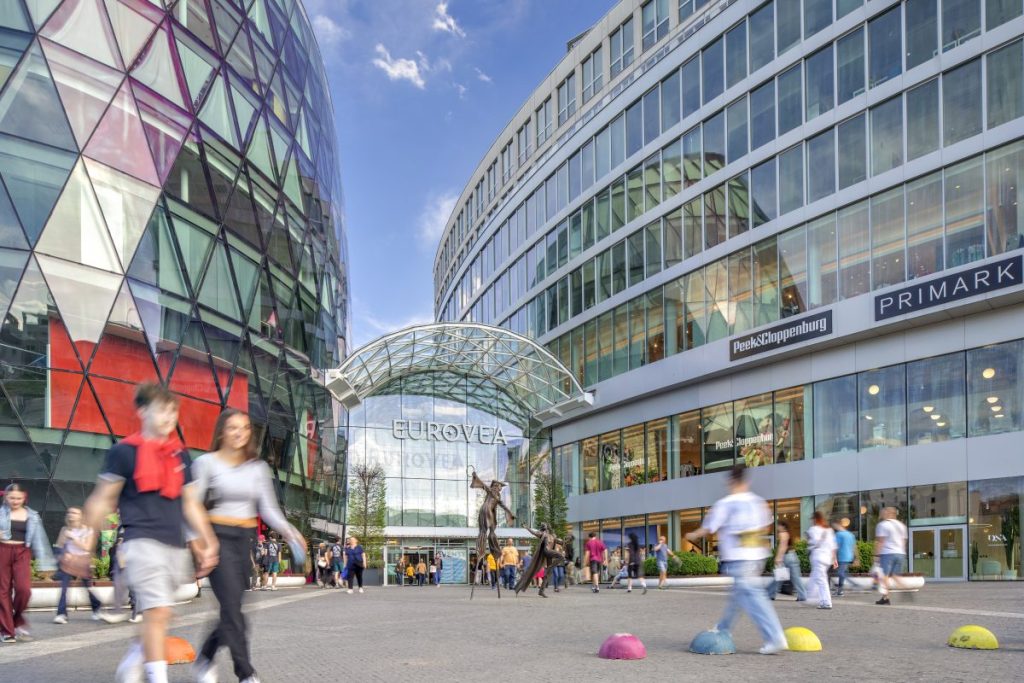
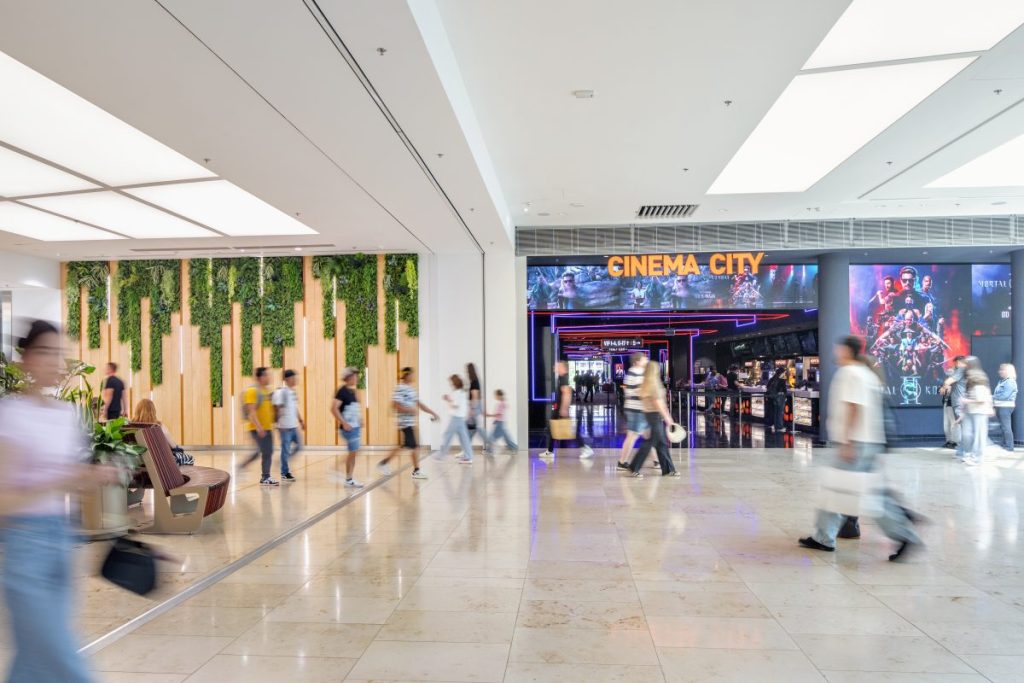
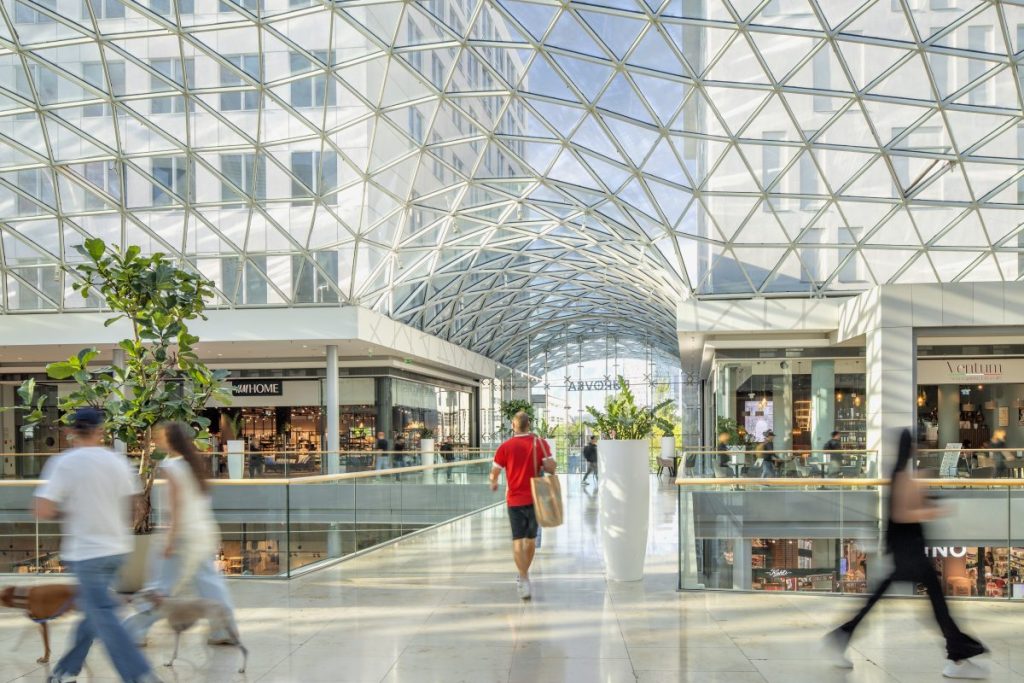
For many years, the success of shopping centers was assessed primarily through footfall, turnover and tenant mix. These indicators remain important, but today‘s urban retail destination plays a much broader role. It is a place for meeting, leisure, culture, sport, dining and everyday social interaction. The space outside its entrance is therefore not merely an aesthetic backdrop or a route between the car park and the shops. It is both the first and the last part of the visitor experience. Eurovea is a strong example because it was conceived from the outset not as an isolated shopping center, but as a mixed-use urban development. Slovakia‘s largest and most comprehensive shopping center is complemented by homes, offices, a hotel, cinema, fitness center, restaurants and extensive public spaces.
These different uses naturally alternate and reinforce one another throughout the day: office workers arrive in the morning; residents, shoppers and tourists use the district during the day; and in the evening it welcomes visitors to its restaurants, cinema and cultural or sporting events. This diversity keeps the district active well beyond conventional shopping hours. What makes Eurovea‘s location exceptional is its direct visual and physical connection with the river. Here, the Danube is not a distant backdrop beyond a road or flood barrier, but a natural part of the everyday experience. People can sit on the lawn, walk along the water, exercise or spend time on restaurant terraces overlooking the river. This kind of relationship with a place cannot be created by marketing alone; it has to be embedded in the urban design. Over its 16 years of operation, the Eurovea waterfront has grown beyond its local role to become a visitor destination in its own right. The Bratislava Tourist Board presents it as a Danube-side destination for shopping and leisure, only around a ten-minute walk from the historic center – effectively extending the city center towards the river. Visitors do not enter a separate tourist precinct, but an authentic urban space used every day by residents, office workers, families with children, athletes and cyclists.
Responsibility is demonstrated every day
The care of publicly accessible space is less visible than a new store opening or a major marketing campaign. It consists of the daily maintenance of surfaces and landscaping, cleanliness, lighting, safety, accessibility and the ability to respond to weather conditions, high footfall and unexpected situations. This continuous work determines whether people simply pass through a space or choose to spend time there and return. Responsibility, however, is not only about keeping a place in good condition. It also means considering how it is used, whom it serves and whether different activities can coexist without unnecessary conflict. The more vibrant and attractive a waterfront becomes, the more diverse the interests that converge there.
Pedestrian and cycle movement, family activities, servicing, events, recreation and new uses of the waterfront must be coordinated in a way that preserves safety, accessibility and the quality of the environment. Any new intervention or use of the public realm should therefore be coordinated in advance with all affected stakeholders, including the site manager. This is not about slowing development. On the contrary, coordination is what ensures that new activities genuinely add value to the place, do not damage surfaces or landscaping, and do not create risks for the people who use it every day.
Programming gives a place its identity
Architecture alone does not create a vibrant place. It needs programming that gives people a reason to visit and, over time, to form a relationship with it. Eurovea organizes or hosts around 300 indoor and outdoor events each year. Its program deliberately operates at different scales – from smaller community gatherings, workshops, morning exercise sessions and local markets to major cultural occasions and national and international events. This allows different generations and communities to find something that resonates with them. The public realm can become a stage, a playground and a setting for shared experiences at the same time. Smaller events bring regularity and a sense of connection, while major occasions can transform the waterfront and the square for several days into a stage with citywide or international reach.
The value of these events is not limited to a short-term uplift in footfall. More importantly, they create the rhythm and identity of the place. When events recur and respond naturally to the character of their setting, they become part of the life of the city. People then associate the destination not only with a particular shop or restaurant visit, but with their own experiences and memories.
Art as an enduring part of the destination
A place is, of course, shaped by more than temporary events. Art also plays an important role: it remains present every day and gradually becomes both a landmark and part of the community‘s shared memory. One of the square‘s defining features is its large fountain, integrated into the surrounding rest areas. Water flows through it in different directions, while its movement and sound evoke the river with which Eurovea has been connected from the outset. The fountain has become a popular place to relax and meet, naturally attracting children and adults alike.
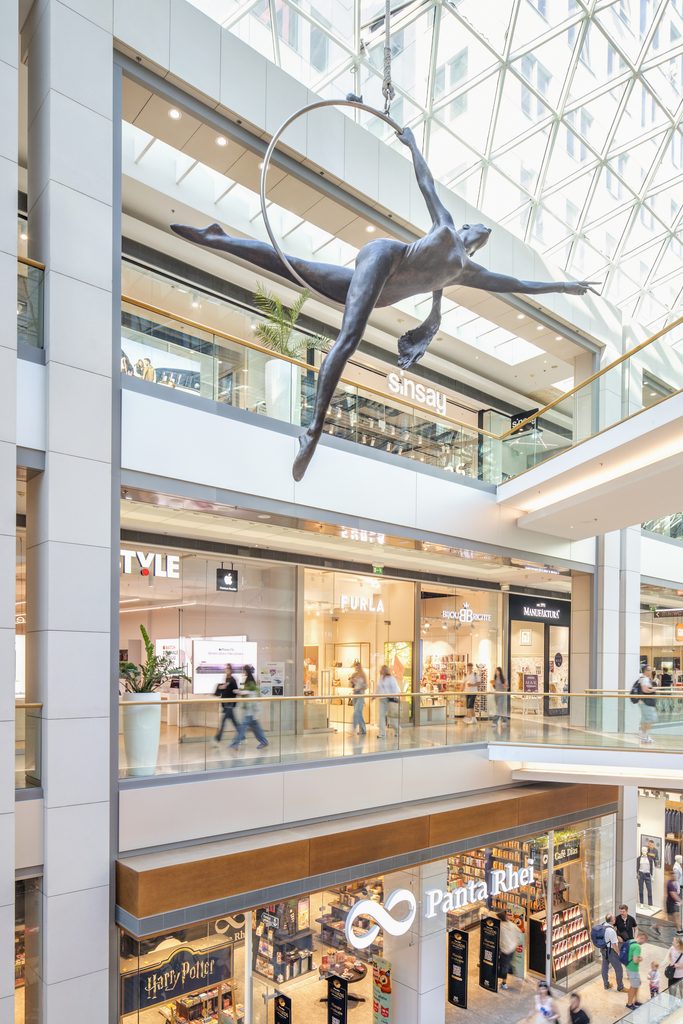
On the extended promenade stands Octahedral Body, a thirteen-meter work by Viktor Frešo selected through a public art competition. It is complemented by eleven sculptures of circus performers by British sculptor Colin Spofforth, placed both indoors and in the public realm, as well as the interactive Animal Factory objects by designer Luca Boscardin. These works are more than decoration. People meet and take photographs around them, children interact with them instinctively, and visitors use them as memorable reference points. Art adds emotion, storytelling and discovery to the public realm – qualities that commercial communication alone cannot replicate.
Shared value requires collaboration
The public realm around a retail destination cannot be developed successfully in isolation. It requires collaboration among owners, site managers, the city, cultural and sporting organizations, operators and the communities that use it. The best outcomes arise when all parties are involved early, understand their responsibilities and agree on the fundamental rules. It is essential to view the destination through the eyes of its users. They do not need to know where private ownership ends and municipal land begins, who authorizes a particular activity or who is responsible for individual technical elements. They expect the entire environment to be safe, clean, functional and easy to navigate.
If one part fails, it affects perceptions of the destination as a whole. Investment in high-quality surroundings is therefore not simply an additional cost. It creates both public and commercial value. An attractive, well-managed environment increases dwell time, supports food and beverage operators and retailers, strengthens the destination‘s appeal to tenants, and contributes to quality of life in the city. Public and commercial interests do not have to be in opposition. In a well-conceived development, they reinforce one another.
The city does not end at the entrance
In my experience, trust in a place is not built through a single campaign. It grows out of countless everyday details – whether the environment is well maintained, whether people feel safe, whether it offers relevant, high-quality programming, and whether its management listens to the needs of both the city and its visitors. I therefore believe the future of retail destinations lies not in turning inward, but in actively connecting with their surroundings. A successful shopping center does not draw a boundary between retail and the city. It helps create a place that serves people even when they are not shopping. Because the city does not end at the entrance to a shopping center – and neither should our responsibility.