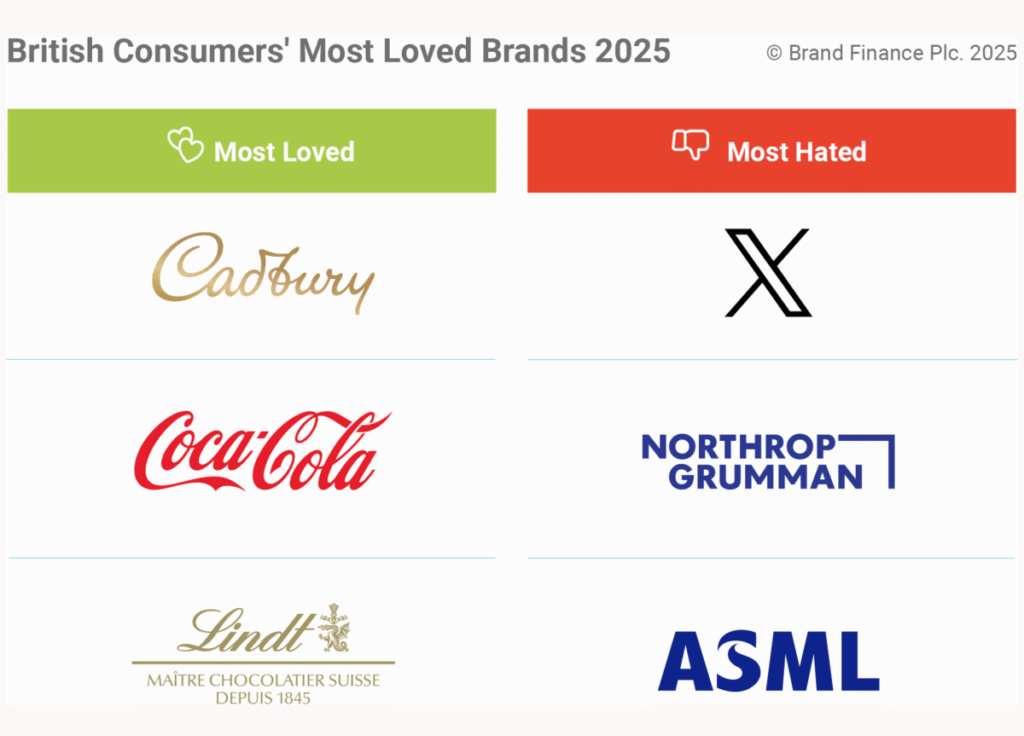



Emotional perceptions of brands have become core commercial drivers, and being liked – or better yet, loved – influences consumer behavior. It translates into real commercial outcomes like consideration and market share. As Annie Brown, Valuation Director of Brand Finance, argues, brand love is anything but soft.
In Brand Finance’s latest study of British consumer sentiment, the brands that Brits love and those that they do not have been identified. More than 1,000 brands were regarded.
FMCG giants dominate the “most loved” list. The Mondelez-brand Cadbury (chocolate), Coca-Cola, and Lindt chocolate top the rankings, demonstrating how consistency and emotional resonance translate into measurable commercial advantage: for every 1% increase in the share of consumers who love a brand, consideration rises by around 1.6%. Love drives action.
On the opposite end, brands such as X (formerly Twitter), the space, aeronautic and defense company Northrop Grumman, and the semiconductor specialist ASML appear among the most disliked. Whether due to limited consumer relevance or reputational issues, the outcome is similar: low brand love equals low consideration.