Wind and Solar Energy Combined: Ingka Group’s Hybrid Hub
Grid capacity is one of the greatest practical challenges in renewable energy development: securing a new connection point is time-consuming and increasingly competitive across Europe. Ingka Group’s recently announced project in Portugal addresses this challenge by working within existing infrastructure.


In their announcement in early March 2026, Ingka Group has unveiled their hybrid power park concept in Portugal that transforms an existing wind park with the addition of solar panels, unlocking 233 GWh. Apart from utilizing the same location, this hybrid energy hub also uses the same grid connection, further increasing its efficiency.

Wind and solar generation often peak at different times: when there is less wind, solar can partially compensate, and vice versa — creating a more stable and predictable flow of energy than either source could provide alone.
NEPI Rockcastle’s 54 MW Solar Project
The retail real estate leader of the CEE region has a track record of sustainability efforts, NEPI Rockcastle’s renewable energy output is expected to cover 48% of the electricity demand of its shopping centers and tenants in Romania by the end of 2026, up from just 6% at the end of 2024.

This is supported by their strategic collaboration with LONGi Solar Europe and the ENEVO Group. NEPI Rockcastle joined forces with the two companies to bring their major 100M EUR green energy investment: the Chișineu-Criș photovoltaic power plant.
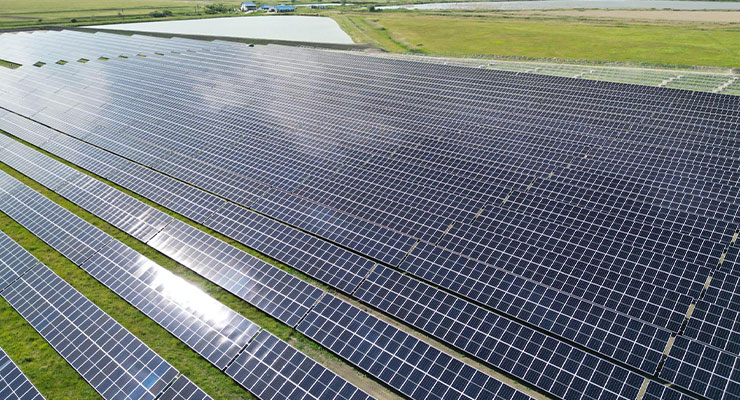
The new PV power plant located in Western Romania is set to supply more than 70 000 MWh of electricity per year, helping to avoid approximately 21,100 tons of CO2 emissions annually. Additionally, a second greenfield photovoltaic project is due to start construction in 2026 and will further increase the capacity of the plant.
EU Legislative Steps: Textile Sector and the ESPR
Within the retail landscape, the textile sector is getting more attention in connection to sustainability, often not a positive kind. Fast fashion – the mass production of cheap and disposable clothing – has been on the scope of the European Union for many years. Overconsumption of natural resources, water pollution, microplastics are just a few examples of the repercussions fast fashion brings about, with large scale clothing waste in landfills also posing as a major issue.
The scale of the problem is significant. Every year in Europe, an estimated 4-9% of unsold textiles are destroyed before ever being worn, generating around 5.6 million tons of CO2 emissions — a figure almost equal to Sweden’s total net emissions in 2021 In France alone, around €630 million worth of unsold products are destroyed each year.

To combat these practices, the European Union has started to introduce measures, one of the most recent ones being adapted under the Ecodesign for Sustainable Products Regulation (ESPR).
Measures to cut waste, control environmental damage and facilitate an even ground for retailers that choose sustainable practices by banning the destruction of clothing articles have entered into force on February 9, 2026.

As defined by the European Commission, the destruction ban will come to effect on the 19th of July 2026 for large companies, with the medium size organizations following suit in 2030.
“The textile sector is leading the way in the transition to sustainability, but there are still challenges. The numbers on waste show the need to act. With these new measures, the textile sector will be empowered to move towards sustainable and circular practices, and we can boost our competitiveness and reduce our dependencies,” says Jessika Roswall, Commissioner for Environment, Water Resilience and a Competitive Circular Economy.