Is physical retail losing the younger generation of consumers? Two new surveys presented this week suggest that the picture is more nuanced. While digital channels increasingly shape how younger people discover products and brands, shopping centers continue to feature prominently in their shopping habits. The findings indicate that younger consumers are comfortable moving between digital and physical channels and continue to value aspects of shopping that online retail cannot easily replicate.

The first Westfield Shopping Trend Radar for Austria, commissioned by Westfield Shopping City Süd and Westfield Donau Zentrum in cooperation with TQS Research & Consulting, offers a snapshot of current consumer behavior. Meanwhile, ECE’s latest customer survey, based on almost 90,000 interviews across seven European countries, provides a broader perspective on how shopping centers are used and who visits them.
Although the surveys differ in geographical scope and methodology, both suggest that physical retail remains relevant, including for Generation Z.
From Social Media to the Store
The relationship between online inspiration and offline shopping is particularly apparent in the Westfield findings. Among respondents aged 16 to 29, 77% said they had already discovered a brand or product on Instagram, TikTok, or another social media platform and subsequently searched for it in a physical store. Across all age groups, the figure was 55%.
The smartphone also remains an important shopping companion once consumers are inside a store. Almost half (49%) of younger respondents use their phones to research prices or product information while shopping. Among consumers aged 30 to 39, the proportion is even higher, at 53%.
These findings suggest that digital channels are not necessarily replacing physical retail but increasingly complementing it. The distinction between online and offline shopping appears to be becoming less pronounced as consumers move between inspiration, research, and the actual purchase.
What younger shoppers expect from technology is also revealing. Practical services appear to take priority over more sophisticated applications: 41% of respondents aged 16 to 29 would welcome information about product availability, while 40% want faster digital payment options. AI-based product recommendations, by contrast, would improve the in-store shopping experience for just 8%.
The Westfield findings also highlight the advantages consumers associate with physical retail. According to the survey, 85% of respondents enjoy visiting shopping centers because they can see or try products before buying them. For 65%, the ability to see, touch, or try products is an advantage of brick-and-mortar retail over online shopping. Another 53% value being able to take their purchases home immediately.
Gen Z Are Regular Shopping Center Visitors
ECE’s findings reinforce this picture from a European perspective. Its 2025 customer survey, conducted over 509 days at 119 shopping centers in Germany, Austria, Poland, the Czech Republic, Hungary, Italy, and Turkey, involved almost 90,000 respondents aged 16 and over.
One of the more interesting findings concerns Generation Z, a consumer group frequently associated with digital-first shopping habits.
According to ECE, 64% of respondents aged 16 to 29 are regular shopping center visitors, defined as visiting at least once every two weeks. This is close to the overall figure of 63%. The results therefore suggest that younger consumers are not merely occasional visitors who come to shopping centers for specific shopping occasions. They form part of the regular customer base.
Their spending patterns differ from those of older generations, however. Gen Z has an average transaction value of €62, compared with €94 among visitors aged 30 to 59. Younger visitors nevertheless contribute to activity within shopping centers in other ways. Almost half (49%) purchase clothing, while 33% visit food courts, compared with 27% among visitors aged 60 and over.
The figures also point to the importance of everyday convenience alongside shopping and leisure. For younger visitors, shopping centers are not exclusively destinations for special occasions but can also form part of regular routines.
Experience Matters
This wider role also emerges from the Westfield survey. Among households with children, 82% of respondents believe shopping, gastronomy, and leisure belong together in a shopping center. Almost four in five (79%) expect more than just shopping opportunities.
The experience itself is important to 74% of households with children, compared with 65% of households without children. Moreover, 70% of respondents combine their shopping center visit with eating or drinking.
Younger visitors also appear particularly receptive to spontaneous discovery. While 62% of all respondents frequently come across brands or products they were not originally looking for, the proportion rises to 76% among those aged 16 to 29. More than half (53%) of younger consumers also visit shopping centers at least occasionally without having a specific purchase in mind.
This points to a difference between shopping online and visiting a physical retail destination. Online shopping is often driven by a specific need or search, whereas a shopping center can also offer opportunities for discovery, unexpected encounters, and experiences that extend beyond the original reason for visiting.
ECE’s data provides another perspective on this combination of functions. Across its surveyed centers, 85% of respondents reported making a purchase during their visit. Clothing, shoes, and accessories accounted for purchases by 50% of visitors, while groceries and drugstore products were purchased by 53%. Food and drink accounted for another 31%.
The figures illustrate the variety of activities taking place within shopping centers, where everyday necessities and more experience-oriented shopping coexist.
Physical Retail And Digital Channels Are Complementary
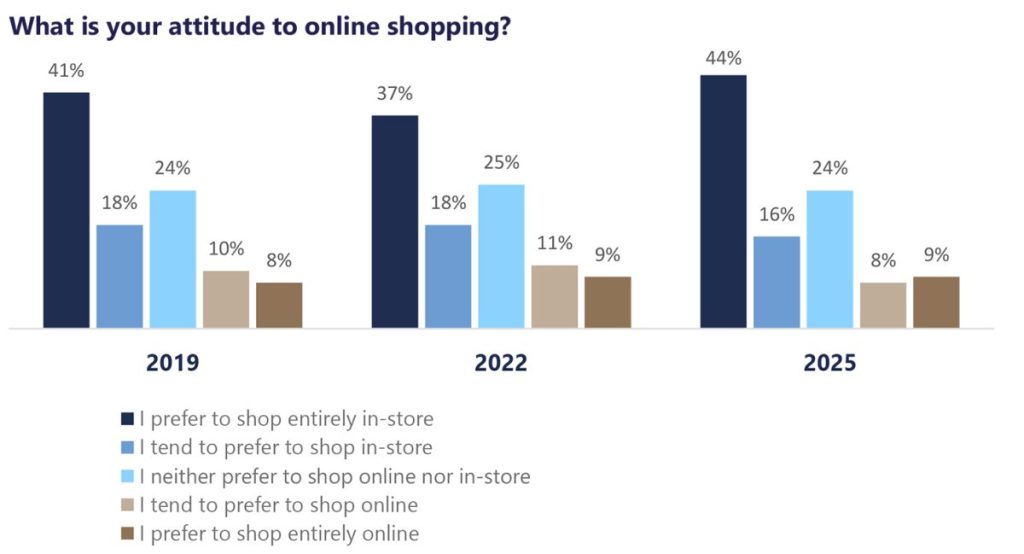
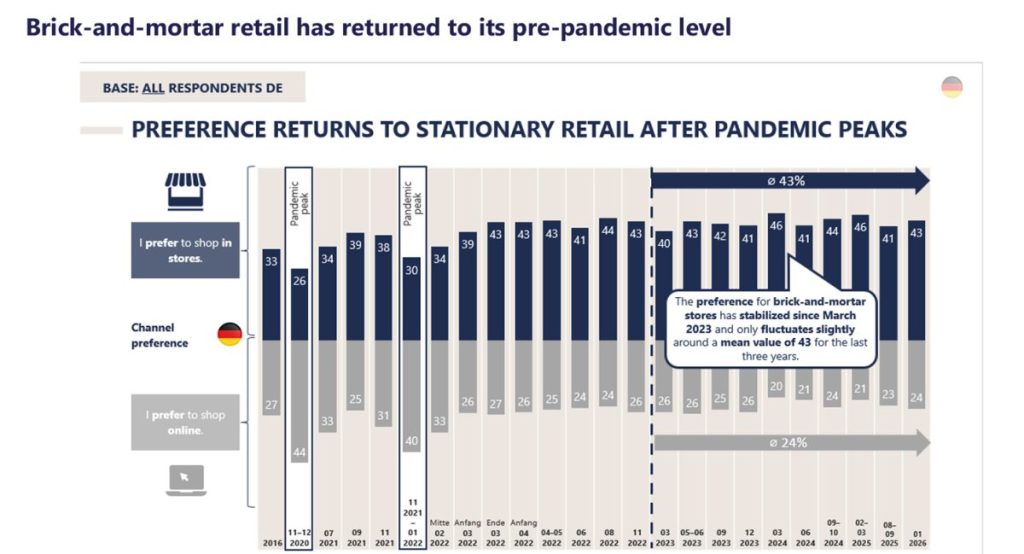
ECE’s findings also offer an indication of how consumers view the relationship between online and physical retail. Approximately 60% of surveyed shopping center customers say they prefer shopping in physical stores. This brings the figure back to its 2019 level, before the pandemic. The proportion has remained relatively stable since 2022, suggesting that the significant shifts in shopping preferences during the pandemic have largely normalized.
For shopping center operators, the findings provide further indications of the factors supporting physical retail. Digital channels offer convenience and facilitate product searches, while physical stores provide immediate product availability, personal advice, the opportunity to try products, and a broader shopping experience.
The challenge for operators and retailers is to combine these strengths with the convenience consumers have come to expect from digital services.
The two surveys do not establish that all shopping centers will automatically benefit from these developments. ECE’s findings, in particular, underline how strongly usage patterns depend on location, catchment area, and the function of an individual center. Nor do the results suggest that younger consumers are immune to the attractions of online retail.
They do, however, offer an interesting indication that physical retail remains relevant to a generation often associated with digital consumption. Younger consumers continue to visit shopping centers regularly. They arrive with inspiration from social media, use their smartphones while shopping, discover new brands, and combine purchases with food and leisure.
For the retail real estate industry, the findings offer further indications that the appeal of shopping centers extends beyond the purchase itself. Shopping, discovery, experiences, and social interaction all contribute to the attraction of physical destinations. Rather than competing with digital channels on their own terms, physical retail may derive its strength precisely from offering something different.