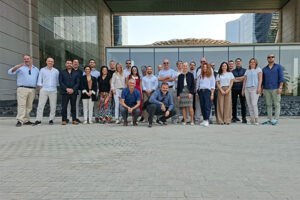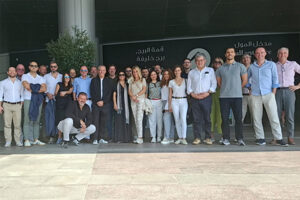
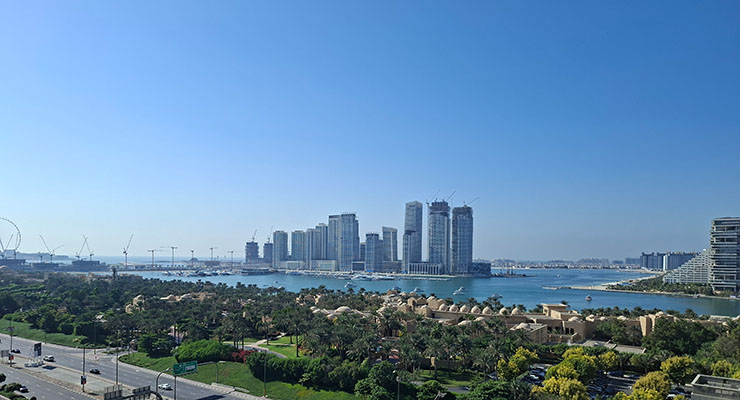
For 30 participants from Portugal, the Netherlands, Austria, Serbia, and Albania, the journey to Dubai and Abu Dhabi delivered what the ACROSS Study Tour program was created for: first-hand retail immersion, exclusive executive insights, and a unique platform for cross-border networking within the placemaking industry.
When ACROSS launched its international Study Tour program in 2023 the goal was clear: bring retail professionals directly to the world’s most dynamic markets, provide unmatched on-site insights, and create a networking platform that combines learning, discovery, and strategic exchange.
After successful editions in various countries, this year’s tour to the United Arab Emirates was fully booked – proof of the industry’s appetite for on-site knowledge and global perspective.
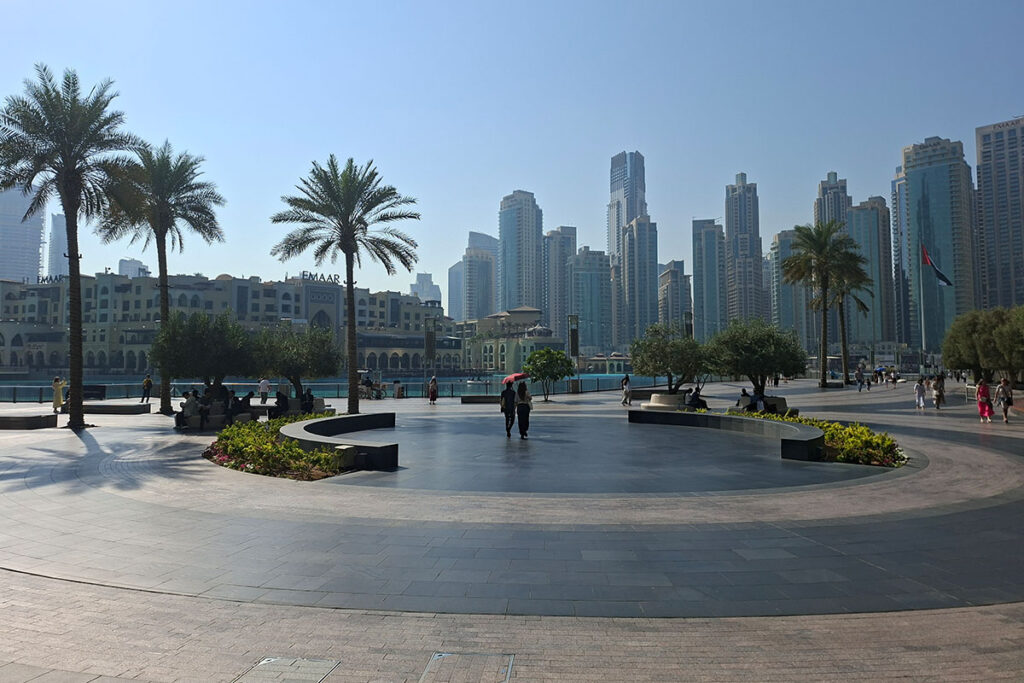
Hosted by Reinhard Winiwarter, Will and Manuela Odwarka and Rüdiger Pleus, the tour delivered three intense days of meetings, site visits, expert sessions, and behind-the-scenes access. It also provided inspiration, powerful benchmarks, and meaningful conversations in a region where retail evolves at lightning speed.
But why Dubai? Reinhard Winiwarter, publisher of ACROSS Magazine, described ahead of the tour:
“Without a doubt, Dubai is now a global hub for retail innovation, making it an essential destination for professionals in the shopping center industry.”
DAY 1 – DUBAI
The Power of Vision, Scale, and Relentless Reinvention
The first morning set the tone. At an informal gathering at the hotel, participants were welcomed by the hosts. Will Odwarka, Founder and CEO of Dubai-based firm Heartatwork Hospitality Consulting, introduced the UAE’s cultural, economic and climatic landscape which one must keep in mind when visiting the emirate.
From there, the group headed straight to an icon that requires no introduction: The Dubai Mall.
As the world’s most visited retail destination, Dubai Mall draws 80–100 million shoppers annually from every corner of the globe. During the guided tour, participants experienced first-hand the fundamentals of its appeal: design on a monumental scale, seamless integration of entertainment, and an ecosystem engineered to maximize dwell time.
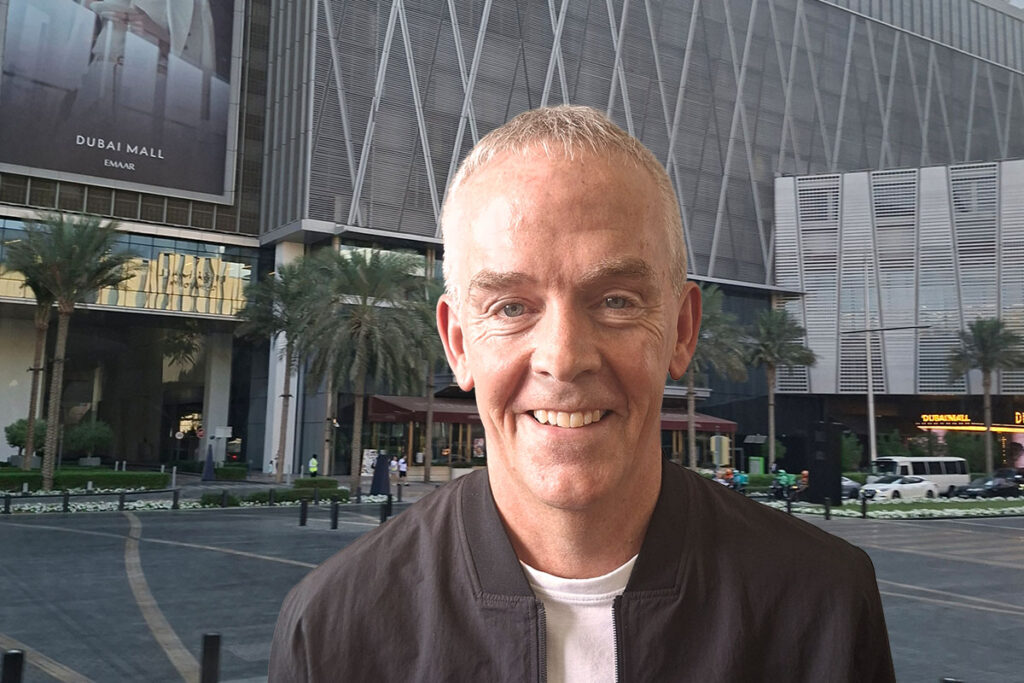
Hadden offered a frank, practical view of how retail works in the UAE:
“Dubai means business,” he emphasized.
“This market moves fast. It rewards innovation – and it punishes hesitation.”
The tour’s exclusivity rose to another level with a private session led by John Hadden, CEO of Alshaya Group, the region’s leading franchise operator. With operations across 25 markets, Alshaya is responsible for running many of the world’s most recognized brands in the Middle East.
Together with long-time UAE resident Will Odwarka, Hadden broke down the DNA of doing business in the Gulf: a highly international customer base, a franchise-driven retail structure, and a consistently growing appetite for new concepts.
According to Hadden:
“Retailers sometimes underestimate how global Dubai’s audience really is. You’re not serving one demographic – you’re serving the world.”
A Historical Deep Dive: David McAdam on Building Dubai Mall
The afternoon featured another masterclass, this time from David McAdam, CEO of the Middle Eastern Council of Shopping Centers and Retailers. As a former JLL executive and someone directly involved in the leasing of Dubai Mall, he provided a rare behind-the-scenes look into how the mall came to be.
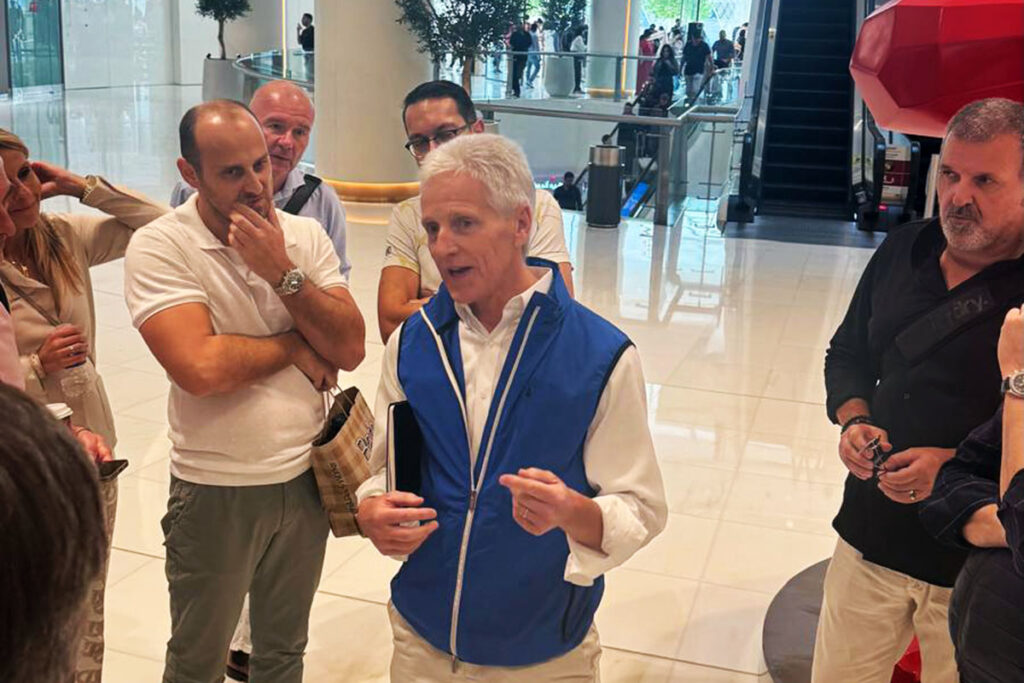
From the earliest vision to its 30,000-person operational workforce, McAdam described the mindset behind the project:
“The brief was simple: build the very best. Not the best in the region – the best in the world.”
He outlined how retailers lined up for space despite receiving no incentives – an unheard-of scenario in most global markets – and how Dubai’s leadership maintained unwavering expectations throughout the process.
Participants were particularly struck by his description of the service-charge model, the integration of entertainment anchors, and Dubai Mall’s continuous expansion strategy, which ensures the project remains fresh and competitive year after year.
Culinary Concepts as Destinations: Time Out Market
As the sun set, the group headed to Souk Al Bahar for a sensory shift: the vibrant Time Out Market Dubai.
General Manager Argiris Tragoutsis explained what makes the curated F&B hall one of the city’s most successful culinary destinations.
“We bring together the city’s best chefs and tastemakers under one roof,” Tragoutsis said. “It’s not a food court – it’s a celebration of Dubai’s culinary creativity.”
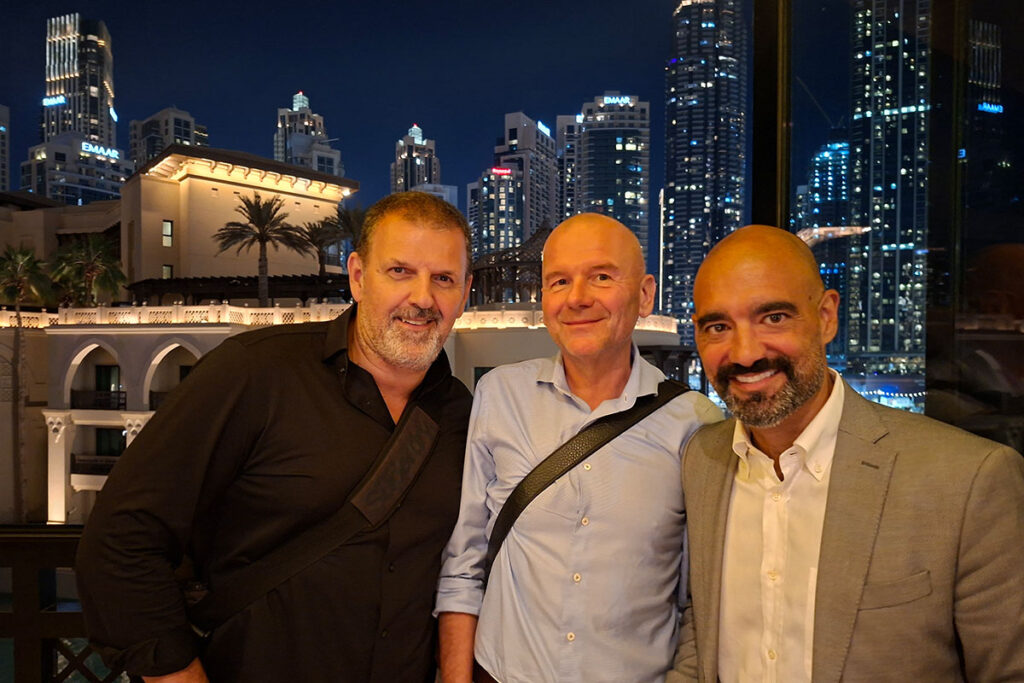
For participants, it was a reminder that in the UAE, F&B is no longer a supporting category – it is increasingly a primary driver of footfall, dwell time, and emotional connection.
The first day ended not only with full stomachs but full minds, energized for what was still to come.
DAY 2 – ABU DHABI
The Capital’s New Identity: Scale, Culture, and Strategic Evolution
If Dubai dazzles with speed and spectacle, Abu Dhabi moves with purpose, strategy, and cultural depth.
Day 2 showcased a market undergoing significant transformation – one deeply aligned with the emirate’s long-term development vision.
The Galleria Al Maryah Island: Luxury at the Heart of the Financial District
The morning began with a guided exploration of The Galleria Al Maryah Island, where General Manager Linda Hurst introduced the mall’s unique role in Abu Dhabi’s urban fabric.
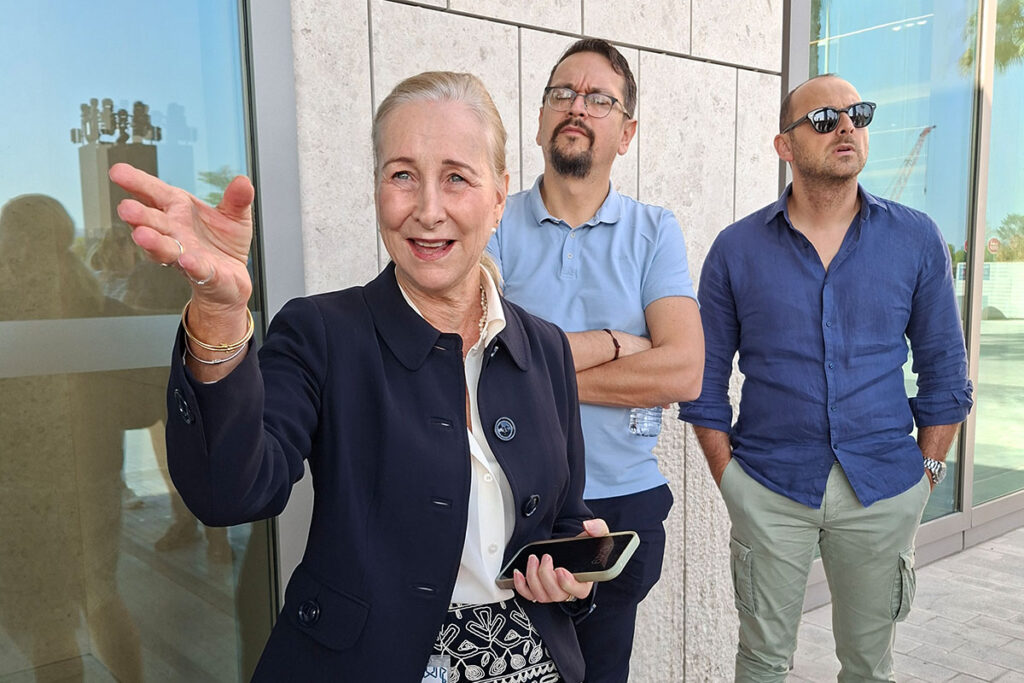
Situated in the heart of the financial district and connected to office towers, hotels, and soon residences, The Galleria is both a luxury destination and a daily hub for professionals.
Hurst highlighted its dual personality:
- A vibrant High Street with premium mainstream retail
- A 30,000 m² luxury wing featuring the world’s top brands
- A bold expansion strategy focused on first-to-UAE and first-to-Abu-Dhabi concepts
- Major investments in F&B, new promenades, escalators, and waterfront experiences
“We are building for tomorrow, not today,” Hurst emphasized. “Our customers expect international quality – and local authenticity. We need to deliver both.”
Participants discovered a mall that has mastered the art of balancing high-luxury retail with community-based functionality – an approach increasingly crucial for long-term success.
Marina Mall: Reinventing a City Landmark
From the modern financial district, the tour moved to Marina Mall, one of Abu Dhabi’s most established shopping destinations. General Manager Simon El Khoury walked the group through the mall’s ambitious multi-year modernization program.
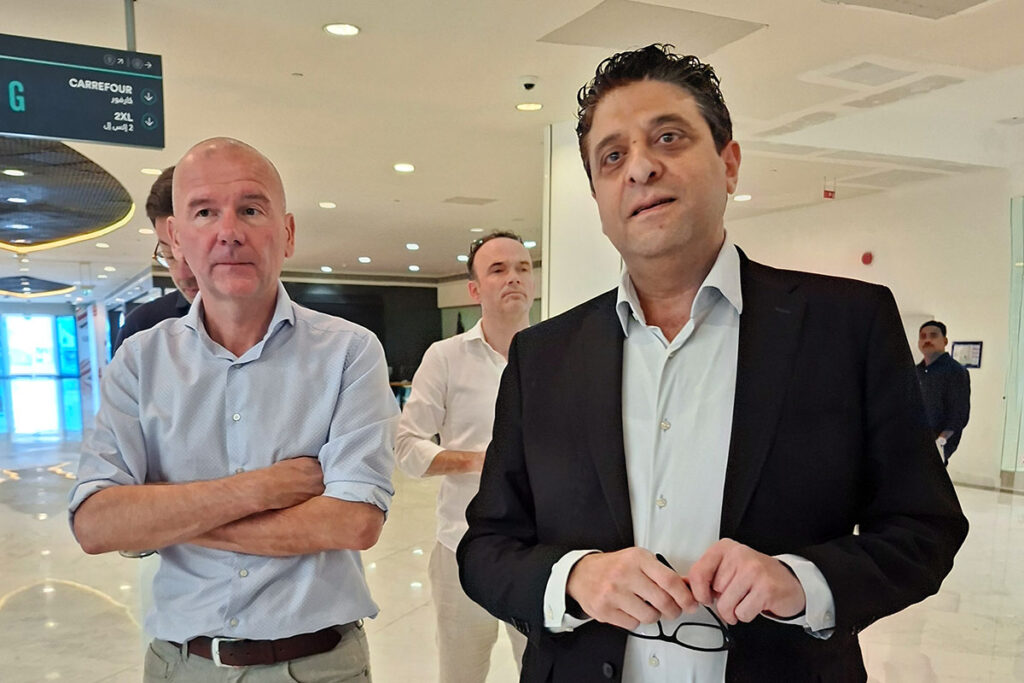
Once attracting 35 million annual visitors, Marina Mall is now undergoing a phased transformation that touches nearly every part of the property:
- Façade, ceilings, and interior redesign
- Upgraded MEP systems
- 28 new-to-market brands
- A stunning AED 69 million opera-style cinema theatre
- Integration into a wider district redevelopment including future hotels, residences, and a 300,000 m² expansion
“The mall has history – and enormous potential,” El Khoury said. “Our job is to honor the past while preparing for the next chapter.”
Participants appreciated the contrast between The Galleria’s premium polish and Marina Mall’s bold reinvention journey. Together, they offered a comprehensive picture of how Abu Dhabi is reshaping its retail landscape.
Cultural Context: Saadiyat Island
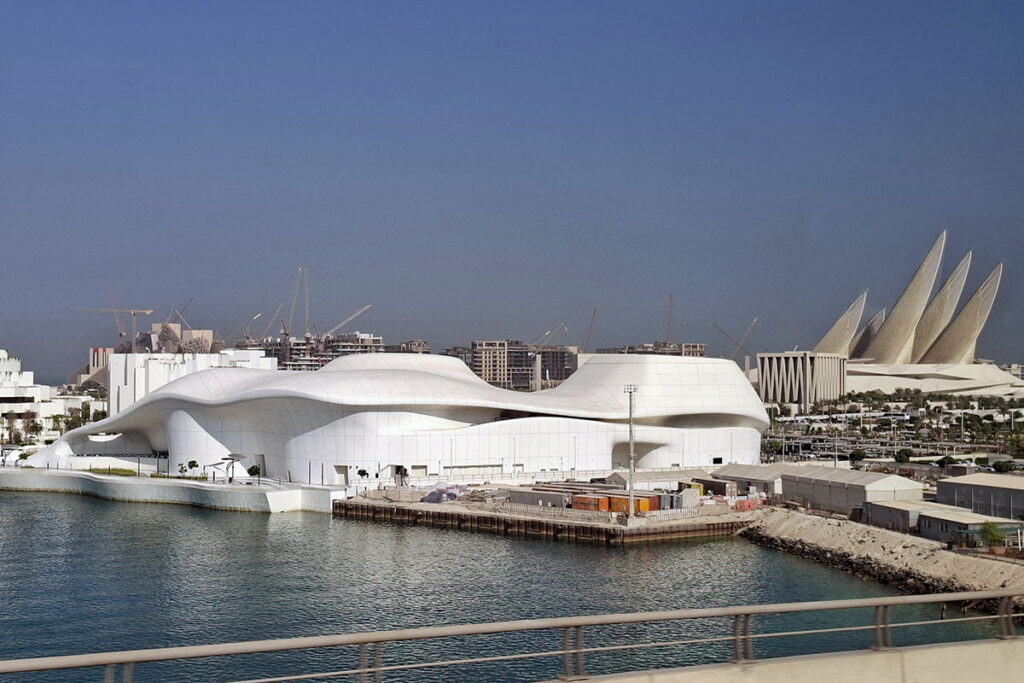
Between mall visits, the group toured Saadiyat Island, home to the Louvre Abu Dhabi and soon the Sheikh Zayed Museum.
This stop reinforced how strongly Abu Dhabi invests in cultural placemaking – and how deeply culture, tourism, and retail are intertwined in the UAE’s strategy for global positioning.
DAY 3 – DUBAI
Modern Communities, Heritage Roots, and the Future of Experience
The final day returned participants to Dubai for a close-up look at three very different malls – each reflecting a distinct chapter of the city’s retail evolution.
Al Ghurair Centre: The Original Mall with a Community Heart
As Dubai’s first shopping mall, opened in 1981, Al Ghurair Centre represents the city’s retail origin story.
Yet, as Vice Presidents Janice Sanpedro and Angela Guastella explained, its success today is built on reinvention and community focus.
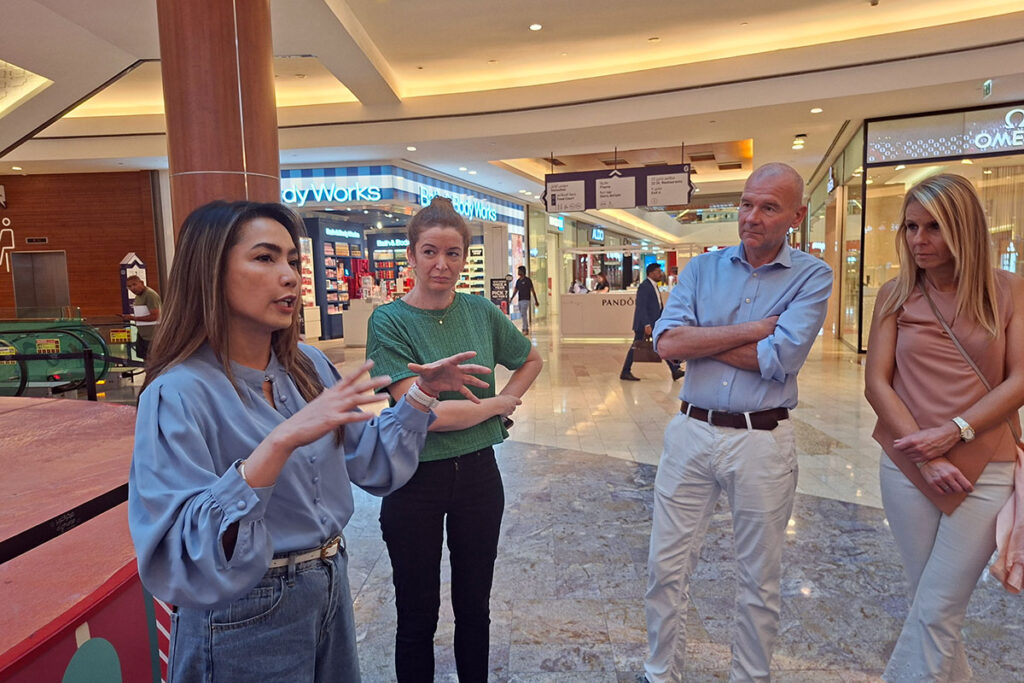
The mall’s strategy is rooted in:
- A strong pivot toward 35–40% F&B
- A thriving sports lifestyle category
- A unique cultural and residential integration – literally built into the neighborhood’s fabric
- The reinvention of homegrown concepts such as Glitch, now expanding across the UAE
- In-house operation of the entire food hall – rare in Dubai
“We’re not competing with Dubai Mall,” Sanpedro shared. “We are competing for daily life – for belonging. That is our strength.”
Participants gained insight into how older malls can thrive by doubling down on authenticity and community relevance.
Dubai Hills Mall: A New Community’s Living Room
Next came Dubai Hills Mall, part of a master-planned residential district with more than 300,000 residents.
Unlike the spectacle-driven destinations of central Dubai, this mall embraces simplicity and functionality.
It opens early to serve morning walkers. It provides elegant, approachable F&B.
And it has introduced a major entertainment anchor – a dramatic, looping indoor roller coaster.
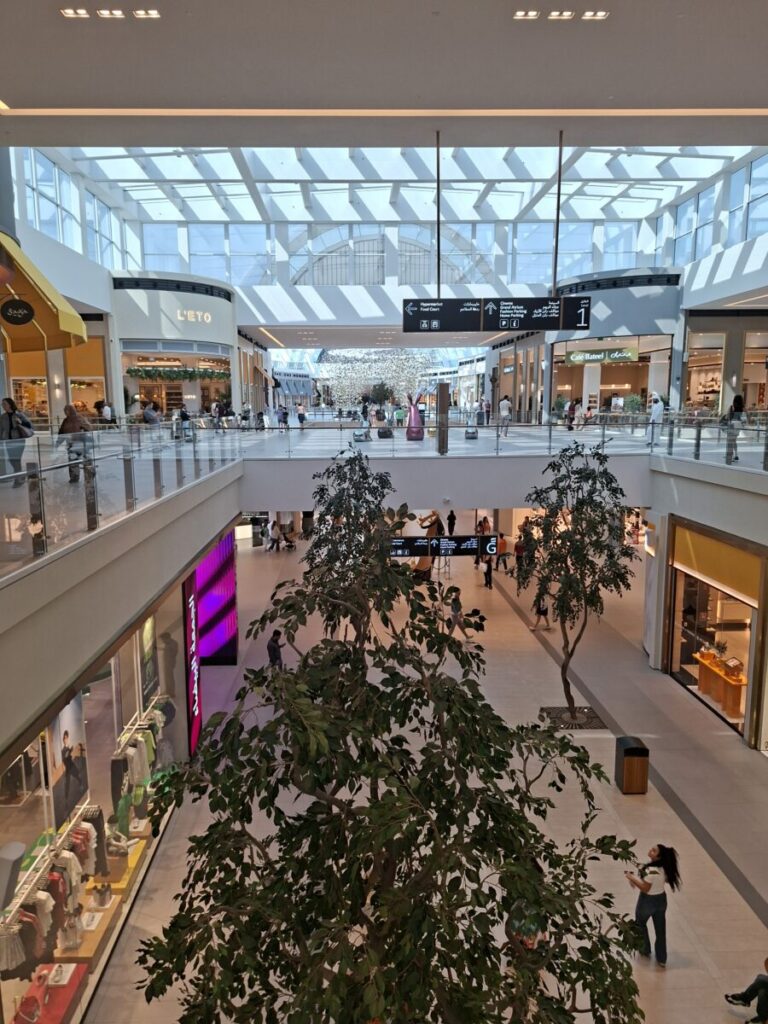
“Our goal is to be an extension of home,” explained one of the local senior managers.
“People don’t come here for a show. They come here to live.”
This shift toward hyper-local relevance signals a broader trend shaping Dubai’s next retail chapter.
Mall of the Emirates: Reinventing an Icon
The final stop was Mall of the Emirates (MOE) – an established powerhouse attracting more than 50 million visitors annually. While known globally for Ski Dubai, the mall is undergoing a significant repositioning.
Senior executives Guillaume Chuzel and placemaking-legend Phil McArthur who had been in the first developing team of the mall from 1995 on, detailed two headline strategies:
1. Major Luxury Expansion
MOE is strengthening its position as Dubai’s preferred luxury destination with flagship stores for Chanel, Dior, Gucci, Saint Laurent, Louis Vuitton, and more.
2. Massive F&B Redevelopment
A new district called The Hangout will replace the outdated food court – an investment exceeding €120 million.
Designed as a bright, daylight-filled space, it will significantly grow MOE’s F&B share and bring the mall closer to global benchmarks.
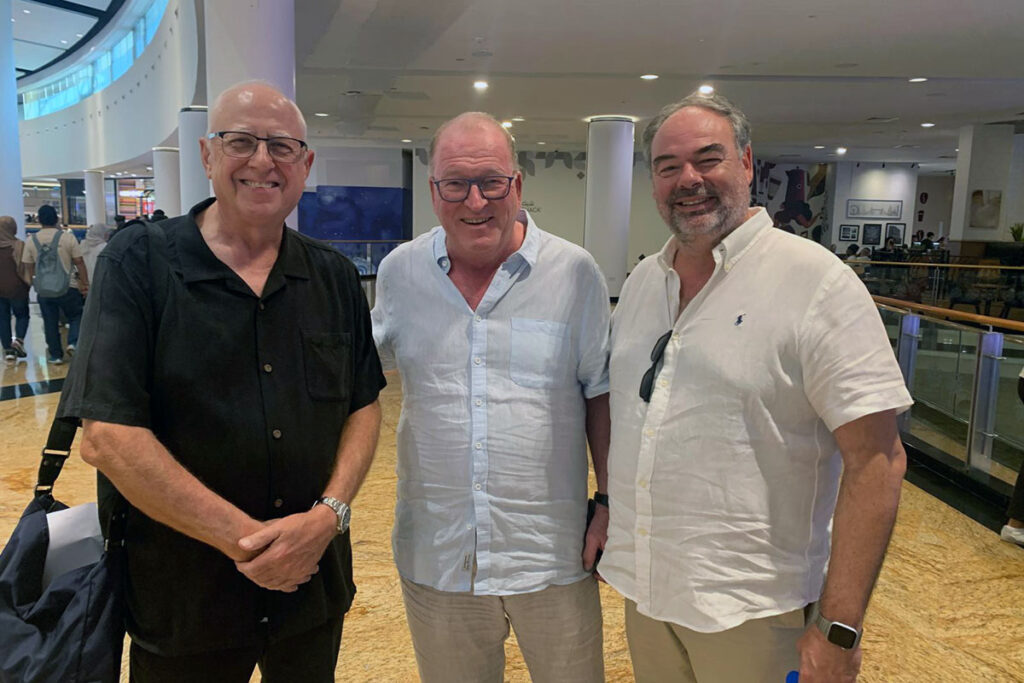
“Legacy is not enough,” Guillaume Chuzel explained.“You must reinvent – even when you’re already successful.”
MOE’s transformation embodies the UAE’s core retail philosophy: constant evolution.
The Luxury Place: Atlantis The Royal
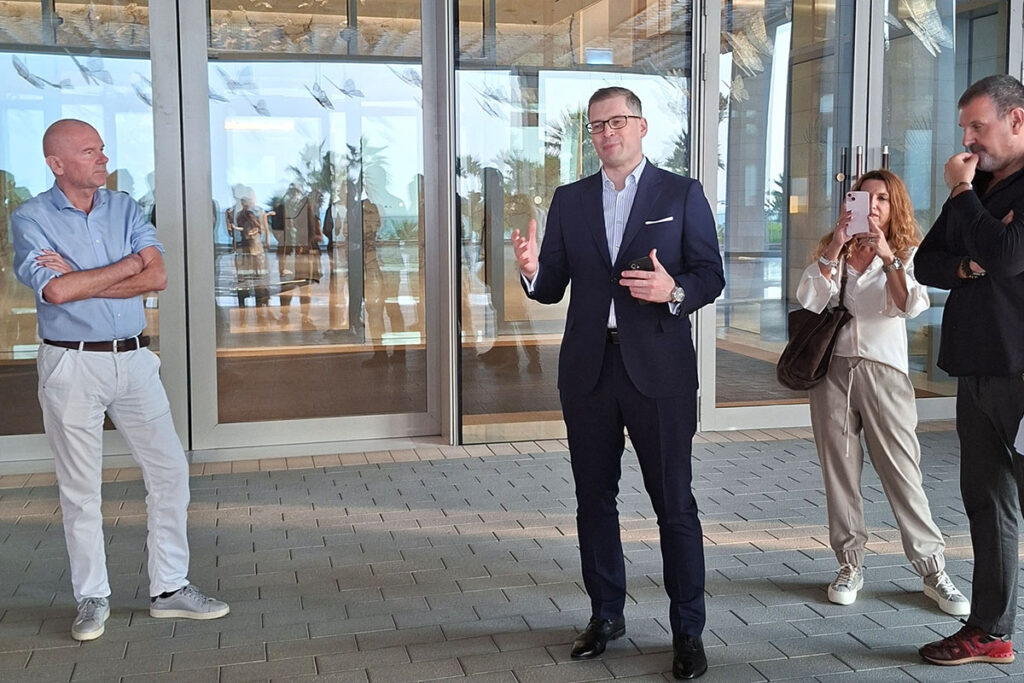
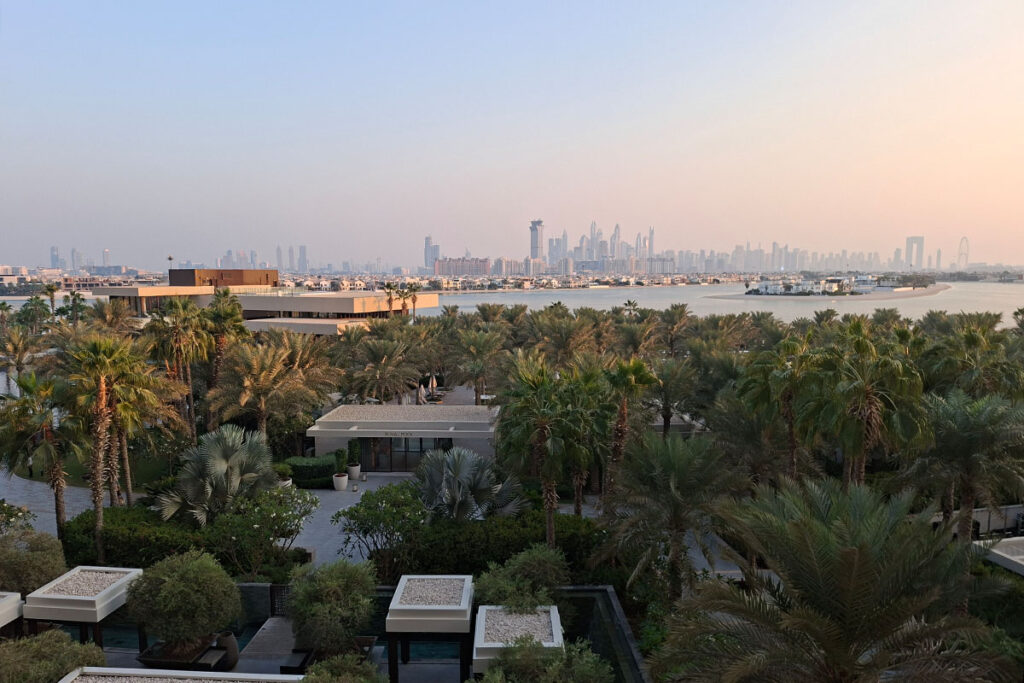
Before heading to the farewell dinner, one final stop was made at Dubai’s ultra-luxurious Atlantis The Royal hotel. Victor Bellot, Head of F&B and Aleksej Zinin F&B Manager guided the group through the hotel’s stunning restaurants, luxurious gardens and beaches. Displaying an exclusive luxurious world, a city by itself that is run by about 6,500 employees.
The day and the ACROSS Study Tour 2025 ended with a spectacular dinner at the famous Clay restaurant near the Ain Dubai wheel in Bluewaters Island where stunning Japanese-Peruvian food, known as Nikkei cuisine, is served. Again leaving the participants with full stomachs and fully loaded with inspiration for their home-markets.
KEY TAKEAWAYS FROM ACROSS STUDY TOUR 2025
After three days, dozens of expert meetings, and deep-dive tours through six major malls, several themes emerged across both cities:
1. Visionary Leadership Defines the Market. Retail in the UAE is not reactive – it is intentionally and aggressively shaped.
2. F&B Is a Primary Anchor. From Time Out Market to MOE’s new strategy: food drives footfall and experience.
3. Exclusivity Is Critical. First-to-market brands and unique formats are central to differentiation.
4. Franchise Structures Dominate. As John Hadden reminded participants: “If you want to succeed here, understand the franchise landscape. It’s the engine of the market.”
5. Community and Hyper-Locality Matter More Than Ever. As seen at Al Ghurair and Dubai Hills Mall, not all of Dubai is about spectacle.
6. Continuous Reinvestment Is Non-Negotiable. From luxury expansions to multi-year refurbishments, the UAE’s leading malls accept only one direction: forward.
7. Culture & Tourism Are Part of the Retail Equation. Saadiyat’s cultural district and Dubai’s touristic magnets prove that retail in the UAE is interconnected with broader national ambitions.
THE ACROSS STUDY TOUR: TRANSFORMING PERSPECTIVES
Whether participants arrived as retailers, developers, advisors, or placemaking professionals, all returned home not only with insights but with inspiration, new relationships, and a renewed understanding of what the future of retail can look like when ambition meets execution.
And with the same impression:
The UAE is not simply a successful retail market – it is a masterclass in strategic vision, execution, and ambition. Here placemaking is not a project – it’s a permanent mindset.
From Dubai’s energy to Abu Dhabi’s cultural depth, the ACROSS Study Tour 2025 provided a rare combination of learning, inspiration, and networking that will resonate long after the flights home.
And as the program continues to grow, one thing is clear: There is no substitute for being on the ground, walking the malls, meeting the leaders, and witnessing innovation first-hand.
The ACROSS Study Tour has once again proven itself as an indispensable platform for anyone shaping the future of retail and placemaking in Europe – and beyond.
Further Readings:
- Dubai Means Business: Insights from the ACROSS Study Tour
- Sunshine & Retail Glamour: ACROSS Study Tour 2025 in Dubai and Abu Dhabi /// Day 1
- Retail Business in Abu Dhabi: How Two Flagship Malls Shape the UAE Capital
- The Meaning of Being Local: Three Dubai Malls and Their Strategies to Stay Indispensable
- ACROSS Dubai & Abu Dhabi Study Tour Fully Booked – Let’s Pick the Next Location Together